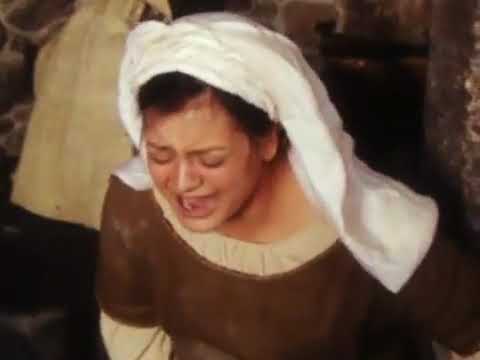
📼 Historias da Galiza | 10 | A historia de ser mulleres (Documentario Completo en Galego, 2007)
The Statue of Maria Pita in the Crown
This section introduces the statue of Maria Pita, a woman who played a significant role in changing the history of her city. The question is raised whether Maria Pita truly represents the spirit of Galician women and their history.
Maria Pita's Heroic Act
- In 1589, during a battle with Admiral Drake's troops, Maria Pita fought bravely alongside other women from the city.
- She confronted an enemy soldier who had managed to breach the city wall.
- Her courageous act had a psychological impact on the British soldiers, leading them to retreat.
Exploring Maria Pita's History
- Visiting Maria Pita's house reveals that she was a woman associated with weapons and bravery.
- While she is often mentioned alongside other notable Galician women such as Queen Urraca, Rosalía de Castro, and Emilia Pardo Bazán, her story is unique.
- To truly understand Galician women's history, we must also consider the anonymous heroines who maintained households throughout centuries.
Women's History in Galicia
This section delves into the historical context of women in Galicia. It explores how patriarchy shaped society and discusses the special relationship between women and land.
Patriarchy and Women's Status
- Throughout history, Galician society has been predominantly patriarchal, influenced by Greco-Latin ideas that relegated women to subordinate roles.
- Christian beliefs reinforced gender discrimination but also established a special connection between Galician women and land.
Women's Role in Society
- Women were not only productive but also fundamental for reproduction and maintaining households.
- They worked on land even after marriage while fulfilling domestic responsibilities.
A Historical Document Reveals Women's Work
- A document from 1337 highlights the story of Maria Martinez and Joan Pérez, who worked on land together.
- The contract shows that women were responsible for various tasks, including domestic work and tending to livestock.
Maria Martinez's Life and Responsibilities
This section focuses on the life of Maria Martinez, highlighting her work on land, domestic duties, and other responsibilities.
Maria's Work on Land
- Despite being pregnant at 22 years old, Maria continued working on land.
- She cultivated the land alongside her partner Joan Pérez in Santo Estebo de Rivas de Sil.
Domestic Duties and Food Preparation
- In addition to agricultural work, Maria had to manage domestic chores such as cooking and selling goods.
- The diet often consisted of pan de centeo (rye bread) due to limited resources.
Challenging Economic Conditions
- Despite their hard work, there was little financial gain. It would take centuries before any significant wealth accumulation occurred.
- Textile work was another important aspect of Maria's life.
Gender Inequality in Land Ownership
This section explores gender inequality in land ownership and how women were forced to pay for land if they did not want to forfeit it.
Unequal Land Ownership Contracts
- Around 75% of land contracts in Galicia favored men over women.
- Women were required to pay for land even if they did not wish to own it.
Maria's Responsibilities Expand
- Apart from agricultural work, Maria also tended to cattle and engaged in various domestic tasks.
Limited Financial Resources
- Despite their efforts, the economic conditions remained challenging for women like Maria.
Conclusion
This summary provides an overview of the transcript by highlighting the story of Maria Pita, exploring women's history in Galicia, and shedding light on the challenges faced by women like Maria Martinez.
The Role of Women in Medieval Society
This section discusses the role of women in medieval society, focusing on their occupations and social status.
Women's Occupations
- Many medieval representations simplify the importance of young farmers.
- Women like Maria had to work in domestic homes and pay for their daughters' upbringing.
- Some women raised rich children as farmers, while others engaged in commerce.
- Women were involved in artisan offices and teaching, but faced limited acceptance in the artisanal world.
Female Participation
- Women participated in hospitals, albergues, and private households.
- They also worked as artisans and played a significant role in markets.
- However, their participation was not fully recognized compared to men.
Gender Roles
- Men primarily engaged in tasks related to war, while women took care of the family and household.
- Women also had specific occupations such as selling goods or agricultural products.
- The economic and social empowerment of women depended on their husband's background and social status.
The Role of Marineries
- Marineries played a crucial role in tobacco factories during the 19th century.
- Maruja Pantín's story exemplifies the challenges faced by working-class women seeking employment.
Challenges Faced by Working-Class Women
This section explores the difficulties encountered by working-class women, including illiteracy and limited job opportunities.
Illiteracy Among Galeas Workers
- Less than 5% of galeas workers knew how to read.
- Maruja's struggle to find employment highlights the challenges faced by working-class women.
Limited Job Opportunities
- Working-class women had to rely on their husbands for economic support.
- Many women had to leave their families and seek help from men outside their immediate circle.
Conclusion
The video concludes by highlighting the social and economic constraints faced by women in medieval society, particularly those from working-class backgrounds.
Social and Economic Constraints
- Women faced limited job opportunities and relied on men for financial support.
- Illiteracy among working-class women further hindered their prospects.
- Despite these challenges, some women managed to carve out roles in various occupations.
The transcript provided does not cover the entire video.
Marucia's Journey in the Tobacco Factory
This section discusses Marucia's journey and challenges in working at the tobacco factory, highlighting the difficult conditions and low wages faced by female workers.
Marucia's Struggles and Working Conditions
- Marucia faced difficulties in recovering from previous failures but managed to find work at the tobacco factory.
- The physical tasks at the factory were challenging, especially given the precarious conditions.
- The master of the workshop, including Marucia, had limited control over their work due to external factors.
Women Workers in Galicia
- Donations played a crucial role in supporting the slow industrialization process in Galicia.
- Many women from different backgrounds worked at the fabric, including married women and soldiers' wives.
- Multiple generations of families sometimes worked together at the factory.
Challenges Faced by Female Workers
- Women workers often lacked education and came from neighborhoods like Barrios de Coruña and Dorural.
- The work was demanding, with long hours that were not compensated adequately.
- Women received lower salaries compared to men as a means to reduce production costs.
Advances for Female Workers
- Civil wars before 1916 led to some improvements in labor conditions for female workers.
- Sociality societies provided support during strikes and protests.
- However, significant advancements for female workers occurred mainly in the 20th century.
Women's Role and Independence
This section explores women's roles and their struggle for independence during this time period.
Gender Roles and Independence
- Masculine instruments symbolized power, making it challenging for women to break free from traditional gender roles.
- A few influential women, such as Rosalía de Castro, Emilia Pardo Bazán, and Concepción Arenal, advocated for education and improved conditions for women.
- Limited education opportunities were available for women until the 20th century.
Education and Empowerment
- The incorporation of women as teachers and the expansion of primary schools provided more opportunities for education.
- Women's access to education increased over time, with a significant percentage being able to read and write by the 1920s.
Ernestino Tero Sestelo's Impact
This section focuses on Ernestino Tero Sestelo's efforts in promoting education and improving the lives of rural families.
Ernestino Tero Sestelo's Work
- Ernestino Tero Sestelo was a director at the normal school in Ponte Vedra who believed in the importance of education.
- He visited a rural family in García to offer assistance and encourage them to send their children to school.
- His efforts resulted in positive changes, including providing meals for children at school.
Education as Progress
- Ernestino Tero Sestelo received a book about his grandfather's experiences that inspired him to pursue teaching.
- Education was seen as a means of progress for individuals and society during this time period.
The transcript is not entirely in English. However, I have provided an English summary based on the available content.
New Section
This section discusses the representation of women in educational initiatives and highlights the pride Ernestino feels for the education provided by the University of New York.
Women's Representation in Educational Initiatives
- 42% of participants in educational initiatives were women.
- These initiatives include colonies, yascantines, and scholars.
- Ernestino is particularly proud of the education provided by the University of New York.
New Section
This section explores the highly-educated school of Vilagarcia and mentions a visit from a member of the Mariner family.
The School of Vilagarcia
- The University of New York is a highly-educated school in Vilagarcia.
- It is interesting to know if a daughter from the Mariner family visited this school.
- The students at this school felt joy when sharing with other students and teachers.
New Section
In this section, Ernestino expresses satisfaction as a teacher and reflects on her personal experiences at Mariner's Normal School.
Ernestino's Experience as a Teacher
- Ernestino takes pride in being a teacher.
- She describes herself as a personal teacher.
- She was born during the 20th year at Mariner's Normal School.
New Section
This section discusses Ernestino's role as an advocate for women's rights and her involvement in legal changes during 1931.
Advocate for Women's Rights
- Ernestino was a teacher who fought for women's rights.
- In 1931, she witnessed significant legal changes regarding women's rights in Spain.
- These changes included achieving gender equality in education and obtaining divorce laws.
New Section
This section highlights various laws and political developments that aimed to improve women's conditions but were hindered by the civil war and Francoism.
Laws and Political Developments
- Several laws were enacted to improve women's conditions, such as maternity protection, non-discriminatory job opportunities, and the right to vote.
- However, these advancements were frustrated by the civil war and Francoism.
- Ernestino's family home in Rd. La Oshi was affected by measures taken against her family due to their political beliefs.
New Section
This section discusses the impact of political debates on women's rights during the Republican Parliament.
Impact of Political Debates
- The right to vote for women was a significant political conquest achieved in 1931.
- However, further debates in the Republican Parliament led to controversial discussions regarding women's rights.
- These debates influenced the implementation of laws affecting women's conditions.
New Section
This section describes how Ernestino faced challenges during Francoism, including being separated from her teaching position.
Challenges During Francoism
- Ernestino expected her situation to be reviewed so she could return to her teaching position.
- However, changes in government orders prevented her from resuming her service.
- Many measures were taken against individuals who opposed Francoism, resulting in a difficult period for women.
New Section
This section emphasizes that recognition for women's contributions during Francoism is lacking.
Lack of Recognition
- Women's contributions during Francoism are not adequately recognized or acknowledged.
- The French government holds records and pictures related to this period but has not provided proper recognition.
- There were licensed medical services available for women in Galicia since 1909.
New Section
This section highlights the presence of women in various fields and their contributions to society.
Women's Contributions
- Women played a significant role in different areas, including medical services.
- Galicia had a considerable number of female doctors and medical professionals.
- The transcript mentions the existence of different types of women in society.
The provided transcript is a mix of English and non-English text. I have only included the English parts in the summary.