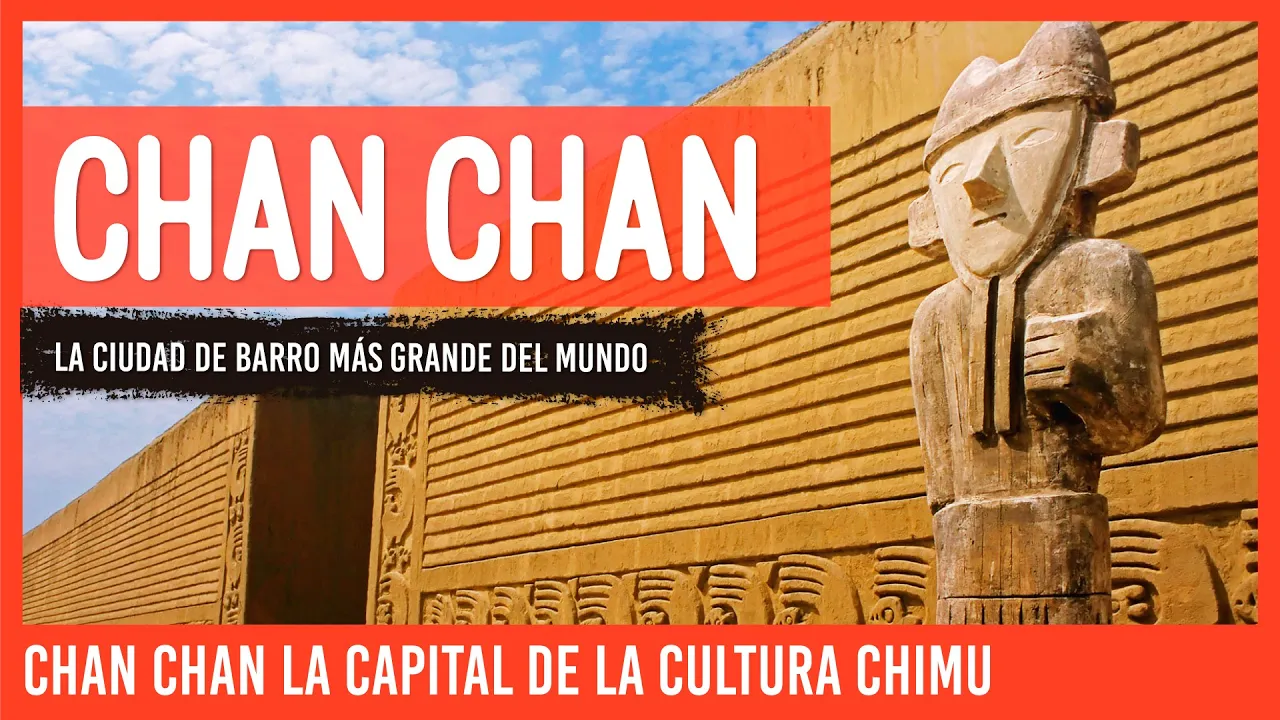
✅ CHAN CHAN LA CIUDAD DE BARRO MAS GRANDE DEL MUNDO ✅ CHAN CHAN LA CAPITAL DE LA CULTURA CHIMU
Welcome and Introduction
In this section, Gustavo introduces the topic of Chan Chan, the largest mud metropolis in the world located in northern coastal Peru.
The Rise of Chan Chan
- The Chimú society developed in northern coastal Peru between 900 and 1470 AD, influenced by Huari urbanism and Sicán metallurgical advancements.
- Chan Chan served as the core of the Chimú culture, expanding its influence from Trujillo to Tumbes and Carabayllo.
- The Chimú culture was centralized under a ruler known as "Psiquis" or "Ximo Cápac," with a clear social hierarchy and complex bureaucracy.
Socio-Economic Structure and Cultural Practices
- Social classes were distinct within Chimú society, with power inheritance and economic functions structured around urban centers for tribute collection.
- The main deity worshiped by the Chimú was the moon, alongside local deities. They excelled in maritime activities like fishing using traditional tools.
Cultural Achievements and Expansion
This section delves into the cultural achievements, trade practices, and expansion efforts of the Chimú civilization.
Technological Advancements
- The Chimú were skilled fishermen, navigators, and traders who utilized totora boats for fishing expeditions. They also engaged in metalworking with copper, bronze, silver, and gold.
Trade Networks and Ritual Sacrifices
- Known for their trading skills using copper-based currency-like objects, the Chimú had significant metallurgical expertise beyond their capital at Chan Chan.
- Besides Chan Chan, other important sites like Manchan Farfán showcased Chimú sacrificial rituals aimed at appeasing natural disasters like El Niño.
Inca Influence and Decline
This section explores how Inca conquest impacted the Chimú civilization leading to their decline.
Inca Conquest
- After falling under Inca rule led by Tupac Yupanqui around 1470 AD due to prolonged warfare efforts against them.
Post-Conquest Events
- Following conquest by Huayna Capac's Incas in 1500 AD after a rebellion attempt by the Chimús resulted in partial destruction of Chan Chan.
Legacy of Chan Chan
This final section discusses post-Spanish colonization events related to looting at Chan Chan and its current status as an archaeological site.
Post-Colonial Era
- From 1532 to 1821 during Spanish colonization era saw looting at Chan Chan due to beliefs of hidden treasures resulting in irreparable loss of historical artifacts.
Archaeological Significance
New Section
The transcript discusses the architecture and layout of Chan Chan, an ancient city in Peru, highlighting its significance and key features.
Architecture and Layout of Chan Chan
- Chan Chan housed between 60,000 to 100,000 inhabitants, making it one of the most populous pre-Columbian cities in America.
- The city covers approximately 20 square kilometers with monumental constructions divided into nine walled units called citadels or palaces.
- Besides the monumental structures, there are independent constructions known as huacas, along with residences, cemeteries, agricultural areas, workshops, and specific activity zones.
- Access to Chan Chan was restricted by high walls except for a narrow entrance. The city was built in stages indicated by different types of adobe bricks.
- Huachac structures were used to extract groundwater for agriculture and possibly served as ritual spaces for offerings to the earth and water.
New Section
This part delves into the water supply system of Chan Chan and its recognition as a significant archaeological site.
Water Supply System and UNESCO Recognition
- Water supply in Chan Chan relied on over 140 wells. It is renowned as the largest mud city globally and was designated a UNESCO World Heritage Site in 1986.
- Currently part of the Moche Route tourism circuit in northern Peru, which includes various archaeological sites like Huacas complexes and museums showcasing Mochica culture.
New Section
The final segment reflects on the enduring legacy of Chan Chan's architecture, urban planning, and cultural significance.
Legacy of Chan Chan
- Despite being made of millions of superimposed adobe bricks, Chan Chan continues to captivate visitors with its mysterious history intertwined with mythical beliefs.