GMT20260418 021924 Recording 1920x1200
Introduction to Otitis Externa
Overview of the External Auditory Canal (EAC)
- The external auditory canal (EAC), also known as CAE, is a cylindrical air-filled structure that opens to the outside and is flattened in the antero-posterior direction. Its medial limit is the tympanic membrane.
- The EAC serves multiple functions: amplification and spatial localization of sound waves, protection of the middle ear, and aesthetic contribution to head shape.
- The EAC measures approximately 3.5 cm in length and has an irregular oval shape, consisting of a cartilaginous outer portion with skin containing hair follicles and sebaceous glands responsible for cerumen production.
- A bony portion covered by tightly adhered skin forms part of the EAC; its defense mechanisms include low pH, fatty acids in secretions, lysozymes, and self-cleaning through epithelial migration.
- Failure of these defense mechanisms can lead to dry skin in the EAC, loss of elasticity, atrophy of glands, and increased susceptibility to infections.
Exploration Techniques for Ear Examination
- Anamnesis is crucial; inquire about which ear is affected, duration of symptoms, presence of discharge or pain, and history of previous infections. Always examine the healthy ear first to avoid cross-contamination.
- Using a biotoscope with a camera enhances visualization during examination; it allows better assessment of tympanic membrane condition on screen.
- Assess tympanic membrane mobility using Valsalva maneuver; positive mobility indicates a healthy ear while lack thereof may suggest otitis media or other issues.
Understanding Otitis Externa
Definition and Causes
- Otitis externa refers to inflammation/infection affecting the skin lining the external auditory canal extending potentially to surrounding tissues like auricle or adjacent cellular tissue due to disruption in lipid barrier allowing germ entry.
- Factors predisposing individuals include excessive cleaning leading to trauma (e.g., use of non-sterile tools), dermatological conditions like psoriasis, allergic reactions such as eczema or seborrheic dermatitis, especially prevalent during swimming season when water exposure increases risk among children.
Etiology and Symptoms
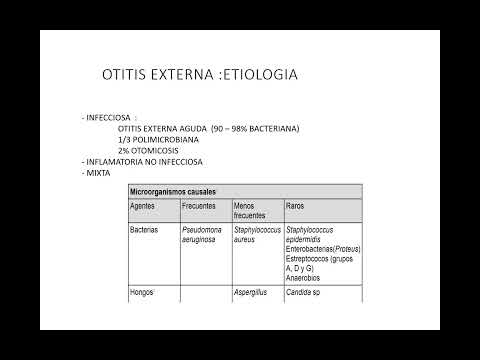
- Acute otitis externa is predominantly bacterial (90%-98%), with Pseudomonas aeruginosa being most common (20%-60% prevalence), followed by Staphylococcus aureus (10%-70%). Mixed infections are also frequent alongside fungal causes primarily from Aspergillus species (60%-90%) or Candida (10%-45%).
- Patients typically present with intense otalgia exacerbated by chewing or touching their ears; they may also experience a sensation of fullness in the ear leading to conductive hearing loss due to inflammation-induced secretion buildup within the canal.
Clinical Evaluation
Signs During Physical Examination
- Positive tragus sign indicates significant inflammation; pulling on auricle may reveal advanced cellulitis if present alongside hyperemia indicating infection severity within external auditory canal leading potentially towards stenosis making visualization difficult via otoscope examination.
- Secretion characteristics can provide diagnostic clues: yellowish discharge with black specks suggests bacterial infection while pruritus points towards possible fungal involvement indicating otomicosis as differential diagnosis within clinical context for otitis externa cases observed clinically during evaluations.
Types of Otitis Externa
- Acute Circumscribed - Characterized by localized furuncle formation due to follicular infection.
- Diffuse - Involves widespread inflammation across external auditory canal.
- Fungal - Primarily caused by fungi such as Aspergillus.
- Viral - Less common but can occur.
These classifications help guide treatment approaches based on underlying etiology identified through thorough patient history taking combined with physical examination findings noted above throughout clinical assessments performed routinely during consultations aimed at managing patients presenting with symptoms indicative thereof related specifically towards otologic concerns encountered frequently within practice settings today overall effectively addressing needs presented therein accordingly recognized appropriately thereafter moving forward into subsequent management strategies outlined subsequently thereafter accordingly established thereafter respectively noted hereinabove throughout discussions held hereinabove overall effectively captured succinctly hereinabove throughout notes compiled herewith accordingly structured thus far overall effectively encapsulated hereinabove comprehensively detailed thus far overall effectively summarized hereinabove concisely articulated thus far overall efficiently conveyed hereinabove systematically organized thus far clearly delineated henceforth onward moving forward into future considerations addressed thoroughly henceforth onward moving forward into future considerations addressed thoroughly henceforth onward moving forward into future considerations addressed thoroughly henceforth onward moving forward into future considerations addressed thoroughly henceforth onward moving forward into future considerations addressed thoroughly henceforth onward moving forward into future considerations addressed thoroughly henceforth onward moving forward into future considerations addressed thoroughly henceforth onward moving forward into future considerations addressed thoroughly henceforth onward moving forward into future considerations addressed thoroughly henceforward onwards continuing forth consistently maintaining clarity coherence continuity consistency cohesiveness comprehensiveness completeness conciseness compactness clarity coherence continuity consistency cohesiveness comprehensiveness completeness conciseness compactness clarity coherence continuity consistency cohesiveness comprehensiveness completeness conciseness compactness clarity coherence continuity consistency cohesiveness comprehensiveness completeness conciseness compactness clarity coherence continuity consistency cohesiveness comprehensiveness completeness conciseness compactness clarity coherence continuity consistency cohesiveness comprehensiveness completeness conciseness compactness clarity coherence continuity consistency cohesively comprehensive concise clear coherent consistent cohesive complete concise clear coherent consistent cohesive complete concise clear coherent consistent cohesive complete concise clear coherent consistent cohesive complete concise clear coherent consistent cohesive complete concise clear coherent consistent cohesive complete concise clear coherent consistent cohesive complete concise clear coherent consistent cohesive complete concise clear coherent consistent cohesive complete concise clear coherent consistent cohesive complete succinctly stated clearly articulated coherently expressed logically structured methodically arranged systematically organized efficiently conveyed accurately represented precisely delineated distinctly defined explicitly described adequately characterized sufficiently illustrated appropriately exemplified suitably demonstrated fittingly portrayed aptly depicted relevantly highlighted significantly emphasized meaningfully underscored importantly accentuated notably marked prominently featured strikingly showcased remarkably displayed exceptionally presented outstandingly exhibited extraordinarily revealed uniquely uncovered singularly disclosed exclusively unveiled particularly spotlighted specifically illuminated distinctly clarified explicitly elucidated adequately expounded sufficiently elaborated fittingly expanded suitably amplified appropriately enhanced meaningfully enriched significantly augmented notably supplemented prominently fortified strikingly bolstered remarkably strengthened exceptionally reinforced outstandingly supported extraordinarily underpinned uniquely buttressed particularly sustained specifically maintained distinctly preserved explicitly safeguarded adequately protected sufficiently shielded fittingly secured suitably defended appropriately ensured meaningfully guaranteed significantly assured notably confirmed prominently validated strikingly substantiated remarkably corroborated exceptionally verified outstandingly authenticated extraordinarily ratified uniquely endorsed particularly sanctioned specifically approved distinctly accepted explicitly acknowledged adequately recognized sufficiently affirmed fittingly attested suitably certified appropriately licensed meaningfully authorized significantly empowered notably enabled prominently facilitated strikingly promoted remarkably advanced exceptionally propelled outstandingly accelerated extraordinarily expedited uniquely hastened particularly quickened specifically sped up distinctly streamlined explicitly optimized adequately refined sufficiently improved fittingly enhanced suitably upgraded appropriately elevated meaningfully boosted significantly amplified notably intensified prominently heightened strikingedly escalated remarkably surged exceptionally soared outstandingl
Overview of Inflammatory Tumors and Otitis Externa
Inflammatory Tumors
- The examination of inflammatory tumors involves assessing their consistency, whether they are hard or fluctuating, which influences treatment decisions regarding drainage.
- It is uncommon to find pre or retroauricular satellite lymphadenopathy associated with these tumors.
Otitis Externa Diffusa
- Commonly known as swimmer's ear, otitis externa diffusa is prevalent in summer and results from infections affecting the dermis and epidermis of the external auditory canal. The most common pathogens include Pseudomonas aeruginosa and Staphylococcus aureus.
- Contributing factors include accidental trauma leading to skin maceration due to heat and humidity, which creates a conducive environment for bacterial growth. Additionally, a lack of cerumen diminishes protective barriers against infection.
Symptoms and Diagnosis
- Patients typically present with intense itching exacerbated by chewing or touch, along with hearing loss due to inflammation in the external auditory canal. Examination may reveal stenosis and congested skin with exudates obstructing visibility of the tympanic membrane.
Treatment Approaches
- For localized otitis externa (circumscribed), treatment includes oral antibiotics alongside topical options like piroxicam or ciprofloxacin combined with hydrocortisone drops for easier application. Amoxicillin-clavulanate is recommended as first-line therapy for broader coverage when necessary.
- Patients should be advised against getting water into the ear during bathing; using a vaseline-coated cotton plug can help keep the ear dry while washing. This practice aids recovery alongside medical treatment.
Fungal Otitis Externa
- Fungal infections account for 5% to 10% of all cases of otitis externa, often following antibiotic treatments that disrupt normal flora, especially in warm, humid conditions that favor fungal growth such as candidiasis or aspergillosis. Initial symptoms include itching followed by pain due to secondary bacterial infection leading to discharge and hearing loss over time.
Clinical Presentation and Differentiation
Identifying Fungal Species
- Distinctive appearances help differentiate fungal species: brownish masses suggest Aspergillus flavus; cottony white indicates Candida albicans; blackish masses point towards Aspergillus niger; while macerated paper suggests Aspergillus fumigatus presence in the canal.
Treatment Protocol for Fungal Infections
- Cleaning the auditory canal via aspiration or irrigation is crucial before applying topical antifungals over a period of 10 to 15 days since fungi take longer to resolve compared to bacteria; concurrent antibiotic therapy may also be required if bacterial superinfection occurs post-treatment initiation. Alcohol drying agents can be used once discharge ceases to maintain dryness within the ear canal post-recovery phase.
Viral Otitis Conditions
Meningitis Bulosa
- This condition primarily affects children during viral infections like influenza or adenovirus causing acute otalgia linked with tympanic membrane inflammation characterized by hemorrhagic blisters on its surface leading potentially to perforation if not managed properly through avoidance of pressure maneuvers like Valsalva maneuver during episodes of nasal congestion or coughing spells that could exacerbate tympanic damage.
Treatment Strategies
- Management includes systemic antibiotics such as amoxicillin-clavulanate or ciprofloxacin along with topical antibiotic-steroid combinations administered over seven days while advising patients against actions that might compromise tympanic integrity during acute phases.
Herpes Zoster Oticus
Clinical Features
- Herpes zoster oticus presents primarily in immunocompromised individuals manifesting symptoms including severe pain (otalgia), pruritus, vesicular lesions around auricular regions indicative of varicella-zoster virus reactivation affecting cranial nerve VII pathways resulting in facial paralysis alongside typical vesicular eruptions across affected areas.
Management Considerations
- Treatment focuses on antiviral medications such as acyclovir combined with corticosteroids aimed at reducing inflammation while antiseptic solutions assist in promoting faster healing processes for vesicles formed throughout this condition’s course.
Overview of Hearing Loss and Treatment
Initial Assessment of Hearing Loss
- The discussion begins with the need to assess the degree of hearing loss (hipocusia) before and after corticosteroid treatment.
Types of Otitis Externa
- A summary is provided on various types of otitis externa, including those caused by Pseudomonas, Staphylococcus, and Streptococcus.
Contributing Factors to Ear Conditions
- Key factors leading to ear issues include maceration, heat, humidity, and trauma. Patients often present with otalgia due to inflammation in the ear.
Treatment Approaches for Ear Infections
Antibiotic Treatments
- Treatment typically involves topical and oral antibiotics for conditions like localized otitis externa or otomicosis.
Symptoms of Otomicosis
- Characteristic symptoms include itching (prurito), prompting a need for cleaning the ear and initiating antifungal treatment alongside oral antibiotics.
Understanding Acute Otitis Media
Definition and Classification
- Acute otitis media is defined as a non-specific inflammatory process affecting the middle ear and mastoid cells. It can be classified into acute, subacute, and chronic stages.
Pediatric Considerations
- Children are particularly susceptible due to anatomical differences in their Eustachian tubes which facilitate easier transmission of infections from the nasal cavity to the ear.
Predisposing Factors for Ear Infections
Host Factors
- Genetic predispositions such as malformations or immunodeficiencies increase susceptibility to infections.
Environmental Influences
- Environmental factors like daycare attendance, breastfeeding practices, exposure to tobacco smoke, and seasonal allergies contribute significantly to infection rates in children.
Clinical Presentation of Acute Otitis Media
Symptom Progression
- The condition typically evolves predictably through four phases: initial congestion with fever; followed by potential suppuration; then perforation; concluding with healing if treated appropriately.
Emergency Signs
- In pediatric emergencies, key indicators include fever, irritability, vomiting, decreased hearing ability (hypoacusis), along with signs of tympanic membrane congestion during examination.
Phases of Acute Otitis Media Development
Congestive Phase Symptoms
- Early symptoms include fever and pulsating pain (otalgia), leading to progressive hypoacusis due to inflammation affecting auditory function.
Collection Phase Dynamics
- This phase is characterized by cerous fluid accumulation behind an opaque tympanic membrane that may exhibit bubbles indicative of effusion.
Complications Associated with Untreated Otitis Media
Risk Management Strategies
- High-dose antibiotics are crucial in preventing complications such as mastoiditis or meningitis resulting from untreated acute otitis media. Monitoring for intratemporal complications is essential in pediatric cases.
Intracranial Infections and Initial Treatments
Overview of Intracranial Conditions
- Discusses various intracranial conditions such as abscesses and thrombophlebitis, emphasizing the importance of monitoring for meningitis.
- Highlights amoxicillin as a first-line antibiotic treatment for acute otitis media in children, with recommended dosages.
Treatment Adjustments Based on Response
- If there is no adequate response to amoxicillin, it can be combined with clavulanic acid for enhanced effectiveness.
- For allergic patients, alternatives like ciprofloxacin or clarithromycin are suggested; emphasizes careful selection based on allergy history.
Foreign Bodies in Ear, Nose, and Throat Emergencies
Introduction to Foreign Body Management
- Introduces the topic of foreign bodies in ENT emergencies, setting the stage for further discussion.
Anatomy of the Ear
- Describes the anatomy of the ear canal as an S-shaped tube leading to the tympanic membrane.
- Differentiates between cartilaginous and bony parts of the ear canal and their dimensions.
Types of Ear Canal Configurations
- Identifies three types of ear canals: straight (ideal), intermediate (S-shaped), and tortuous (most difficult to evaluate).
Common Foreign Bodies Found in Ears
- Lists common foreign bodies including animated objects like insects and inanimate objects such as toy fragments.
Symptoms and Evaluation Techniques
- Notes symptoms associated with foreign bodies like a sensation of blockage or decreased hearing; insect presence may cause pain or bleeding.
Extraction Techniques for Insects
- Advises against immediate extraction if an insect is present due to potential injury; suggests using substances like glycerin to suffocate it first.
Emergency Procedures for Battery Removal
- Discusses urgent procedures required when a battery is lodged in the ear due to its corrosive nature that can damage tissues.
Complications from Foreign Bodies
- Outlines complications such as tympanic membrane perforation or external auditory canal infections resulting from improper handling during removal.
Managing Nasal Foreign Bodies
Techniques for Removal
- Explains how special curettes are used to remove nasal foreign bodies; notes that some may remain unnoticed until they cause odor or sinusitis symptoms.
Common Orofarangeal Foreign Bodies
Identification Methods
- Discusses common cases involving adults who have fish bones stuck in their throats; emphasizes thorough examination techniques including laryngoscopy.
Understanding Sinusitis
Definition and Causes
- Defines sinusitis as inflammation affecting mucosa lining paranasal sinuses; highlights various mechanisms causing this condition.
Anatomy Related to Sinus Drainage
- Details anatomical structures involved in sinus drainage, including maxillary, frontal, ethmoidal, and sphenoidal sinuses.
This structured markdown file provides a comprehensive overview while allowing easy navigation through timestamps linked directly to specific discussions within the transcript.
Sinusitis: Fisiopatología y Tratamiento
Fisiopatología de la Sinusitis
- La sinusitis se caracteriza por la obstrucción del ósteo, que es el punto de drenaje de los senos paranasales. Esto puede ser causado por inflamación de la mucosa nasal o un defecto mecánico como una desviación del tabique.
- La obstrucción provoca una disminución en la ventilación del seno, lo que lleva a una disfunción ciliar. Sin buena ventilación, los cilios no pueden mover el moco hacia afuera, resultando en congestión y acumulación de moco.
- Con la disfunción ciliar, el seno se vuelve congestivo e hipóxico, creando un ambiente propicio para el crecimiento bacteriano y desarrollando así la sinusitis.
- Resumiendo: Obstrucción del ósteo → Hipoxia → Disfunción ciliar → Retención de secreciones. Esta secuencia es clave para entender cómo se desarrolla la sinusitis.
- Factores predisponentes incluyen fibrosis quística, alteraciones congénitas, síndrome de cilio inmóvil y procesos alérgicos que causan congestión nasal. También se consideran factores ambientales como trauma o exposición a agentes químicos.
Clasificación y Síntomas
- La sinusitis se clasifica en aguda (menos de 4 semanas), subaguda, crónica (más de 12 semanas) y recurrente (4 episodios al año). Los síntomas varían según la clasificación pero incluyen dolor facial y obstrucción nasal con rinorrea purulenta.
- En niños, los síntomas menores pueden incluir fiebre y halitosis; mientras que en adultos puede haber dolor facial variable asociado a otros síntomas como descarga posterior.
- El diagnóstico inicial incluye anamnesis para identificar antecedentes de sinusitis previas; además se evalúa visualmente mediante endoscopía nasal para observar mucosa congestionada o secreción anormal.
Diagnóstico Avanzado
- Se recomienda realizar una tomografía computarizada (TC) de senos paranasales como método estándar para evaluar obstrucciones y secreciones en comparación con radiografías menos efectivas.
- Durante la TC se pueden observar características específicas como desviaciones del tabique nasal o pólipos obstructivos que contribuyen a los problemas respiratorios del paciente.
Tratamiento
- El tratamiento inicial recomendado es amoxicilina con ácido clavulánico; si hay resistencia o complicaciones, se pueden considerar antibióticos alternativos como ciprofloxacino o moxifloxacino.
- Para casos más severos que no responden al tratamiento convencional, opciones adicionales incluyen ceftriaxona intramuscular o clindamicina intravenosa para mejorar resultados terapéuticos.
- Además del tratamiento antibiótico, se sugiere el uso controlado de descongestionantes nasales tópicos durante un máximo de 7 días para evitar efectos adversos prolongados sobre las mucosas nasales.
Uso de Corticoides en el Tratamiento de la Congestión Nasal
Efectos de los Corticoides Orales
- Los corticoides orales, como la prednisona y el deflazacort, son efectivos para disminuir la congestión nasal y el edema de la mucosa nasal.
Poliposis Nasal y Corticoides Tópicos
- En casos de pólipos nasales, que son tumoraciones por rinitis no controlada, los corticoides ayudan a reducir su tamaño.
- El uso de corticoides tópicos es aún más efectivo para disminuir los pólipos y controlar procesos inflamatorios severos.
Tratamiento Quirúrgico en Sinusitis Crónica
- La sinusitis crónica puede requerir tratamiento quirúrgico si hay obstrucción del ostium maxilar, ya que otros tratamientos no serán suficientes.
- Se recomienda cirugía endoscópica sinusal junto con septoplastía si se identifica un tabique desviado.
Procedimiento Quirúrgico Detallado
- Durante la septoplastía localizada, se retira la parte obstruida del tabique nasal y se abre el ostium maxilar para mejorar el drenaje.
- Se realiza una aspiración y lavado del área afectada para eliminar cualquier material obstructivo, asegurando una buena apertura del ostium frontal y maxilar.
Manejo Postoperatorio en Pacientes con Poliposis Nasal
Control Continuo Necesario
- Los pacientes con poliposis nasal requieren controles regulares debido a la posibilidad de recurrencia de los pólipos que pueden causar obstrucción nuevamente.
Tratamiento Prolongado con Corticoides Tópicos
- Se inicia un tratamiento continuo con corticoide tópico durante al menos 90 días para controlar síntomas postquirúrgicos y prevenir complicaciones adicionales.
Complicaciones Asociadas a Sinusitis No Tratadas
Riesgos Potenciales
- Las complicaciones graves incluyen celulitis orbitaria o abscesos orbitarios que requieren intervención urgente para descomprimir el ojo afectado por sinusitis no tratadas adecuadamente.
Diagnóstico Diferencial entre Sinusitis Aguda y Crónica
- La sinusitis aguda responde bien al tratamiento farmacológico; sin embargo, si es crónica, se requiere tomografía computarizada (TC) y endoscopía nasal para evaluar opciones quirúrgicas.
Estrategias Diagnósticas en Pacientes Recurrentes
Evaluación en Casos Repetidos
- Para pacientes con más de cuatro episodios agudos al año sin mejoría tras antibióticos, se debe realizar una TC de senos paranasales antes de considerar cultivos o intervenciones quirúrgicas posteriores.
Conclusiones sobre Diagnóstico
- Un diagnóstico adecuado permite establecer un plan claro para el manejo futuro del paciente basado en sus necesidades específicas tras evaluación exhaustiva.