Antibioticos: Trimetoprim Sulfametoxazol
Introduction to Trimethoprim with Sulfamethoxazole
In this section, the speaker introduces one of the most important and commonly used antibiotics in clinical practice, trimethoprim with sulfamethoxazole. They explain that this medication belongs to a group of drugs called folate synthesis inhibitors, which are crucial for bacterial replication and maintenance.
Importance of Folate for Bacterial Growth
- Bacteria require folate as a nutrient for their replication and maintenance.
- Folate is essential for the formation of bacterial structures such as the cell wall, cytoplasm, ribosomes, toxins, and DNA.
- The DNA within bacteria acts as the command center, determining toxin production, nutrient requirements, host targeting, and invasion.
Nutrients Involved in DNA Formation
- Folate is one of the key nutrients required by bacteria for DNA replication and maintenance.
- Another important precursor nutrient involved in bacterial DNA formation is p-aminobenzoic acid (PABA).
- Bacteria convert PABA into dihydrofolic acid (DHF), which further converts into tetrahydrofolic acid (THF). THF is an active nutrient used to form purines and pyrimidines necessary for DNA synthesis.
Mechanism of Action of Trimethoprim with Sulfamethoxazole
- Trimethoprim belongs to a chemical group called trimethoprim-sulfonamide combinations.
- It inhibits the enzyme dihydrofolate reductase (DHFR), which converts DHF into THF.
- Sulfamethoxazole also blocks DHFR by binding to its receptor site.
- By inhibiting DHFR activity, these drugs prevent the conversion of PABA into THF, disrupting bacterial DNA synthesis.
Impact on Bacterial Growth
- The inhibition of DHFR by trimethoprim with sulfamethoxazole prevents the formation of purines and pyrimidines, essential components for DNA synthesis.
- Without these precursors, bacteria cannot replicate or maintain their DNA.
- As a result, the antibiotics act as bactericidal agents, destroying existing bacteria and preventing the multiplication of new ones.
Resistance to Trimethoprim with Sulfamethoxazole
- Over time, bacteria can develop resistance to these antibiotics.
- Bacteria may find alternative pathways to form DNA using different nutrients instead of PABA.
- Another resistance mechanism is the overproduction of precursor nutrients to compensate for the blocked receptors.
Mechanism of Action of Trimethoprim
In this section, the speaker explains how trimethoprim acts in the biochemical cascade to prevent bacterial DNA synthesis.
Interaction with Dihydrofolate Reductase (DHFR)
- Trimethoprim binds to the enzyme DHFR and blocks its activity.
- This prevents DHF from being converted into THF, disrupting bacterial DNA synthesis.
Synergy with Sulfamethoxazole
- The combination of trimethoprim with sulfamethoxazole enhances their effectiveness against bacteria.
- Both drugs target different steps in the biochemical cascade involved in bacterial DNA synthesis.
- By blocking multiple steps simultaneously, they have a synergistic effect on inhibiting bacterial growth.
Bacterial Resistance and Alternative Pathways
In this section, the speaker discusses how bacteria can develop resistance mechanisms against trimethoprim with sulfamethoxazole.
Finding Alternative Pathways
- Bacteria may develop alternative pathways that involve different nutrients other than PABA for DNA formation.
- These pathways allow bacteria to bypass the blocked receptors and continue DNA synthesis.
Overproduction of Precursors
- Bacteria may respond to the presence of trimethoprim with sulfamethoxazole by overproducing precursor nutrients.
- This compensatory mechanism aims to ensure a sufficient supply of precursors for DNA synthesis, despite the blocked receptors.
The transcript provided does not contain any further sections or timestamps.
Acid and Biochemical Cascade
This section discusses the role of acid in the biochemical cascade that leads to the formation of DNA. It also mentions how some bacteria form circular DNA sequences called plasmids.
- Acid is important for the biochemical cascade that leads to DNA formation.
- Plasmids are circular DNA sequences found in many bacteria.
Low Affinity Products and Bacterial Defense Mechanisms
This section explains how low affinity products, such as receptors with low affinity for a drug but high affinity for a nutritional precursor, contribute to the biochemical cascade. It also mentions that bacteria can develop defense mechanisms against antibiotics.
- Low affinity products help in the biochemical cascade by ensuring more copies of DNA precursor.
- Bacteria can develop defense mechanisms over time, such as expulsion pumps, to prevent antibiotics from acting on them.
Bacterial Resistance and Incomplete Antibiotic Treatment
This section highlights how bacteria can develop resistance mechanisms when patients misuse or do not complete their antibiotic treatment.
- Bacteria can create resistance mechanisms when antibiotics are overused or not taken according to the prescribed regimen.
- Incomplete antibiotic treatment can lead to bacterial resistance and render future treatments ineffective.
Absorption and Distribution of Trimethoprim with Sulfamethoxazole
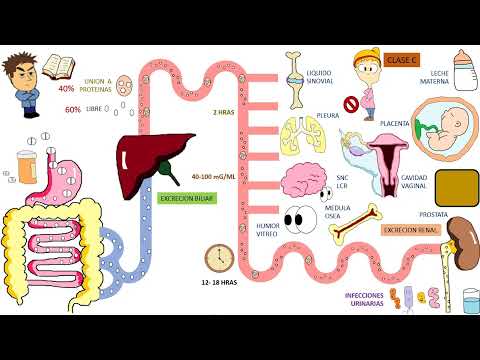
This section explains how trimethoprim with sulfamethoxazole is absorbed through oral ingestion, passes through the liver, and gets distributed throughout the body via blood vessels.
- Trimethoprim with sulfamethoxazole is well absorbed in the intestines after oral ingestion.
- The medication is distributed to various tissues through blood vessels, with 40% bound to proteins and 60% as a free fraction.
- The medication reaches therapeutic concentrations in the body within 2 hours of ingestion.
Distribution to Various Tissues
This section discusses the distribution of trimethoprim with sulfamethoxazole to specific tissues, including synovial fluid, pleura, central nervous system, vitreous humor, bone marrow, prostate tissue, and vaginal cavity.
- Trimethoprim with sulfamethoxazole has excellent distribution to various tissues in the body.
- It can reach synovial fluid, pleura, central nervous system (including cerebrospinal fluid), vitreous humor in the eye, bone marrow, prostate tissue, and vaginal cavity.
Elimination and Therapeutic Effects
This section explains that trimethoprim with sulfamethoxazole is primarily eliminated through renal excretion. It also mentions that its therapeutic effects last approximately 12 to 18 hours.
- Trimethoprim with sulfamethoxazole is mainly eliminated through renal excretion.
- Its therapeutic effects last for about 12 to 18 hours in the human body.
- The medication should not be given to pregnant women due to its classification as a class C drug.
Urinary Tract Infections and Crystal Formation
This section discusses how trimethoprim with sulfamethoxazole can be used for urinary tract infections but may lead to crystal formation and potential kidney stone formation. Adequate water intake is recommended to minimize this risk.
- Trimethoprim with sulfamethoxazole is an excellent option for urinary tract infections.
- However, it may generate crystals that can contribute to kidney stone formation.
- Adequate water intake is crucial to minimize the risk of crystal formation.
Usage and Indications
This section mentions that trimethoprim with sulfamethoxazole is effective against both gram-negative and gram-positive bacteria. It also highlights its use in urinary tract infections, parasitic infections, pneumonia, inflammatory bowel diseases, and chlamydia.
- Trimethoprim with sulfamethoxazole is effective against both gram-negative and gram-positive bacteria.
- It can be used for urinary tract infections, parasitic infections (such as toxoplasmosis and malaria caused by Plasmodium falciparum), pneumonia, inflammatory bowel diseases (e.g., Crohn's disease), and chlamydia.
Other Uses of Sulfamethoxazole
This section briefly mentions other uses of sulfamethoxazole in treating pneumocystis pneumonia and certain parasitic infections.
- Sulfamethoxazole can be used to treat pneumocystis pneumonia, certain parasitic infections (e.g., caused by Toxoplasma gondii), and some sexually transmitted diseases like chlamydia.
Mechanism of Action and Resistance
This section discusses the mechanism of action and resistance of trimethoprim with sulfamethoxazole.
Mechanism of Action
- Trimethoprim with sulfamethoxazole increases concentrations and ensures the biochemical cascade that leads to the formation of various types of DNA.
- Many bacteria form circular DNA sequences called plasmids, which are involved in low-affinity product formation.
Resistance Mechanisms
- Bacteria can develop defense mechanisms and resistance, especially when patients have overused or not completed the antibiotic treatment regimen.
- Premature discontinuation of antibiotic treatment can lead to bacterial resistance.
- Antibiotic resistance is a serious problem in current times.
Receptors and Efflux Pumps
This section explains how receptors and efflux pumps contribute to the mechanism of action and resistance.
Receptors with Low Affinity
- Some receptors have low affinity for the medication but high affinity for the nutritional precursor, ensuring their biochemical cascade for more copies and DNA production.
Efflux Pumps
- Certain bacteria, like Pseudomonas aeruginosa, have developed efflux pumps that expel antibiotics from their structure, preventing them from acting effectively.
Absorption and Distribution
This section describes the absorption, distribution, and utilization of trimethoprim with sulfamethoxazole in the body.
Absorption Process
- The medication is ingested orally and well absorbed in both the small intestine and large intestine after being fragmented by stomach acid.
- It then enters circulation through the portal system after undergoing first-pass metabolism in the liver.
Distribution in Tissues
- The medication is transported to all tissues via the bloodstream, with 40% bound to proteins (especially albumin) and 60% as free fraction.
- Trimethoprim with sulfamethoxazole reaches therapeutic concentrations in various tissues, including synovial fluid, pleura, central nervous system, cerebrospinal fluid, bone marrow, prostate tissue, and vaginal cavity.
Duration of Action
- The therapeutic effects of trimethoprim with sulfamethoxazole last approximately 12 to 18 hours in the body.
- The medication can be present in breast milk but should not be given to pregnant women due to its classification as a class C drug.
Renal Elimination and Urinary Tract Infections
This section discusses the renal elimination of trimethoprim with sulfamethoxazole and its use in urinary tract infections.
Renal Elimination
- Trimethoprim with sulfamethoxazole is primarily eliminated via the kidneys in its active form.
- This makes it an excellent option for treating urinary tract infections as it remains active when excreted through the ureter into the bladder and urethra.
Risk of Crystal Formation
- However, prolonged use of this medication can lead to crystal formation and potentially kidney stones.
- To minimize this risk, patients are advised to consume abundant water while taking the medication.
Uses and Indications
This section highlights the common uses and indications for trimethoprim with sulfamethoxazole.
Effectiveness Against Bacteria
- Trimethoprim with sulfamethoxazole is effective against both gram-negative and gram-positive bacteria.
- It is particularly useful for combating certain pathogens causing urinary tract infections.
Other Uses
- It is also used for parasitic infections caused by Toxoplasma and Plasmodium falciparum.
- Additionally, it can be effective against pneumonia and inflammatory bowel diseases.
The transcript is not in English, but the summary has been provided in English as requested.
Antibiotics and the Importance of Trimethoprim with Sulfamethoxazole
In this section, we will discuss the importance and usage of trimethoprim with sulfamethoxazole as an antibiotic in clinical practice. We will explore its pharmacological properties and how it inhibits bacterial replication by targeting folate synthesis.
Trimethoprim and Folate Synthesis
- Bacteria require folate for replication and maintenance of internal structures.
- The bacteria's DNA serves as the command center for toxin production, nutrient formation, and host invasion.
- To prevent bacterial multiplication, we need to inhibit the formation and maintenance of bacterial DNA.
- Folate is a crucial nutrient for bacterial DNA replication.
Inhibiting Folate Synthesis
- The precursor nutrient for bacterial DNA formation is para-aminobenzoic acid (PABA).
- PABA needs to be converted into dihydrofolic acid through a series of enzymatic reactions.
- Trimethoprim acts by blocking the enzyme dihydrofolate reductase, preventing the conversion of dihydrofolic acid into tetrahydrofolic acid.
- Tetrahydrofolic acid is essential for purine and pyrimidine synthesis, which are building blocks for new DNA strands.
Mechanism of Action
- Trimethoprim belongs to a group called sulfonamides that bind to the same enzyme as PABA.
- By binding to dihydrofolate reductase, trimethoprim prevents the conversion of PABA into tetrahydrofolic acid.
- This blockade disrupts the biochemical cascade necessary for DNA formation in bacteria.
Impact on Bacterial Growth
- Without functional enzymes involved in folate synthesis, bacteria cannot form new DNA strands or maintain existing ones.
- This leads to inhibition of bacterial replication and destabilization of existing bacterial DNA.
- Trimethoprim acts as a bactericidal agent by preventing the biochemical support required for DNA synthesis.
Resistance and Future Considerations
- Bacteria can develop resistance over time, finding alternative pathways for DNA formation or overproducing precursors.
- Understanding the mechanisms of action and potential resistance is crucial in clinical practice.
Importance of Folate in Bacterial Replication
This section highlights the significance of folate in bacterial replication and how it serves as a target for antibiotics like trimethoprim with sulfamethoxazole.
Role of Folate in Bacterial Replication
- Bacteria require folate as a nutrient for their replication process.
- Folate is essential for the formation of new bacterial walls, cytoplasm, ribosomes, toxins, and DNA.
- The DNA within bacteria acts as the command center, dictating toxin production, nutrient formation, host targeting, and invasion strategies.
Targeting Folate Synthesis
- Inhibiting folate synthesis disrupts bacterial replication.
- Para-aminobenzoic acid (PABA) is a precursor nutrient that bacteria convert into dihydrofolic acid to form new DNA strands.
Mechanism of Action
- Trimethoprim with sulfamethoxazole inhibits dihydrofolate reductase enzyme activity.
- This prevents the conversion of PABA into dihydrofolic acid and subsequently tetrahydrofolic acid.
Impact on Bacterial Growth
- By blocking folate synthesis, trimethoprim with sulfamethoxazole hinders purine and pyrimidine synthesis necessary for new DNA strands.
- This leads to inhibition of bacterial growth and multiplication.
Resistance Development
- Over time, bacteria may develop resistance mechanisms such as alternative pathways or overproduction of precursors.
- Understanding resistance patterns is crucial for effective antibiotic use.
Inhibition of Folate Synthesis by Trimethoprim
This section focuses on the specific role of trimethoprim in inhibiting folate synthesis and its impact on bacterial DNA formation.
Role of Trimethoprim
- Trimethoprim belongs to a chemical group called trimethoprim-sulfamethoxazole.
- It acts as an inhibitor in the biochemical cascade required for bacterial DNA formation.
Blocking Dihydrofolate Reductase
- Trimethoprim binds to dihydrofolate reductase, preventing the conversion of dihydrofolic acid into tetrahydrofolic acid.
Impact on Bacterial DNA Formation
- Without tetrahydrofolic acid, bacteria cannot form purines and pyrimidines necessary for new DNA strands.
- This disrupts the replication process and prevents the formation of new bacterial DNA.
Antibacterial Activity
- By inhibiting folate synthesis, trimethoprim acts as a bactericidal agent, destroying existing bacteria and preventing their multiplication.
Mechanism of Action of Sulfamethoxazole with Trimethoprim
This section explores how sulfamethoxazole works in conjunction with trimethoprim to inhibit bacterial replication by targeting folate synthesis.
Role of Sulfamethoxazole
- Sulfamethoxazole is part of the trimethoprim-sulfamethoxazole group.
- It plays a crucial role in blocking folate synthesis alongside trimethoprim.
Structural Similarity to PABA
- Sulfonamides like sulfamethoxazole structurally resemble para-aminobenzoic acid (PABA).
- This similarity allows sulfamethoxazole to bind to the same receptor as PABA.
Inhibition of Dihydrofolate Synthetase
- By binding to dihydrofolate synthetase, sulfamethoxazole prevents the conversion of PABA into dihydrofolic acid.
Impact on Bacterial DNA Formation
- The blockade of dihydrofolate synthetase disrupts the biochemical cascade necessary for bacterial DNA formation.
- Without functional enzymes involved in folate synthesis, bacteria cannot form new DNA strands or maintain existing ones.
Antibacterial Activity
- Sulfamethoxazole, along with trimethoprim, acts as a bactericidal agent by inhibiting folate synthesis and preventing bacterial replication.
Trimethoprim and Sulfamethoxazole in Bacterial Replication
This section discusses how trimethoprim with sulfamethoxazole acts in the biochemical cascade of bacterial
Antibiotics and the Importance of Trimethoprim with Sulfamethoxazole
In this section, the speaker discusses the importance of antibiotics in clinical practice, specifically focusing on trimethoprim with sulfamethoxazole as one of the most commonly used antibiotics. The discussion revolves around the role of folate synthesis inhibitors in bacterial replication and the need to inhibit certain enzymes involved in DNA formation.
Importance of Folate for Bacterial Replication
- Bacteria require folate as a nutrient for their replication and maintenance.
- Folate is essential for forming new bacterial walls, cytoplasm, ribosomes, toxins, and DNA.
- The DNA within bacteria acts as a command center, determining toxin production, nutrient formation, host targeting, and invasion.
Role of Enzymes in DNA Formation
- Enzymes are necessary for bacterial multiplication by facilitating biochemical processes.
- One important precursor nutrient for bacterial DNA formation is p-aminobenzoic acid (PABA).
- PABA needs to be converted into dihydrofolic acid through an enzyme called dihydropteroate synthetase.
- Dihydrofolic acid then further converts into tetrahydrofolic acid with the help of another enzyme called dihydrofolate reductase.
- Tetrahydrofolic acid is crucial for forming purines and pyrimidines that make up new DNA strands.
Inhibiting Enzymes with Trimethoprim-Sulfamethoxazole
- Trimethoprim belongs to a group called dihydrofolate reductase inhibitors.
- It blocks the action of dihydrofolate reductase enzyme responsible for converting dihydrofolic acid into tetrahydrofolic acid.
- Sulfamethoxazole belongs to a group called sulfonamides, which structurally resemble PABA.
- Sulfamethoxazole competes with PABA for binding to dihydropteroate synthetase, preventing the conversion of PABA into dihydrofolic acid.
- By inhibiting these enzymes, trimethoprim-sulfamethoxazole disrupts the biochemical cascade necessary for bacterial DNA formation.
Mechanism of Action and Resistance
- Trimethoprim-sulfamethoxazole acts as a bactericidal agent by destroying existing bacteria and preventing new bacterial growth.
- It hinders the synthesis of DNA by blocking precursor nutrients and destabilizing existing DNA in invading bacteria.
- Over time, bacteria can develop resistance mechanisms such as alternative pathways for DNA formation or overproduction of precursors.
Importancia de los Antibióticos y el Folato en la Replicación Bacteriana
En esta sección, el hablante discute la importancia de los antibióticos en la práctica clínica, centrándose específicamente en el trimetroprim con sulfametoxazol como uno de los antibióticos más utilizados. La discusión se enfoca en el papel de los inhibidores de síntesis de folato en la replicación bacteriana y la necesidad de inhibir ciertas enzimas involucradas en la formación del ADN.
Importancia del Folato para la Replicación Bacteriana
- Las bacterias requieren folato como nutriente para su replicación y mantenimiento.
- El folato es esencial para formar nuevas paredes bacterianas, citoplasma, ribosomas, toxinas y ADN.
- El ADN dentro de las bacterias actúa como un centro de mando, determinando la producción de toxinas, formación de nutrientes, selección del huésped e invasión.
Papel de las Enzimas en la Formación del ADN
- Las enzimas son necesarias para la multiplicación bacteriana al facilitar procesos bioquímicos.
- Uno de los precursores nutricionales importantes para la formación del ADN bacteriano es el ácido p-aminobenzoico (PABA).
- El PABA necesita convertirse en ácido dihidrofólico a través de una enzima llamada dihidropteroato sintetasa.
- El ácido dihidrofólico se convierte posteriormente en ácido tetrahidrofólico con la ayuda de otra enzima llamada dihidrofolato reductasa.
- El ácido tetrahidrofólico es crucial para formar purinas y pirimidinas que componen las nuevas cadenas de ADN.
Inhibición de Enzimas con Trimetroprim-Sulfametoxazol
- El trimetroprim pertenece a un grupo llamado inhibidores de la dihidrofolato reductasa.
- Bloquea la acción de la enzima dihidrofolato reductasa responsable de convertir el ácido dihidrofólico en ácido tetrahidrofólico.
- La sulfametoxazol pertenece a un grupo llamado sulfonamidas, que se parecen estructuralmente al PABA.
- La sulfametoxazol compite con el PABA por unirse a la dihidropteroato sintetasa, impidiendo así la conversión del PABA en ácido dihidrofólico.
- Al inhibir estas enzimas, el trimetroprim-sulfametoxazol interrumpe la cascada bioquímica necesaria para la formación del ADN bacteriano.
Mecanismo de Acción y Resistencia
- El trimetroprim-sulfametoxazol actúa como un agente bactericida al destruir las bacterias existentes y prevenir el crecimiento de nuevas bacterias.
- Obstaculiza la síntesis del ADN al bloquear los nutrientes precursores y desestabilizar el ADN existente en las bacterias invasoras.
- Con el tiempo, las bacterias pueden desarrollar mecanismos de resistencia, como vías alternativas para la formación del ADN o sobreproducción de precursores.
Sintetasa para volar
This section discusses the use of a synthase to enable flight.
Synthase for Flight
- A synthase is used to allow flying.
- The specific details and context are not provided in the transcript.
Effects of Medications on Transporters
This section explains how certain medications can affect transporters.
Effects of Warfarin, Sulfonylureas, and Antiepileptics
- Warfarin, sulfonylureas, and antiepileptics can lower transporter levels.
- These medications bind to proteins but trimethoprim can displace them from the protein.
- As a result, the free fraction of these medications increases, leading to a higher risk of intoxication.
Considerations for Medication Interactions
This section emphasizes the importance of considering medication interactions and adverse effects.
Allergic Reactions and Cross-Reactivity
- Allergic reactions, including anaphylaxis, can occur with sulfas and penicillins.
- It is crucial to inquire about any medication allergies before prescribing antibiotics or antimicrobial treatment.
- Allergic reactions to sulfas can manifest as skin reactions (bronchospasm, dermatitis, papules).
- Severe allergic reactions like Stevens-Johnson syndrome may also occur.
Adverse Reactions and Side Effects
This section highlights various adverse reactions and side effects associated with medications.
Common Adverse Reactions
- Fever, gastrointestinal discomfort (nausea, vomiting, diarrhea), crystalluria (kidney stones), arthritis reactiva can occur.
- It is important to consume abundant fluids while taking these medications to prevent kidney stone formation.
- Rare adverse reactions include aplastic anemia and decreased bone marrow function, leading to thrombocytopenia (low platelet count) and anemia.
Allergic Reactions and Inflammation
This section discusses the potential for allergic reactions and inflammation with trimethoprim.
Inflammation of the Liver
- Trimethoprim can cause liver inflammation in susceptible individuals.
- Immediate discontinuation of the medication is necessary if liver inflammation occurs.
- Alternative antibiotics should be considered.
Conclusion
These notes provide a summary of the transcript, highlighting key points related to synthase for flight, effects of medications on transporters, considerations for medication interactions, adverse reactions, and allergic reactions.