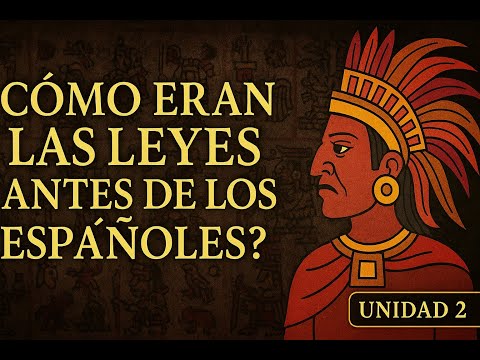
Historia del Derecho Mexicano: El Derecho Prehispánico y su Legado | Unidad 2 explicada paso a paso
Introduction to Prehispanic Mexican Law
Overview of Prehispanic Legal Systems
- The prehispanic legal system in Mexico was a complex network of norms established by indigenous peoples long before European contact, deeply rooted in their worldview.
- For the Mexicas, law was integral to maintaining cosmic and social balance, reflecting their belief in multiple eras of creation and destruction.
- Leadership within communities like the Calpulli was based on respect and experience rather than modern democratic processes, emphasizing social harmony.
- Each member of the Calpulli had specific obligations and rights, with laws embodied in rituals and oral traditions rather than written codes.
Justice System Structure
- Transgressions were viewed as disruptions affecting the entire community; restoring order was paramount for societal stability.
- Local disputes were resolved by councils of elders or local leaders (Teacau), focusing on quick resolutions through oral procedures aimed at reconciliation.
- Specialized courts existed for commercial disputes, such as those in Tlatelolco, while Tenochtitlán housed higher courts for serious cases overseen by noble judges.
Role of the Tlatoani
Authority and Governance
- The Tlatoani held a multifaceted role combining political, military, and religious authority; his power was absolute but checked by institutional frameworks.
- Nobles faced stricter penalties under the law; crimes like theft had varying consequences based on severity—minor theft could lead to restitution while severe offenses could result in death.
Nature of Punishments
- Adultery was severely punished with death for both parties involved; intent behind actions influenced sentencing significantly within this legal framework.
- Violating laws represented not just societal crime but also a challenge to divine order; thus, punishments aimed at community purification rather than rehabilitation.
Philosophical Foundations of Law
Justice as Sacred Responsibility
- The exercise of power among Mexica rulers was seen as a sacred duty rather than arbitrary control; justice required wisdom and moral integrity from leaders.
- The Tlatocán council played a crucial role in governance decisions, ensuring collective deliberation over significant issues impacting society.
Judicial Processes
- Justice delivery involved public rituals that reinforced communal honor; local judges (Tekuchtli) handled minor conflicts while specialized courts addressed more serious matters.
Education and Legal Knowledge
Educational Institutions
- Legal education began early among Mexica youth through structured institutions like Calmeca for nobles focused on various disciplines including law.
- Practical applications were emphasized alongside theoretical learning through participation in rituals and simulated trials to instill judicial responsibility.
Community Involvement
- Learning about laws occurred through community engagement rather than coercion; ethical understanding formed the basis for legal adherence across generations.
Restorative Justice Principles
Conceptualizing Crime
- Crimes were perceived as threats to communal harmony rather than mere violations against individuals; penalties sought restoration over punishment alone.
Specific Offenses
- Theft varied greatly in consequence depending on context—public market theft led to immediate execution due to its impact on economic stability.
Legacy of Prehispanic Law
Historical Continuity
- Modern Mexican law retains elements from prehispanic systems despite colonial imposition aiming to erase indigenous practices.
Cultural Influence
- Respect for legitimate authority persists today within Mexican society where leaders are expected to derive power from collective consensus.
Conclusion: Reflection on Indigenous Wisdom
Importance Today
- Recognizing ancestral knowledge can enrich contemporary legal systems by integrating restorative principles that prioritize community healing over punitive measures.
Turn any video into a summary like this
YouTube links, meetings, lectures. With transcripts, search, and chat.