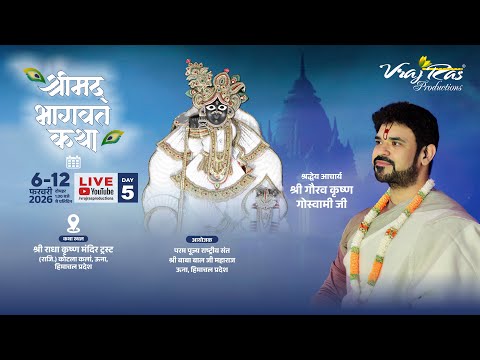
LIVE || Shrimad Bhagwat Katha || Day 5 || Acharya Gaurav Krishna Goswamiji || Una Himachal Pradesh
Shri Banke Bihari Ki Aarti
Introduction to the Aarti
- The session begins with a devotional invocation, expressing reverence towards Krishna and acknowledging the divine essence that is beyond comprehension.
Devotional Songs and Offerings
- The singer expresses devotion through the recitation of "Aarti," dedicated to Shri Banke Bihari, highlighting the beauty and grace of Lord Krishna.
- The lyrics celebrate Krishna's attributes, including his enchanting flute (bansuri), emphasizing a deep emotional connection with the divine.
Divine Presence and Blessings
- The singer seeks blessings from Lord Krishna, referring to him as "Dasa Anath ke Nath," indicating reliance on divine support in both joy and sorrow.
- There is an emphasis on witnessing the divine form of Krishna, showcasing a longing for spiritual connection through visualizing his presence.
Community Worship and Celebrations
- The collective chanting continues with praises for various forms of Krishna, reinforcing community spirit among devotees during worship.
- Multiple deities are honored in succession, reflecting a rich tradition of honoring various aspects of divinity within Hinduism.
Spiritual Guidance and Connection
- A call for all devotees to take their places signifies organized worship while invoking sacred mantras that connect them spiritually to Lord Krishna.
Engaging with Modern Technology
- Information is shared about connecting with spiritual teachings via social media platforms like Facebook and Instagram, encouraging wider participation in devotional activities.
Conclusion: Invitation to Participate in Katha
- An invitation is extended for participants to engage deeply in the upcoming Katha (storytelling), emphasizing its importance in enriching lives through divine narratives.
Celebration of Divine Love and Devotion
The Essence of Radha and Krishna
- The repeated invocation of "प्यारी राधा रानी" and "प्यारो मदन गोपाल" emphasizes the deep love and devotion towards Radha and Krishna, central figures in Hindu spirituality.
- A significant moment is described where devotees felt a divine presence, likening it to being in Gokul, highlighting the importance of spiritual experiences during worship.
- The speaker notes that God is not confined to physical forms but exists in the feelings of devotion (भाव), suggesting that true connection with divinity comes from emotional engagement rather than material representations.
Spiritual Gathering and Blessings
- The gathering is filled with joy as participants express their devotion through songs dedicated to Radha, reinforcing community bonds among devotees.
- References to "बांके बिहारी" illustrate the playful nature of Krishna's persona, inviting attendees to celebrate his divine playfulness alongside Radha's grace.
Expressions of Devotion
- The lyrics reflect a longing for divine connection, using metaphors like "चारों गति चंचल," which suggests an awareness of life's transient nature while seeking eternal love.
- Repeated phrases about life being intertwined with divine essence emphasize how deeply personal faith can be; it becomes a source of vitality for believers.
Importance of Community Worship
- The call for collective chanting ("हरि बोल") signifies the power of communal worship in enhancing spiritual experiences and fostering unity among participants.
- Continuous references to needing support from God ("मेरा कोई ना सहारा बिन तेरे") highlight human vulnerability and reliance on divine grace during challenging times.
Reflection on Sacred Texts
- Mentioning sacred texts like "श्रीमद् भागवत महापुराण" indicates their role in guiding spiritual practices and understanding divine narratives within Hinduism.
- The narrative transitions into recounting stories from these texts, emphasizing their relevance in contemporary worship settings as they connect past teachings with present experiences.
The Infinite Nature of Divine Expression
The Limitless Singing of the Divine
- The Upanishads and Vedas express a sense of exhaustion from singing, yet they feel they have not sung enough. This highlights the infinite nature of divine praise.
- Goddess Saraswati sings from morning until evening, symbolizing the continuous devotion and expression towards the divine. Similarly, Lord Vishnu sings with his thousand mouths throughout the day.
Understanding Infinity in Devotion
- Despite extensive singing, there is a realization that one can never fully encompass or reach the end of divine glory; it is eternal and boundless. The more one sings, the more one feels inadequate in capturing its essence.
- The concept that if something has no beginning (like God), it cannot have an end is emphasized; understanding one's own beginnings helps to grasp this idea better.
Tagore's Reflection on Divine Songs
- Rabindranath Tagore sang around 6000 songs related to God but felt even that was insufficient for expressing God's greatness when he was nearing death. He believed that even 6000 lifetimes would be too few to sing praises adequately.
- Tagore’s perspective reflects a deep humility regarding divine attributes, suggesting that God's qualities are limitless and beyond full comprehension or expression by humans.
Kabir's Unique Insight on Completeness
- Saint Kabir claimed to have attained completeness despite acknowledging God's infinite nature; he suggests that true fulfillment comes from recognizing oneself as part of God rather than separate from Him.
- This notion challenges conventional understanding—Kabir implies that separation leads to incompleteness while unity with God brings wholeness and fulfillment.
Metaphor of Waves in Understanding Unity
- A metaphor involving waves illustrates how individual identity can lead to fear of ending (as waves approach shore) while recognizing oneself as part of a greater whole (the ocean) leads to peace and continuity beyond perceived endings.
- The wave's anxiety about crashing at the shore symbolizes human fears about mortality and separation from divinity; however, those who see themselves as part of God remain untroubled by such thoughts.
Embracing Guidance for Inner Peace
- Distance from God results in unrest and suffering; conversely, embracing spiritual guidance fosters joy even amidst difficulties—this principle assures followers they will find happiness through faith and community support during hardships.
- By aligning life with divine teachings under wise guidance, individuals can experience joy regardless of external circumstances—a promise made confidently by spiritual leaders like Vyasa in Bhagavatam teachings.
Joy Beyond Duality: Nanda & Yashoda's Role
- The narrative shifts focus onto Nanda Baba and Yashoda Ma’s lives filled with joy due to their connection with Krishna—highlighting their significance within spiritual lore where deities choose them over celestial beings for playfulness with Krishna.
- Their past lives reveal deeper connections: Nanda was previously Dronacharya while Yashoda was Dhara, emphasizing their longstanding devotion leading up to their current roles as caretakers of Krishna.
- Their story illustrates how sincere devotion transcends time and manifests into profound relationships with divinity across lifetimes.
- This connection serves as an example for devotees seeking closeness with God through love-filled service rather than mere ritualistic practices.
By structuring these notes chronologically based on timestamps provided in the transcript, readers can easily navigate through key insights while reflecting upon profound philosophical concepts discussed within this discourse on divinity and human experience.
Message to Narada: Seeking Divine Guidance
The Dilemma of Parenthood
- Two individuals approach Narada, expressing their desire for clarity regarding their potential for parenthood. They request that he inquire with the Lord about whether they are destined to have children or not.
- They articulate a practical perspective: if they are meant to have children, they will stay at home; if not, they prefer to engage in devotional practices instead of remaining idle. This reflects a deep understanding of spiritual priorities.
Characteristics of True Devotees
- The discussion emphasizes that true devotees do not insist on specific outcomes from God but seek understanding and acceptance of divine will. A genuine seeker does not complain or demand but rather observes the grace in every situation.
- Citing Tulsidas, it is noted that a devotee's greatest quality is their equanimity—neither rejoicing excessively upon gaining something nor lamenting over loss, recognizing everything as part of divine grace.
Divine Response and Assurance
- Narada conveys the message from God back to the two individuals, affirming that their love and devotion reach Him despite their current circumstances. However, He reveals that there is no destiny for them to have children in this lifetime. Instead, they should focus on worshipping Him diligently during this time.
- God assures them that while they may not have children now, their devotion will yield fruit in future incarnations when they will be reborn as Nanda and Yashoda during the Dvapara Yuga, experiencing divine childhood pastimes with Krishna directly.
The Significance of Nanda Mahotsav
Celebrating Divine Birth
- The narrative transitions into discussing the Nanda Mahotsav (celebration of Nanda's son), highlighting its importance within spiritual texts like Bhagavatam where 18 verses celebrate this event as significant across various Puranas and scriptures. Each verse encapsulates profound meanings attributed to Krishna’s birth and his divine playfulness.
Interpretations by Scholars
- Different scholars interpret these verses variably; some suggest these 18 verses represent insights from all 18 Puranas combined with Bhagavatam itself, emphasizing Krishna's multifaceted nature as both a deity and an embodiment of joy (Ahlad). This interpretation enriches our understanding of Krishna’s significance beyond mere historical context into spiritual realms.
Expressions of Joy Amidst Adversity
Contrasting Celebrations
- While Gokul celebrates exuberantly with music and dance upon Krishna's birth, contrastingly Devaki and Vasudev experience profound joy even amidst confinement in prison—a testament to how true happiness transcends external circumstances through faith and connection with divinity. Their tears reflect deep emotional release tied to witnessing God's presence directly rather than merely hearing about it through others' experiences.
The Nature of Divine Experience
- Vasudev expresses gratitude for witnessing Krishna firsthand rather than just conceptualizing His glory through meditation or hearsay—highlighting how fortunate he feels compared to yogis who only glimpse such divinity through intense practice without direct interaction or realization.
This moment underscores the unique relationship between devotees and God characterized by personal encounters filled with emotion rather than abstract beliefs alone.
Brahma Jyoti and Devotional Insights
The Nature of Divine Experience
- The speaker discusses a verse sung by Devaki, expressing her prayer to the Lord. This contrasts with Vasudev's earlier prayer, emphasizing personal experience over mere knowledge.
- It is highlighted that a devotee's thirst for divine connection cannot be quenched through contemplation alone; true fulfillment comes from direct vision of the divine.
- The concept of 'avyakt' (unmanifested) is explained, noting that while God may appear for yogis as formless, He manifests in a beautiful form for devotees.
Light in Darkness
- Devaki describes the arrival of the Lord as illuminating their dark prison cell, likening His presence to a lamp dispelling darkness.
- The transformation brought by God's presence is likened to countless moons shining brightly in the previously dark environment.
The Role of Devotion
- Emphasis is placed on how devotion allows God to manifest; without sincere feelings from devotees, divine presence remains hidden.
- A discussion on how idols or images do not inherently possess divinity unless infused with the devotee's heartfelt emotions.
Divine Manifestation Through Emotion
- The speaker asserts that it is the devotee’s emotion that brings forth God into an idol; thus, worship must stem from genuine feeling rather than ritualistic actions alone.
- In their temple, they believe that their spiritual leader’s essence resides within their deities due to deep emotional connections established through devotion.
Historical Context and Personal Anecdotes
- Reference is made to historical figures like Goswami Vitthalnath who viewed Krishna as their child and engaged deeply in devotional practices.
- An anecdote about Vitthalnath highlights his humility and generosity when interacting with others in his community, showcasing his character as a devoted servant of God.
Lessons from Goswami Vitthalnath's Life
- A story illustrates how Vitthalnath interacted with a local vendor (kachharin), demonstrating kindness and integrity while addressing issues of honesty within transactions.
- This narrative serves as an example of how genuine devotion can manifest in everyday interactions and moral conduct.
The Divine Encounter and Its Implications
The Dream of Goswami Vitthalnath
- Goswami Ji recounts an experience where he adorned the eighth bride with bangles, emphasizing that he did not lie about this act.
- In a dream, Goswami Ji encounters the divine couple Priya and Pritam, who express their displeasure regarding his claim of having seven sons.
- The divine couple reveals that if he has seven sons, then Radha Rani is indeed his daughter-in-law, highlighting a deeper connection.
Realization and Search for Truth
- Upon realizing the truth about the bangle seller being none other than Radha Rani herself, Goswami Ji wakes up in urgency to find her.
- He reflects on how even if devotees forget their commitments to God, God never forgets theirs; emphasizing the importance of maintaining a relationship with the divine.
Devotional Expressions
- A heartfelt devotional song is introduced that expresses longing for Radha Rani's presence and blessings.
- The lyrics convey deep devotion and yearning for spiritual connection through Radha's feet dust.
Humility Before Divinity
- The speaker acknowledges their unworthiness compared to God's grace but still seeks a drop of mercy from Radha Rani.
- They express a desire for even a single drop of grace to bloom their heart like a flower.
Reflection on Divine Grace
- There’s an acknowledgment of human flaws contrasted with God's infinite capacity for forgiveness and compassion.
- The speaker recognizes their shortcomings yet finds strength in knowing that God's mercy surpasses human failings.
Understanding Divine Relationships
- A discussion unfolds about feeling unworthy due to pride but finding solace in God's ability to forgive even those deemed lowly or sinful.
- Emphasizing that despite one's faults, they can still approach God because His compassion extends beyond human limitations.
This structured summary captures key moments from the transcript while providing insights into themes such as divine relationships, humility before God, and expressions of devotion. Each bullet point links back to specific timestamps for easy reference.
Devotional Expressions and Narratives in Bhakti
The Essence of Devotion
- The lyrics express a deep yearning for divine connection, emphasizing the importance of Radha's presence and her feet as a source of grace.
- A singular desire is highlighted throughout the verses, showcasing the devotion towards Radha as central to life’s aspirations.
- The speaker acknowledges their unworthiness but seeks to be made worthy through divine grace, illustrating humility in devotion.
Themes of Divine Presence
- Repeated affirmations of Radha's presence signify an intense longing and emotional connection with the divine.
- The mention of dust from Radha's feet symbolizes purity and reverence, indicating that even the smallest connection to divinity is cherished.
Transformation Through Devotion
- There is a belief that mere contact with Radha can change one's destiny, reflecting the transformative power attributed to divine love.
- The narrative suggests that true devotion can lead to profound changes in one’s fate, reinforcing faith in spiritual practices.
Celebrating Divine Leelas
- Transitioning into stories from Krishna's childhood, there is an emphasis on celebrating divine pastimes (Leelas), particularly during festive occasions like Nandotsav.
- References are made to significant events such as Putana’s arrival during Krishna's early life, linking these tales back to themes of good versus evil.
Symbolism and Mythological Context
- Putana represents ignorance or impurity; her character serves as a metaphor for obstacles faced by devotees on their spiritual journey.
- The narrative contrasts purity against impurity within mythological contexts, highlighting how divine intervention protects innocence.
This structured summary captures key insights from the transcript while maintaining clarity and coherence. Each bullet point links directly to its corresponding timestamp for easy reference.
The Festival of Chhath Puja and the Arrival of Putana
Gathering at Nand Bhavan
- The festival of Chhath Puja is in full swing, with a large crowd gathering inside Maharaj Nand Bhavan.
- Devotees, including gopis and cowherd boys, are eagerly hoping for a glimpse of the divine figure, Banke Bihari.
Putana's Disguise
- To avoid detection as a demoness, Putana cleverly disguises herself as a gopi by adorning traditional attire.
- Observers mistake her for an enchanting goddess rather than recognizing her true identity as a demoness.
Encounter with Yashoda
- Upon entering the inner sanctum where baby Krishna is resting, Putana approaches Yashoda to see the child.
- She fabricates a story about returning from her maternal home to gain Yashoda's trust and permission to hold Krishna.
Trusting Nature of Yashoda
- Yashoda naively accepts Putana’s deceitful words and hands over baby Krishna without suspicion.
- This act symbolizes the selfless nature of devotion; true joy comes from sharing love rather than hoarding it.
Divine Interaction
- As soon as Krishna is placed in Putana's lap, he closes his eyes—a significant moment described by Sukadeva in Bhagavatam.
- This gesture indicates that while Krishna grants liberation and his touch to Putana, he intentionally avoids meeting her gaze.
Symbolism Behind Closed Eyes
- The closing of Krishna's eyes signifies that he perceives Putana as ignorance (avidya), contrasting with his embodiment of knowledge (vidya).
- Scholars interpret this action as an acknowledgment that ignorance cannot withstand the presence of knowledge; thus, if seen by him, she might flee before receiving salvation.
Playfulness in Divine Actions
- Another interpretation suggests that Krishna’s closed eyes reflect playful innocence akin to how children react when frightened—by shutting their eyes.
- This behavior illustrates how even divine beings engage in playful acts during their earthly pastimes.
Contemplation on Past Lives
- There’s also speculation that Krishna may be reflecting on Putana’s past actions while keeping his eyes shut—pondering what merit led her here today.
This structured summary captures key moments from the transcript related to Chhath Puja and the narrative surrounding Putana's encounter with baby Krishna. Each bullet point links back to specific timestamps for easy reference.
The Nature of Devotion and Liberation
The Case of Putana
- The Lord granted vision to Putana but withheld devotion, indicating that despite her deceptive approach, she did not receive the true essence of bhakti (devotion).
- God emphasizes that those who come to Him with sincerity and without deceit are blessed with devotion, while those like Putana, who approached with malice, do not receive it.
Divine Interactions
- The narrative describes how Putana attempted to nurse Krishna while concealing poison in her breast, showcasing her malicious intent despite appearing as a nurturing figure.
- Sukadeva Goswami vividly illustrates this scene, emphasizing the tension between divine innocence and demonic intentions during the act of nursing.
Transformation Through Divine Grace
- As Krishna refuses to drink from Putana's poisoned breast, it is suggested that He embodies both anger and compassion; His refusal symbolizes a rejection of evil.
- When the poison begins to leave Putana’s body, she reverts back to her true demonic form amidst panic as she realizes her impending doom.
The Nature of Attachment
- In desperation, Putana pleads for Krishna to let her go. However, Krishna responds by stating that if she intended to capture Him only to release Him later, then such behavior is typical of worldly attachments.
- This interaction highlights a profound truth about divine relationships: once one is embraced by God (Krishna), they are never truly released.
Understanding Liberation
- Chaitanya Mahaprabhu explains the difference between souls and God: beings who grasp out of selfishness will eventually let go; however, God holds on eternally once He embraces someone.
- This principle underscores God's unwavering commitment compared to human tendencies towards attachment and detachment.
Conclusion on Liberation
- Despite being a source of poison and death for others (like Putana), Krishna ultimately grants liberation at the end of her life journey.
- This paradoxical mercy reflects God's nature—He offers salvation even when faced with malevolence.
The Redemption of Putana
The Encounter with the Guardians of Golok
- Putana, who was previously a jewel necklace in her past life, is now reborn as a demoness. Upon reaching Golok, she is confronted by the guardians who recognize her as the one who poisoned their Lord.
- Overcome with emotion, Putana admits to her heinous crimes and acknowledges that she has committed great sins against God by administering poison.
Plea for Mercy
- As she recalls the moment when her life was fading away, she shares how Govind called her "mother," pleading for her to be allowed into Golok despite her past actions.
- She emphasizes the unparalleled compassion of Lord Banke Bihari, suggesting that even those who have sinned can receive mercy if they approach Him with love.
The Story of Taanavart
- A fierce demon named Taanavart appears as a storm and attempts to abduct Krishna from Yashoda's lap but fails due to Krishna's divine weight.
- The narrative highlights that while many can lift Krishna temporarily, only true devotees can sustain His presence; this illustrates the depth of devotion required.
Divine Intervention and Naming Ceremony
- Krishna ultimately defeats Taanavart by throwing him down onto a large stone, leading to his demise amidst celestial celebrations.
- Following this victory, Gargacharya arrives for the naming ceremony of both brothers at Nand Baba's request. He performs rituals invoking Ganesh before bestowing names upon them.
Significance of Names
- The first name given is "Bala" for Balarama due to his immense strength. Gargacharya explains that he will bring joy and bliss to others, hence he is also named "Ram."
- Both names are combined into "Balram," symbolizing strength and joy. Additionally, another name "Sankarsan" is given due to his transfer from Devaki’s womb to Rohini’s.
The Charm of Krishna
- Nand Baba expresses affection towards his younger son and requests Gargacharya to name him. Gargacharya finds it difficult due to Krishna's captivating nature.
- He notes that anyone who sees Krishna cannot help but fall in love with Him; thus emphasizing Krishna's irresistible charm and beauty.
Eternal Avatars
- Gargacharya reveals that Krishna has countless incarnations throughout ages which cannot be counted like stars or grains of sand on Earth.
- He concludes by naming him "Krishna," which means 'the dark one,' highlighting His unique identity among all avatars.
Krsna's Name and Its Significance
The Meaning of Krsna
- The term "Krsna" has multiple meanings, including the one who attracts or pulls towards oneself. It signifies a divine force that draws devotees in.
- The act of calling out to Krsna is described as an irresistible pull, indicating the deep connection between the devotee and the divine.
The Story of Yashoda and Rohini
- A narrative unfolds about Yashoda and Rohini, who are returning from a naming ceremony at the cow shed while discussing their children.
- Yashoda expresses her difficulty in pronouncing Krsna's name correctly, finding it challenging compared to other names like Ram.
Pronunciation Challenges
- There’s humor in how saying "Krsna" can feel awkward; even standing before a mirror can reveal this challenge.
- A comparison is made between saying "Ram," which flows easily, versus "Krsna," which may cause one's mouth to twist due to its complexity.
Anecdote About a Saint's Kirtan
- An anecdote describes a saint leading a kirtan where he alternates singing lines with villagers—he sings Ram while they sing Krsna.
- After two hours of kirtan, villagers request to sing only Hindi names while leaving Sanskrit names for the saint due to pronunciation difficulties.
Names Given by Mothers
- Yashoda and Rohini decide on unique names for their children: Kanua and Balua, reflecting personal affection despite any formal naming conventions.
- Emphasis is placed on not differentiating between divine names; all are sacred regardless of personal preference or ease of pronunciation.
Importance of Name in Devotion
- Ten offenses related to chanting names are mentioned, particularly emphasizing that one should not discriminate against different divine names.
- A prayer highlights that without invoking God's name (like Ram), life feels incomplete; thus stressing the importance of devotion through sound.
This structured summary captures key insights from the transcript regarding the significance of Krsna's name, challenges faced by devotees in pronunciation, anecdotes illustrating these themes, and broader reflections on devotion.
The Essence of Devotion in Bhakti
The Importance of Divine Presence
- The lyrics emphasize that beauty and worth are diminished without the presence of God, specifically mentioning "Ram" and "Shyam."
- It reiterates that even adornments like kohl (kajal) lose their significance without divine connection.
- The phrase "without the Lord's vision, nothing is beautiful" highlights the necessity of spiritual sight for true appreciation.
- Acknowledges that worldly experiences are meaningless without divine presence, reinforcing a theme of longing for God.
- Suggests that even countless births are insignificant if one does not attain a connection with the divine.
Celebrating Divine Playfulness
- Expresses devotion through repetitive chants, emphasizing the importance of remembering God in daily life.
- Highlights Krishna's playful nature as he steals butter (makkhan), symbolizing joy and love in devotion.
- Discusses how devotees often complain about God's absence when He doesn't engage in His playful acts, showcasing human emotions tied to divine interactions.
- Reflecting on how complaints from devotees can be seen as expressions of love rather than genuine grievances against God’s actions.
Understanding Divine Love Through Stories
- Narrates stories from Krishna's childhood, illustrating his mischievous nature while also highlighting his role as a protector and beloved figure among devotees.
- Emphasizes that Krishna’s playful acts serve to deepen the bond between Him and His followers, making them feel cherished despite any mischief.
- Mentions how these stories contribute to understanding Krishna's character beyond mere divinity; they reveal His relatability and charm.
Conclusion: The Role of Devotion in Daily Life
- Concludes by stressing that devotion should permeate all aspects of life—eating, drinking, or simply existing—encouraging constant remembrance of God.
- Encourages practitioners to embrace their faith actively through rituals and personal connections with the divine.
The Sweet Complaints of the Gopis
The Nature of Gopi Complaints
- The gopis express their love for Krishna through sweet complaints, highlighting their deep emotional connection with Him.
- One gopi complains to Yashoda about Krishna visiting their homes and freeing calves from their pens, which disrupts their daily routines.
- The complaint emphasizes that when Krishna releases the calves, it leads to a shortage of milk for them, causing distress during milking time.
Spiritual Significance of Complaints
- The gopis' grievances reflect deeper spiritual truths; they symbolize the soul's struggle for liberation and the challenges faced in achieving it.
- Their complaints suggest that even if one is not ready for liberation, divine grace can still lead to freedom when one surrenders to God.
Understanding Butter as a Metaphor
- Butter (makkhan) represents the pure heart of a devotee; understanding this requires recognizing that the body (matki) is merely a vessel.
- Just as butter comes from milk stored in pots, true devotion arises from within one's heart rather than external appearances.
The Essence of Devotion
- A devotee's heart is likened to butter; worldly attachments are seen as poison. Only when one's mind focuses on God does it transform into pure devotion.
- Ramji emphasizes that only those with a pure heart can attain Him, reinforcing the importance of inner purity over outward appearances.
Divine Playfulness and Liberation
- Further stories illustrate Krishna's playful nature and His ability to liberate souls through His divine pastimes.
- An anecdote about Krishna being tied up by Yashoda highlights His endearing qualities and how He earned the name Damodar due to this incident.
Overcoming Obstacles
- Narratives include various demons defeated by Krishna, symbolizing obstacles in spiritual progress. Each victory signifies overcoming ignorance and illusion.
- Brahma’s confusion regarding Krishna’s identity showcases how divine play can transcend human understanding and lead to enlightenment.
Understanding Brahma's Devotion and Praise
Brahma's Realization and Praise of God
- Brahma Ji realizes the divine play (Leela) and praises God through verses from the Srimad Bhagavatam, expressing his devotion.
- He emphasizes that while he offers salutations, he also acknowledges his role in singing God's glories, recognizing that only God is worthy of praise.
- Brahma reflects on human flaws, stating that people are filled with faults but God possesses infinite virtues, urging listeners to focus on divine qualities rather than their own shortcomings.
The Nature of God
- Brahma describes God's form as extraordinary, comparing Him to dark rain clouds filled with water, symbolizing abundance and grace.
- He refers to God as "Megh Shyam" or "Ghan Shyam," indicating His beautiful dark complexion akin to a rain cloud.
Divine Grace and Equality
- Brahma highlights that just like rain clouds do not discriminate when showering blessings, God bestows grace equally upon all who approach Him sincerely.
The Pastimes in Vrindavan
- As Krishna enters his childhood phase (Pauganda), significant events unfold including the expulsion of Kaliya from Yamuna and purification of its waters.
- The Gopis sing various songs during this time; the first being the Venu Geet which captures Krishna's enchanting flute music.
Worshipping Katyayani Devi
- The Gopis worship Katyayani Devi during Margashirsha month seeking blessings for union with Krishna instead of worldly desires.
- They express their wish for Krishna to be their husband through sincere prayers without asking for material wealth.
Krishna’s Assurance to Gopis
- Krishna reassures the Gopis about future meetings through divine plays (Leelas), promising them a grand experience in Ras Leela.
Indra's Pride and Its Correction
- Nand Baba prepares for a grand feast in honor of Indra but is unaware that true divinity resides among them—Krishna Himself.
- Krishna points out Indra’s arrogance by reminding everyone that they should worship Him instead since He is the ultimate deity present there.
Lessons on Karma
- Through these interactions, Krishna aims to dismantle the pride of deities like Indra by teaching lessons about karma—emphasizing that actions determine one's fate rather than mere worship.
Understanding the Role of Karma in Life
The Nature of Suffering and Joy
- The speaker emphasizes that everyone experiences the consequences of their actions, stating that both joy and suffering stem from one's own karma.
- It is highlighted that good deeds lead to happiness, while bad actions result in suffering, regardless of rituals performed.
- Life is described as a balance between happiness and sorrow, akin to a rose bush filled with thorns; one must endure both aspects.
Transition from Indra's Worship to Giriraj Puja
- The discussion shifts to the transition from worshipping Indra to honoring Giriraj (Govardhan Hill), emphasizing that true worship should be directed towards God rather than prideful deities like Indra.
- The speaker argues that worship should focus on humility and devotion towards God, contrasting it with the arrogance associated with Indra.
Importance of Spiritual Gatherings
- A reminder is given about the ongoing spiritual gathering (katha), encouraging attendees to participate actively for blessings and insights.
- The presence of saints during these gatherings enhances their significance, making them more fruitful for participants.
Upcoming Events in Katha
- An announcement is made regarding upcoming stories related to Lord Krishna’s life, specifically mentioning Sudaama's character and other beautiful tales.
Devotional Practices
- Participants are encouraged to engage in devotional singing as they prepare for circumambulating Giriraj Ji, reinforcing community spirit through shared devotion.
- A call for collective singing highlights the importance of unity in devotion as they chant praises together.
Conclusion: Embracing Devotion
- The session concludes with repeated chants of "Jai Radhe Radhe," fostering an atmosphere of joy and celebration among devotees.
Devotional Songs and Rituals in Worship
Chanting and Devotion to Radha
- The session begins with a heartfelt chant of "Radhe Radhe," emphasizing devotion to Radha, the beloved of Lord Krishna.
- Repeated invocations of "Radhe" create an atmosphere of spiritual connection, particularly highlighting her association with Barsana.
- Participants are encouraged to raise their hands and clap while chanting, fostering a communal spirit during worship.
Celebrating Divine Presence
- The call for collective participation is reinforced as attendees are invited to sing praises of Radha, enhancing the devotional experience.
- A plea is made for divine union with Shyam (Krishna), showcasing the longing for spiritual connection through song.
Locations of Worship
- Various sacred sites such as Kusum Sarovar and Shyam Kund are mentioned, indicating their significance in the context of worship and pilgrimage.
- The importance of Govardhan Hill is highlighted as a central place for devotion, further deepening the participants' engagement with these holy locations.
Engaging in Collective Worship
- Attendees are urged to fully immerse themselves in worship by clapping and singing together without lowering their hands, promoting unity among devotees.
- The session emphasizes maintaining enthusiasm throughout the ritual, encouraging continuous chanting as a form of devotion.
Concluding Ritual Practices
- An invitation is extended for all participants to join in the Aarti (a ceremonial light offering), reinforcing community involvement in religious practices.
- Details about daily rituals at 1:00 PM highlight ongoing opportunities for devotees to engage in worship regularly.
This markdown file captures key moments from the transcript related to devotional practices centered around Radha and Krishna. Each bullet point links back to specific timestamps for easy reference.