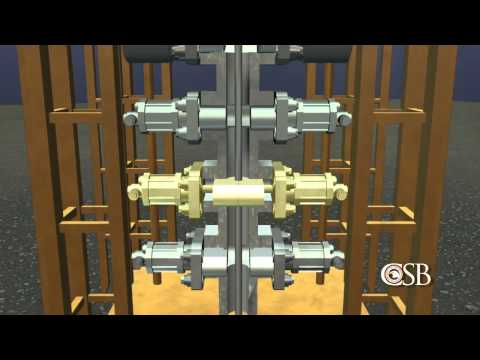
Deepwater Horizon Blowout Animation
Deepwater Horizon Explosion and Oil Spill
This section provides an introduction to the Deepwater Horizon explosion and oil spill, which occurred on April 20th, 2010. It mentions the number of casualties and the location of the incident.
Introduction to Deepwater Horizon Incident
- On April 20th, 2010, an explosion occurred on the Deepwater Horizon offshore drilling rig.
- The incident resulted in the death of 11 workers and serious injuries to 17 others.
- The rig was located approximately 50 miles off the coast of Louisiana.
- The burning rig eventually sank, triggering the largest oil spill in US history.
Investigation into Deepwater Horizon Accident
This section discusses the investigation launched by CSB (Chemical Safety Board) to examine factors contributing to the Deepwater Horizon accident.
CSB Investigation Findings
- The CSB conducted an investigation into the technical, organizational, and regulatory factors that led to the accident.
- During their investigation, new findings were discovered regarding why a key safety equipment called blowout preventer (BoP) failed to seal the well during the emergency.
- These findings help explain why the accident had such devastating consequences.
- The CSB cautioned that other blowout preventers currently in use could also fail in similar ways.
Offshore Well Drilling Process
This section explains the process of drilling an offshore well and highlights potential risks associated with it.
Offshore Well Drilling Process
- Drilling an offshore well involves creating a pathway between a drilling rig and oil/gas reservoirs beneath the seafloor.
- A deep hole or well bore is drilled through layers of subsea rock and sediment.
- These layers can contain water, crude oil, and natural gas under pressure.
- An unplanned flow of these well fluids into the well bore, known as a kick, can be dangerous and lead to a blowout.
- A blowout is an uncontrolled release of flammable oil and gas from the well.
Importance of Blowout Preventer (BoP)
This section emphasizes the critical role of a blowout preventer (BoP) in controlling wells during drilling operations.
Role of Blowout Preventer (BoP)
- The safety of drilling crew depends on a device called a blowout preventer (BoP), located on the sea floor.
- The BoP is connected to the drilling rig by a large diameter pipe called a riser.
- Its primary function is to prevent flammable oil and gas from traveling up the riser to the rig in case of a kick or blowout.
- The BoP seals the area around the drill pipe, known as the annular space, to control well flow.
Failure of Blowout Preventer (BoP)
This section discusses how the blowout preventer (BoP) failed to seal the well during the Deepwater Horizon accident.
Failure Mechanism
- In case other safety measures fail, such as mud barrier or annular preventers, there is a last resort - blind shear rams.
- Blind shear rams are sharp metal blades designed to cut through drill pipes and seal off wells in emergencies.
- On April 20th, 2010, when a kick occurred in Macondo well, oil and gas entered undetected above the blowout preventer.
- Despite attempts to close various components of the BoP, flammable oil and gas continued to flow towards the rig.
- The pressure difference between the annular space and drill pipe caused the drill pipe to buckle, rendering blind shear rams ineffective.
Issues with Blowout Preventer (BoP) Control Systems
This section highlights issues with the control systems of the blowout preventer (BoP) during the Deepwater Horizon accident.
Problems with Control Systems
- The blowout preventer (BoP) has redundant control systems known as yellow pod and blue pod.
- These control pods operate independently and are responsible for controlling important functions of the BoP, including closing blind shear rams.
- Evidence suggests that both yellow and blue pods had wiring issues, leading to failures in their solenoid valves.
- Miss-wiring of solenoid valves prevented proper operation of blind shear rams, contributing to the failure of the BoP.
Conclusion
This section concludes by summarizing key findings related to the Deepwater Horizon incident.
Key Findings
- The Deepwater Horizon explosion and oil spill resulted in casualties and significant environmental damage.
- Investigation findings revealed failures in safety equipment, particularly the blowout preventer (BoP).
- Wiring issues in control systems compromised the functionality of solenoid valves, affecting critical operations of blind shear rams.
- Lessons learned from this incident highlight the need for improved safety measures and better maintenance practices in offshore drilling operations.
New Section
This section discusses the failure of the computer system and its impact on the miswired solenoid valve.
Failure of Computer System
- The affected computer system failed to initiate the command to energize the miswired coil.
- Both coils of the miswired solenoid valve should have been energized, generating opposing forces on the valve and keeping it closed.
- However, due to a failed battery, one coil became inoperable while the other coil opened the solenoid valve by itself.
- This led to the closure of the blind shear Ram, which should have cut the drill pipe and sealed the well, but it was unsuccessful due to buckling and off-center positioning of the drill pipe inside the blowout preventer.
New Section
This section explores a mechanism called effective compression that likely caused buckling of the drill pipe during well operations.
Mechanism of Effective Compression
- Effective compression is a mechanism that can cause buckling of drill pipes during well operations.
- Drill pipes may appear straight but actually have minute bends and irregularities invisible to naked eyes.
- Along these bends, one side of the pipe is slightly longer with more surface area than the other side.
- When there is a large difference in pressure between inside and outside of the pipe, as happened during this incident, this imbalance in surface area creates a bending force that can buckle even heavy pipes.
New Section
The consequences and implications of effective compression are discussed in this section.
Implications of Effective Compression
- The buckled drill pipe prevented the blind shear Ram from sealing the well, allowing oil and gas to flow into the Gulf of Mexico for 87 days.
- This incident resulted in one of the worst environmental disasters in United States history, with approximately 5 million barrels of oil spilled.
- The Chemical Safety Board (CSB) warned that existing blowout preventer designs may be less effective in emergency situations if differential pressure conditions occur.
- Crews at other drilling rigs should be aware of the potential hazards posed by effective compression and take necessary precautions.
Timestamps are provided for each section to help locate specific parts of the video related to the summarized content.