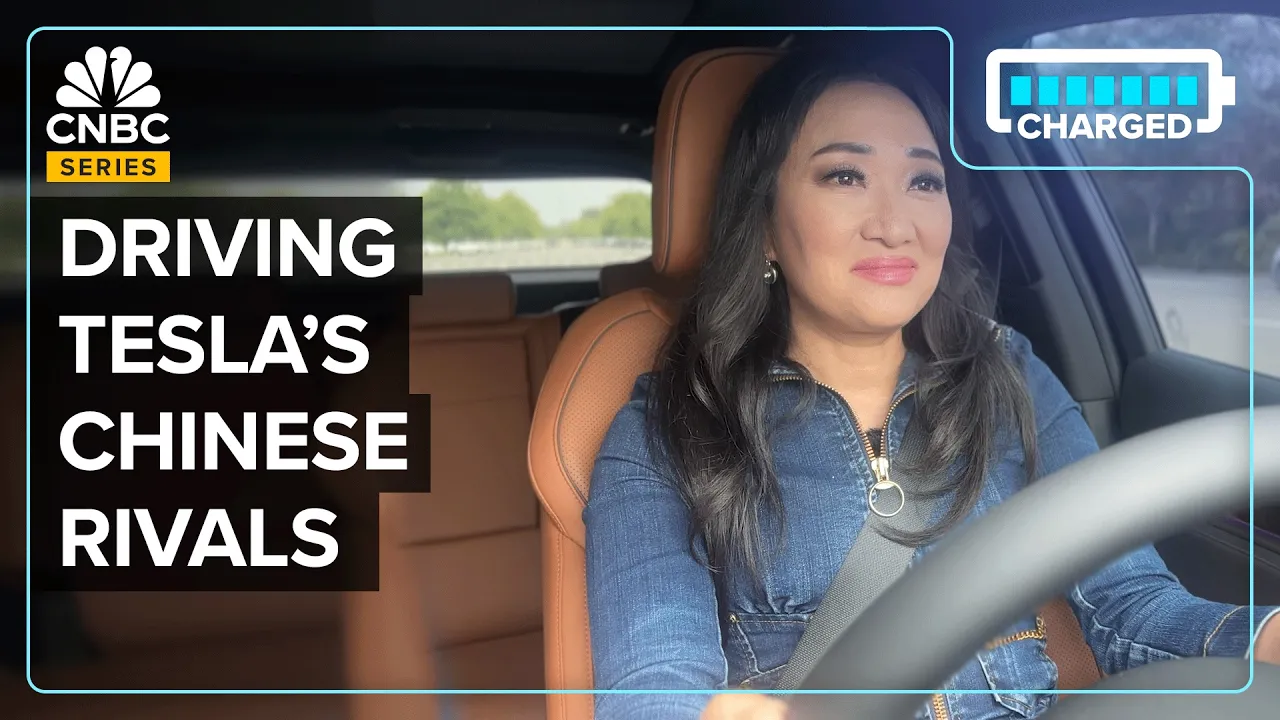
How BYD, Nio And Other Chinese EVs Compare To Tesla
The Rise of Chinese EVs: A Challenge to Tesla?
Introduction to the Competitive Landscape
- The speaker highlights a growing trend where consumers are increasingly asking for affordable electric vehicles (EVs), particularly from Chinese manufacturers like Nio and Li Auto, which are perceived as competitive with Tesla.
- China is identified as the largest auto producer globally, producing one in three cars. The domestic market cannot absorb all inventory, leading to increased exports.
Concerns Over Competition
- There are fears that Chinese automakers will replicate their success in other industries by using cheap labor and government support to dominate the automotive market.
- The Biden administration has imposed a 100% tariff on Chinese EV imports to protect American manufacturers from this competition.
Performance Comparison: Tesla vs. Chinese Brands
- CNBC compares various Chinese EV models against the Tesla Model Y, noting that some local brands have begun outselling Tesla in China.
- BYD's Tang model is highlighted for being significantly cheaper than the Model Y while offering similar features, showcasing China's ability to produce cost-effective vehicles.
Cost Advantages of Chinese Manufacturers
- The discussion reveals that between 2009 and 2023, the Chinese government provided approximately $231 billion in subsidies to boost its automotive industry.
- BYD's vertical integration strategy allows it to manufacture 75%–80% of its vehicle parts in-house, contributing significantly to lower production costs compared to competitors like Tesla.
Technological Features and Market Positioning
- The G6 model from Xpeng is noted for being priced at $27K—$9,000 less than the Model Y—while offering comparable specifications and advanced technology features.
- The speaker emphasizes how Chinese EV makers are democratizing access to smart technology within vehicles, making them appealing not just due to price but also value-added features.
Family-Oriented Designs and Unique Selling Points
- Li Auto markets itself as a family-friendly brand with unique offerings such as longer range capabilities through gas-powered range extenders.
Innovations in Chinese Electric Vehicles
Cabin Comfort and Features
- The cabin of modern electric vehicles (EVs), particularly from Chinese manufacturers, offers numerous creature comforts such as TV screens and massage chairs for front seat passengers.
- Nio, a notable player in the EV market, has introduced battery swapping technology, allowing users to exchange depleted batteries for charged ones at designated stations.
Market Performance and Challenges
- Despite a hyped IPO in 2018, Nio's stock has plummeted by 90% since its peak in 2021 due to slow sales growth and high cash burn rates.
- In 2023, Nio sold approximately 160,000 electric vehicles but faces challenges with sluggish sales compared to competitors.
Charging Infrastructure
- China boasts around 3 million public charging facilities, making it relatively easy to find charging points; however, user experiences may vary.
- Battery swapping stations are prevalent across China, with Nio operating about 3,500 of them. Users report varying times for battery swaps.
AI Integration and User Experience
- The AI assistant named Nomi is designed to interact more naturally than typical car AI systems. It can respond conversationally rather than just executing commands.
- The shift in business models emphasizes data monetization over hardware sales. Companies like Apple exemplify this trend by selling products that create ongoing revenue streams through services.
Technology Features vs. Performance
- Chinese EV makers are incorporating various tech features into their vehicles; however, not all features prove useful or effective during testing.
- Some advanced features like auto-parking have been reported as stressful or unreliable based on user experiences.
Driving Experience and Market Positioning
- Observations indicate that many Chinese EV models do not prioritize performance as much as competitors like Tesla; this affects driving precision.
- Compromises made by Chinese manufacturers often lead to lower prices but also result in less refined vehicle designs compared to pricier alternatives.
Future of Foreign Automakers in China
- Concerns arise regarding the competitiveness of foreign automakers against homegrown brands that cater well to local preferences for technology integration.
Cultural Shifts and Financial Challenges in the EV Market
The Financial Landscape of Tech Companies
- Many tech companies, including those in the electric vehicle (EV) sector, struggle with profitability until they reach a critical mass or inflection point in their sales cycle.
- The ongoing price war within the industry exacerbates financial instability, making it difficult for these companies to secure a sustainable business model.
Overcoming Brand Loyalty: A Challenge for Chinese EV Makers
- Chinese EV manufacturers face significant hurdles in convincing consumers abroad to switch from established brands like GM, Toyota, and VW to lesser-known Chinese brands.
- Performance issues and unique design quirks are crucial factors that could influence consumer decisions when considering a switch to Chinese EVs.
Consumer Considerations Beyond Price
- While government subsidies and market competition are often discussed as key factors influencing consumer choices, ultimately, personal safety and family considerations play a more significant role when purchasing vehicles.