Types of Photosynthesis in Plants: C3, C4, and CAM
Understanding Photosynthesis and Carbon Fixation
Overview of Photosynthesis in Plants
- The discussion revisits photosynthesis, previously covered in detail during the biochemistry series, with a focus on its relevance to plant diversity.
- Emphasis is placed on carbon fixation, which is the conversion of CO2 into organic compounds, highlighting its importance in angiosperms.
C3 Photosynthesis
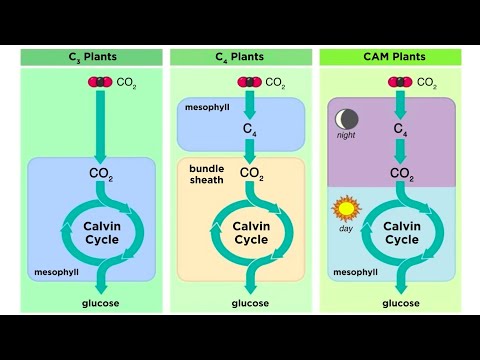
- C3 plants utilize rubisco to fix CO2 to RuBP, producing 3-PGA as the first organic compound; this pathway is the most common form of photosynthesis.
- In arid environments, C3 photosynthesis faces challenges due to photorespiration when stomata close, leading to inefficient sugar production and ATP generation.
C4 Photosynthesis
- C4 plants like corn and sugarcane have adapted by fixing CO2 into a four-carbon compound before entering the Calvin cycle, allowing them to conserve water while continuing photosynthesis.
- The process involves mesophyll cells using PEP carboxylase for initial carbon fixation, ensuring high CO2 levels for efficient sugar production.
Convergent Evolution of C4 Pathway
- Notably, C4 carbon fixation has evolved independently at least 20 times within grass species, illustrating an example of convergent evolution among different plant groups.
CAM Photosynthesis
- CAM plants such as pineapples and succulents adapt to extreme aridity by opening stomata at night for CO2 intake and storing it as organic acids for daytime use.
- This method allows CAM plants to perform photosynthesis during the day despite closed stomata, showcasing another adaptation strategy in response to environmental stressors.
Summary of Key Differences