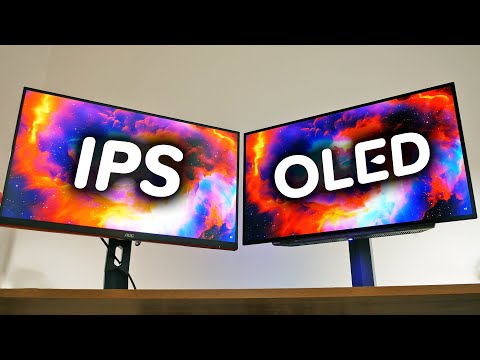
Monitor IPS vs OLED, ¿cuál ELEGIR?
Comparison of OLED and IPS Monitors
Overview of Monitor Technologies
- The speaker has compared two monitor technologies: OLED and IPS, concluding that while OLED is superior, it may not be the best choice for everyone.
- There are two main groups of monitors based on technology: LCD (Liquid Crystal Display) and OLED. Within LCD, there are various types including TN (Twisted Nematic), VA (Vertical Alignment), and IPS (In-Plane Switching).
Types of LCD Panels
- TN panels are known for their speed but have poor color quality and viewing angles; they are often used by esports professionals due to their low cost.
- VA panels offer better contrast than TN but are slower. They provide a good balance between performance and price.
- IPS panels stand out for their excellent color accuracy and viewing angles, although they were historically slower than other LCD types.
Advantages of OLED Technology
- Unlike LCD panels that rely on a backlight, each pixel in an OLED panel can emit its own light, allowing for true black levels as pixels can be turned off completely.
- This capability leads to significant differences in image quality, particularly in terms of contrast when comparing OLED with IPS.
Image Quality Comparison
- Contrast is a critical factor where OLED excels over both TN and IPS panels; the difference is visually striking even if specifications might not fully convey it.
- While brightness levels favor IPS displays, especially models like LG Ultra Gear compared to cheaper AOC models, this does not diminish the overall image quality advantage held by OLED.
Color Representation
- IPS panels have been favored by graphic designers due to their wide color gamut; however, OLED displays can represent colors even more accurately across standards like DCI-P3 or sRGB.
- The ability of OLED screens to produce pure blacks enhances immersion significantly compared to the grayish blacks seen on IPS displays.
Viewing Angles
- Although IPS offers good viewing angles within LCD technology, OLED maintains consistent color accuracy and contrast from any angle without degradation in quality.
Comparison of OLED and IPS Panels
Overview of Panel Types
- The discussion begins with a comparison between IPS and OLED panels, highlighting that while IPS panels may have poorer viewing angles, OLED technology is superior overall.
- Manufacturers like ASUS, AC, and LG are noted for improving the response times of IPS panels through innovations like Fast IPS technology. However, OLED panels still outperform in speed and ghosting issues.
Energy Consumption
- Energy efficiency is a significant factor; OLED panels consume less power than IPS due to their organic technology. This aspect is increasingly relevant as consumers seek to manage energy costs effectively.
Design Advantages
- The design flexibility of OLED panels allows for thinner and more aesthetically pleasing screens compared to IPS. This internal arrangement enables manufacturers to create flatter displays.
Drawbacks of OLED Technology
- Despite the advantages, there are notable drawbacks with OLED technology, particularly screen burn-in over time. This occurs when pixels remain illuminated at high intensity for extended periods.
- Burn-in happens because organic components lose brightness over time when subjected to prolonged use at high intensities, leading to visible marks or silhouettes on the screen.
Mitigation Strategies for Burn-In
- Companies like LG have developed technologies aimed at reducing burn-in risks by implementing features that prevent static images from being displayed too long.
Market Availability and Pricing
- A significant barrier for consumers considering OLED monitors is their price point; they typically start around $750-$800 compared to around $250 for quality IPS monitors.
- The higher cost reflects the newer entry of OLED into the monitor market compared to established LCD technologies. As manufacturers improve production techniques, prices may decrease over time.
Recommendations Based on Budget
- For those with a budget above $800 who prioritize display quality and fast response times, an OLED monitor could be worth the investment.
Monitor Recommendations for Gaming
Importance of Color and Brightness in Monitors
- Deep black colors can enhance the visual experience in gaming, particularly in genres like horror or thriller (e.g., Resident Evil), where shadows play a crucial role.
- A budget of around $400 to $500 is sufficient for a quality IPS panel monitor, offering an excellent balance between price and performance without needing to invest in high-end models.
Performance Considerations
- Fast IPS monitors provide quick response times suitable for gaming; only highly skilled players may notice significant differences compared to more expensive options.