Climate change will displace millions. Here's how we prepare | Colette Pichon Battle
New Section
The speaker reflects on the impact of Hurricane Katrina and the subsequent realization of land loss due to climate change, emphasizing the vulnerability of coastal communities.
Reflection on Climate Change Impact
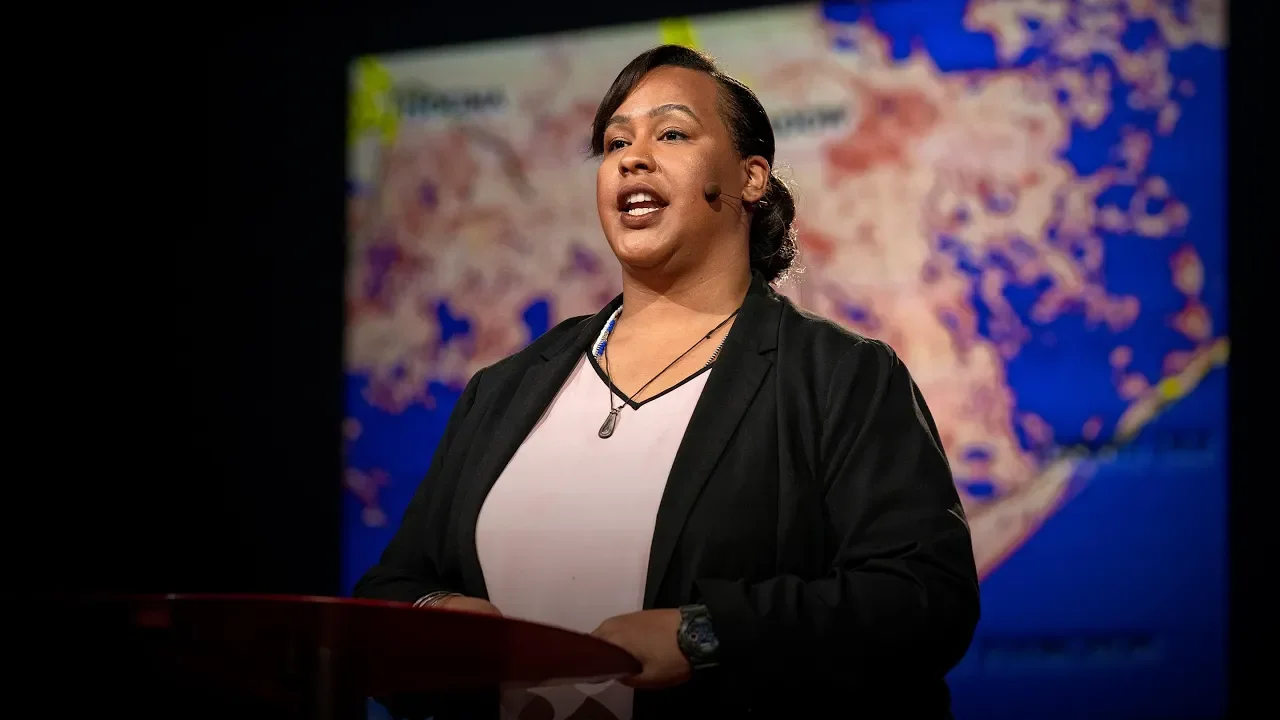
- Two years post-Hurricane Katrina, Louisiana flood maps revealed imminent land loss due to rising sea levels.
- Witnessing massive land loss projections for south Louisiana community prompts a shift from disaster recovery to climate change resilience.
- Communities face the daunting task of preventing erasure by sea level rise, highlighting the interconnectedness of vulnerable regions globally.
Community Advocacy and Global Connections
The speaker delves into their journey of understanding climate impacts by engaging with diverse communities worldwide facing similar challenges.
Global Community Engagement
- Collaboration with various communities reveals shared struggles against climate-induced displacement.
- Over 180 million people may face displacement by century-end due to climate change, prompting preemptive actions in south Louisiana.
Challenges Faced by Impacted Communities
The speaker discusses advocacy efforts for marginalized communities affected by climate crises and the obstacles they encounter.
Advocacy Challenges
- Marginalized communities confront discrimination in climate disaster recovery efforts.
- Misused terms like "refugees" hinder economic recovery and social integration post-climate disasters.
Implications of Climate Migration
Addressing the complexities surrounding global migration driven by climate change and its socio-economic repercussions.
Climate Migration Dynamics
- Urgent need to prepare for global migration as a consequence of climate change impacts.
- Warning against exploitative practices during migration, highlighting risks of climate gentrification in vulnerable regions like Miami.
Call for Systemic Change
Proposing a paradigm shift towards sustainable systems to combat root causes rather than symptoms of environmental degradation.
Paradigm Shift Proposal
- Identifying economic structures as root causes necessitating transformation towards regenerative systems.
Surviving the Next Phase of Human Existence
In this segment, the speaker emphasizes the need to restructure social and economic systems to enhance collective resilience. The focus is on restoring and repairing the earth and communities that have been marginalized for generations, highlighting migration as a global survival necessity rather than a threat.
Restructuring Social Systems for Collective Resilience
- Migration should be viewed as essential for global survival, prompting the development of cities capable of accommodating individuals with housing, food, healthcare, and freedom from overpolicing.
- Investing in public hospitals to prepare for climate migration-related challenges like trauma and loss is crucial. Emphasizing long-term justice over temporary gains is vital for societal advancement.
- Highlighting successful examples post-Hurricane Katrina where educational institutions supported displaced students seamlessly integrating them into productive community members.
Embracing Justice and Indigenous Wisdom
- Advocating for genuine commitment to ecological equity, climate justice, human rights as foundational principles guiding societal transformation towards a fairer future.
- Stressing the importance of recognizing nature's rights, advancing human rights universally, transitioning from individualistic societies to collective-focused ones for sustainable survival.
Empowerment through Shared Liberation
- Acknowledging ancestral resilience as a source of strength in facing challenges ahead. Encouraging unity towards shared liberation as a means to navigate unjust systems collectively.
Turn any video into a summary like this
YouTube links, meetings, lectures. With transcripts, search, and chat.