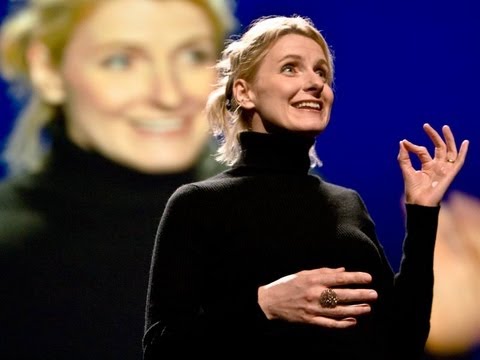
Your elusive creative genius | Elizabeth Gilbert
Introduction and Recalibrating Relationship with Writing
In this section, the speaker introduces herself as a writer and expresses her lifelong love for writing. She mentions that despite her success, she has had to recalibrate her relationship with her work.
- The speaker identifies herself as a writer and expresses her deep passion for writing.
- She wrote a memoir called "Eat, Pray, Love" which became a huge international bestseller.
- People now treat her as if she is doomed and question if she will ever be able to top her previous success.
- The speaker recalls facing similar fear-based reactions when she first started telling people about wanting to be a writer.
Fear and Insecurity in Creative Ventures
In this section, the speaker reflects on the fear and insecurity that creative individuals often face in their careers. She questions why creative ventures seem to make people nervous about each other's mental health.
- People express concerns about never achieving success or being rejected in creative endeavors.
- Creative individuals are often perceived as mentally unstable compared to those in other professions.
- The speaker highlights the high number of creative minds who died young or suffered from mental anguish throughout history.
- There is an assumption that creativity and suffering are inherently linked, which the speaker finds odious and dangerous.
Challenging Assumptions about Creativity
In this section, the speaker challenges the assumption that creativity always leads to anguish. She questions whether it is rational or logical for someone to be afraid of doing the work they feel they were meant to do.
- The speaker questions why creativity is associated with suffering while other professions are not.
- She believes it is better to encourage great creative minds to live rather than perpetuating the idea that artistry leads only to anguish.
- The speaker acknowledges being afraid of various things but questions why she should be afraid of the work she loves.
- She expresses her discomfort with the assumption that her greatest success is behind her and emphasizes her desire to continue doing the work she loves.
Encouraging Creative Minds to Thrive
In this section, the speaker advocates for supporting and nurturing creative minds rather than accepting the notion that creativity always leads to suffering. She shares her own perspective on this matter.
- The speaker finds it dangerous to assume that creativity will lead down a dark path.
- She believes it is important to create a protective psychological construct in order to continue writing.
- The speaker emphasizes that she still has many years of work ahead and wants to keep doing what she loves.
- She challenges the idea that her greatest success is already behind her and rejects the notion of starting down a negative path.
The transcript provided does not contain enough content for additional sections.
The Ancient Understanding of Creativity
In this section, the speaker explores the ancient Greek and Roman beliefs about creativity and how they differ from modern perspectives.
Ancient Greece and Rome's Beliefs on Creativity
- In ancient Greece and Rome, people believed that creativity was a divine attendant spirit that came to human beings from an unknowable source.
- Socrates believed he had a daemon who spoke wisdom to him from afar, while the Romans referred to this creative spirit as a genius.
- The Romans believed that a genius was not just a clever individual but rather a magical divine entity that lived in the walls of an artist's studio and assisted them invisibly with their work.
The Protective Role of Genius
This section discusses how the concept of genius served as a psychological construct to protect artists from certain things and shape the outcome of their work.
Protection Provided by Genius
- The ancient understanding of creativity included the belief that genius protected artists from excessive narcissism.
- If an artist's work was brilliant, they couldn't take all the credit because it was known that their disembodied genius had helped them.
- Conversely, if an artist's work failed, it wasn't entirely their fault as their genius was considered lacking.
Shift in Perspective during the Renaissance
This section highlights how the Renaissance brought about a shift in perspective regarding creativity, placing emphasis on individual human beings as sources of creativity.
Individualism Takes Center Stage
- During the Renaissance, there emerged a new idea centered around putting individual human beings at the forefront of creativity.
- People started referring to artists as geniuses themselves rather than having geniuses assisting them.
- The speaker believes this shift towards individualism was a mistake, as it placed too much responsibility on one fragile human psyche.
The Pressure and Expectations of Creativity
This section explores how the pressure and expectations associated with the belief in individual genius have been detrimental to artists over the past 500 years.
Burden of Responsibility
- Believing that one is the vessel and source of all divine, creative mystery places an immense burden on an individual's psyche.
- The pressure creates unmanageable expectations about performance and distorts egos.
- The speaker suggests that this pressure has been killing off artists for centuries.
Rethinking the Relationship between Humans and Creativity
In this section, the speaker questions whether it is possible to go back to a more ancient understanding of creativity or if we are bound by centuries of rational humanistic thought.
Challenging Rational Humanism
- The speaker poses the question of why not consider alternative explanations for the capriciousness of the creative process.
- While acknowledging that some may have scientific doubts about mystical creatures assisting artists, she encourages open-mindedness towards different perspectives.
- She believes that considering alternative understandings makes as much sense as any other explanation for the unpredictable nature of creativity.
Ruth Stone's Poetic Encounter
This section recounts an encounter with poet Ruth Stone, who describes her experience of being chased by a poem and needing to capture it before it passes.
Ruth Stone's Experience
- Ruth Stone would feel and hear a poem coming at her like a thunderous train of air from over the landscape while working in fields.
- She had to run like hell to reach paper and pencil fast enough to capture the poem before it passed through her.
- Sometimes she would miss the poem, and it would continue searching for another poet across the landscape.
The transcript provided does not contain any further sections or timestamps.
The Creative Process and Inspiration
Elizabeth Gilbert discusses her creative process and the concept of inspiration, drawing parallels to the experiences of other artists.
The Backwards Poem
- Gilbert shares a story about a friend who transcribed poems that appeared on the page perfectly intact but backwards, from the last word to the first.
- She relates this to her own creative process, which she describes as not being a pipeline but rather an awkward and laborious journey.
- Despite this, she acknowledges that there are moments when ideas or work come through her from an unidentified source.
Tom Waits' Transformation
- Gilbert mentions musician Tom Waits as an example of someone who transformed his creative process.
- Previously tormented by trying to control his uncontrollable creative impulses, Waits had a breakthrough moment while driving on the freeway in Los Angeles.
- He heard a fragment of melody in his head but had no way to capture it. Instead of panicking, he stopped and asked for it to return at a more opportune moment.
- This experience changed his work process and allowed him to release the anxiety associated with creativity.
Embracing Collaboration
- Gilbert emphasizes that creativity can be seen as a collaboration between oneself and an external force or inspiration.
- She shares how she incorporated this mindset into her own writing process while working on "Eat, Pray, Love."
- In moments of despair and self-doubt, she addressed the unknown source directly and acknowledged her dedication to showing up for her part of the job.
Transcendent Performances
- Gilbert recalls moonlight dances in North Africa where performers would occasionally transcend their usual abilities during sacred dance and music sessions.
- These transcendent moments were recognized by the audience as something divine happening within the performer.
- People would chant and applaud in response to these extraordinary performances.
The Power of Transcendence
Elizabeth Gilbert explores the concept of transcendence and its impact on creative performances.
The Power of Transcendence
- Gilbert describes how transcendent performances occur when everything aligns for a performer, and they appear to be lit from within with divinity.
- These moments are rare but unforgettable, leaving a lasting impression on the audience.
Acknowledging Divine Influence
- In ancient times, people recognized these transcendent moments as something beyond human ability.
- They would put their hands together and chant in response to the divine influence witnessed during these performances.
Conclusion
Elizabeth Gilbert concludes her talk by reflecting on the importance of showing up for one's creative work and embracing the mysterious collaboration between oneself and inspiration.
Embracing Collaboration
- Gilbert encourages individuals to embrace the peculiar collaboration between themselves and the external force that influences their creativity.
- By acknowledging this partnership, one can release anxiety and allow creativity to flow more freely.
Showing Up for Creativity
- She emphasizes the importance of showing up consistently for one's creative work, regardless of doubts or fears.
- By dedicating oneself to the process, even if it feels imperfect or challenging, progress can be made.
Final Thoughts
- Gilbert ends by reminding us that centuries ago, people recognized and celebrated transcendent moments in performances.
- She encourages us to approach our own creative endeavors with openness and curiosity, allowing room for magic to happen.
New Section
In this section, the speaker reflects on the experience of performers in Spain and how they are seen as glimpses of God when they perform something magical and impossible. However, the challenge comes when they wake up the next morning and realize that they are just ordinary mortals. The speaker explores the idea of finding meaning in life beyond being a glimpse of God.
Reflection on Performers in Spain
- Performers in Spain are celebrated as glimpses of God when they do something impossible and magical.
- The praise and adoration from the audience can make performers feel like they have a special connection to something divine.
The Challenge for Performers
- The next morning, performers wake up to reality and realize that they are just ordinary people with limitations.
- They may struggle with their identity and purpose once they no longer receive praise or feel connected to something greater than themselves.
Finding Meaning Beyond Belief
- It doesn't have to be so anguishing if performers never believed that their extraordinary abilities came solely from themselves.
- Instead, considering these abilities as borrowed or on loan from an unimaginable source can change one's perspective on life's purpose.
- If performers believe that their talents are meant to be passed along to others after their time is finished, it can bring a sense of peace and fulfillment.
New Section
In this section, the speaker shares personal insights about facing challenges and staying committed to one's craft, regardless of external validation or recognition.
Embracing Challenges
- The speaker encourages individuals not to be afraid or daunted by challenges.
- It is important to continue showing up and doing one's job, regardless of the outcome or recognition.
Commitment to Craft
- If someone's job is to dance, they should continue dancing with passion and dedication.
- Even if their efforts don't result in a glimpse of wonderment or divine connection, they should still embrace their craft and give it their all.
The transcript provided does not include specific timestamps for each bullet point. I have associated the bullet points with the given timestamps based on the context provided in the transcript.
Turn any video into a summary like this
YouTube links, meetings, lectures. With transcripts, search, and chat.