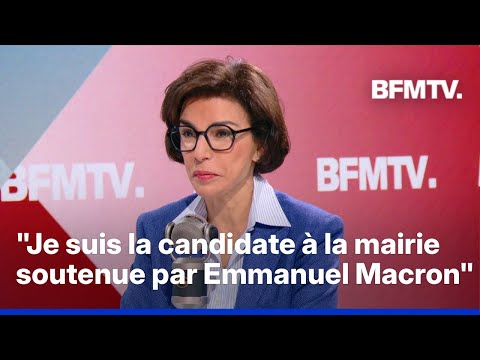
Municipales à Paris, musée du Louvre, Parc des Princes... L'Interview de Rachida Dati en intégralité
Candidate for Paris Mayor: Rachid Adati's Vision
Introduction and Background
- The interview begins with the host greeting Rachid Adati, who has recently resigned as Minister of Culture to run for Mayor of Paris while currently serving as the mayor of the 7th arrondissement.
- Adati confirms a meeting with Emmanuel Macron, where he received political support for his candidacy.
Political Support and Strategy
- Discussion on rival candidate Pierre Bournazel's statements about not aligning with other candidates, emphasizing a need for serious political discourse in Paris.
- Adati stresses that his candidacy is based on years of preparation and collaboration with various stakeholders in Paris, including citizens and city officials.
Critique of Opponents
- He critiques Bournazel’s campaign as lacking genuine commitment to change, labeling it either an "election failure" or an attempt to maintain the status quo.
- Adati highlights ideological differences between himself and leftist candidates associated with antisemitism, asserting that they do not share his values.
Call for Change
- Emphasizes that recent polls indicate a strong desire among Parisians for political change, marking a historic moment since 2001.
- Urges voters to choose change from the first round rather than allowing votes to be split among multiple candidates.
Campaign Dynamics
- Discusses his active campaigning efforts and outreach to various community groups while addressing potential voter concerns regarding other candidates like Bournazel.
- Reiterates the importance of consolidating votes around his candidacy to ensure effective representation in municipal elections.
Values and Political Integrity
- Responding to accusations from opponents about intimidation tactics, Adati defends his approach by contrasting it with what he perceives as aggressive rhetoric from rivals.
- Concludes by reaffirming his commitment to positive values in politics despite facing personal attacks.
Social Racism and Political Identity
Discussion on Social Racism
- The speaker asserts that there is a "glass ceiling" in the country preventing access to high responsibilities, labeling it as social racism. They express frustration with the left's refusal to acknowledge this issue.
Identity and Political Alignment
- The speaker identifies themselves as part of the left due to their background but criticizes the left for viewing them merely as victims rather than equals. They reject being pigeonholed based on their origins.
Critique of Leftist Values
- The speaker argues that the left has strayed from core values such as equality, emancipation, and freedom, aligning instead with radical community-focused ideologies which they do not support.
Media Relations and Accusations
- A reference is made to Sopia Chikirou's public remarks against journalists, calling them "fascists." The speaker distances themselves from these views, indicating a divergence in values within political factions.
Allegations of Extremism
- The conversation touches upon Emmanuel Grégoire’s comments regarding alliances with former members of LFI (La France Insoumise), suggesting a lack of true ideological separation despite personnel changes.
Security Concerns in Paris
Rising Crime Statistics
- The speaker highlights alarming increases in crime rates in Paris between 2019 and 2025: narcotrafic up by 218%, sexual assaults by 60%, and personal attacks by 25%. They emphasize the need for effective security measures.
Proposed Security Measures
- Plans include installing 8,000 surveillance cameras across Paris to eliminate blind spots. This initiative aims to enhance public safety through improved monitoring.
Municipal Police Strategy
- A proposal for an armed municipal police force consisting of 5,000 trained officers is presented. This force would work alongside national police to address local security issues more effectively.
Champ de Mars and Security Concerns
Overview of Current Issues
- The Champ de Mars, managed by the Paris city hall, faces significant security challenges, including a rise in crime and sexual assaults.
- Proposals for revitalizing the site include restoring its historical significance and implementing protective measures like closing it at night and installing surveillance cameras.
- Emphasis on enhancing public safety through increased video surveillance across all streets in Paris to eliminate blind spots.
Addressing Périscolaire Management
- Discussion on the management of extracurricular activities (périscolaire), highlighting issues such as lack of oversight and control over staff qualifications.
- A call for restructuring périscolaire programs to provide more consistent and quality engagement for children, with proposals for longer school days.
- Plans to ensure that all staff are properly vetted with state-recognized qualifications before recruitment.
Future Vision for Education
- Proposal to revert to a four-day school week with structured evening study sessions led by qualified teachers to enhance educational support.
- Advocating for inclusive education where trained animators can assist children throughout the week, not just during extracurricular activities.
Future of PSG at Parc des Princes
Discussions on Stadium Ownership
- The speaker expresses a desire for PSG (Paris Saint-Germain Football Club) to remain in Paris while discussing potential renovations needed at Parc des Princes costing around 100 million euros.
- Previous negotiations between former mayor Hidalgo and PSG were hindered; current discussions focus on whether the club will purchase the stadium.
Financial Considerations
- Questions arise regarding how much PSG would pay for Parc des Princes; initial figures mentioned are deemed insufficient without proper valuation.
- Clarification that if sold, PSG would be responsible for renovation costs associated with the stadium's upkeep.
Cultural Leadership Changes
Ministerial Resignation Context
- Reference made to Laurence Descart’s resignation as Minister of Culture; implications suggest political maneuvering behind her departure.
- The importance of respecting presumption of innocence is highlighted amidst ongoing legal issues involving prominent individuals connected to cultural leadership.
Museum Governance and Cultural Leadership
The Impact of Theft on Museum Operations
- The theft at the Louvre was a significant event that shocked not only France but also had international repercussions. Understanding the causes and failures that allowed this incident to occur was deemed essential for future prevention.
- Following the theft, 17 emergency measures were implemented to address governance issues within the museum, emphasizing the need for improved security protocols. Prioritizing public safety over mere structural security became a focal point in these reforms.
Reflections on Leadership Transition
- The speaker expressed a sense of completion regarding their tenure as president, indicating an expectation for a smooth transition of power. They noted that they would not attend an upcoming awards ceremony due to this anticipated changeover.
- Despite their reluctance to participate in certain events, there is an acknowledgment of gratitude towards President Macron for the opportunity to serve as Minister of Culture, highlighting its significance in their career. This role is viewed as pivotal in addressing cultural cohesion and combating societal fractures.
Commitment to Cultural Democratization
- A strong emphasis was placed on democratizing culture, particularly in rural areas, which is seen as a major achievement during their leadership. The speaker takes pride in efforts made toward restoring and protecting cultural heritage throughout their term.
Engagement with Democratic Processes
- When questioned about participating in debates, the speaker expressed concerns about current conditions being unfavorable for respectful discourse among candidates but affirmed their commitment to engaging with Parisians directly instead of through formal debates. They value listening to constituents' needs over traditional debate formats.
- The speaker highlighted past experiences debating with various political perspectives and emphasized that such interactions fuel their political engagement and commitment to effecting change within Parisian communities ahead of upcoming elections.