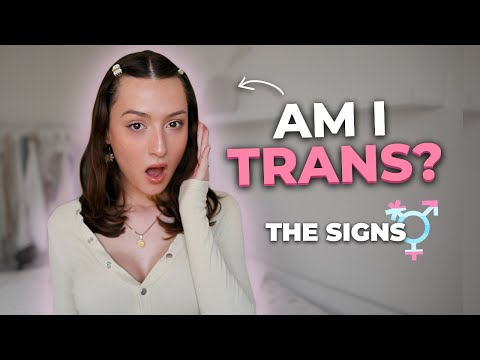
How to Know If You're Transgender | How I knew | mtf
Introduction
In this section, the speaker introduces herself and talks about her absence from the platform. She also mentions that she will be discussing how to know if you're trans.
- The speaker greets the audience and talks about her recent activity on TikTok.
- She announces that she will be talking about how to know if you're trans.
- The speaker clarifies that she is not a licensed therapist or professional in any way, but is speaking from her own experience.
How to Know You're Trans
In this section, the speaker discusses what it means to question your gender identity and provides some signs that may indicate you are transgender.
- The speaker recommends doing research on what it means to be trans and non-binary.
- She suggests thinking about whether you can see yourself as the opposite sex or gender you identify with.
- The speaker notes that questioning your gender identity may indicate something deeper.
- She advises paying attention to thoughts or questions that may be difficult to understand or grasp.
Childhood Experience
In this section, the speaker shares her childhood experience of feeling like something was wrong with her gender identity.
- The speaker recalls always wanting Barbies and dresses from a young age.
- She felt intense jealousy towards girls and wanted to mimic them in every way possible.
- The speaker was confused by these feelings and assumed everyone else had similar thoughts as well.
Signs of Being Trans
In this section, the speaker talks about how they realized they were trans and the signs that led them to that realization.
Early Signs
- The speaker had intense feelings of distress when looking at themselves in the mirror.
- They felt like they couldn't ignore these feelings as they grew up.
- The speaker saw a commercial with a happy man and wanted to be like him, but couldn't picture themselves as an adult man.
Gender Dysphoria
- The speaker's therapist explained that their intense feelings of distress were gender dysphoria.
- Gender dysphoria is an indicator of being trans, which is an umbrella term for many different gender identity variables.
Coping Mechanisms
- As a child, the speaker coped with their gender dysphoria by using the commercial as a goal.
- They forced themselves into thinking that they could have that life and be as happy as the man in the commercial.
Difficulties Growing Up Trans
In this section, the speaker talks about difficulties growing up trans and coping mechanisms used during childhood.
Body Changes
- The way the speaker's body started to change was not what they wanted.
- Their dad made comments about changes in their voice indicating becoming a man, which was difficult for them to hear.
Realization
- At 15 years old, after watching a documentary about trans people, the speaker realized that they were trans.
- They found a licensed therapist who helped them deal with their thoughts and emotions.
Understanding Gender Dysphoria
In this section, the speaker talks about their experience with gender dysphoria and provides advice for those who may be experiencing similar feelings.
Signs of Gender Dysphoria
- The inability to picture oneself as an older person of their biological gender.
- Discomfort with how people address them, especially when being addressed as their biological gender.
- A preference for activities or groups associated with the opposite gender.
Seeking Professional Help
- Researching and educating oneself on the topic through resources such as Google and YouTube.
- Finding a licensed therapist in one's local area who specializes in gender identity issues.
- Transitioning should not be taken lightly and should only be pursued if it is truly what one wants after exploring all other options.
Conclusion
- Transitioning can be difficult and should only be pursued if one is 110% sure that it is what they want.
Turn any video into a summary like this
YouTube links, meetings, lectures. With transcripts, search, and chat.