Patogenia y mecanismo de defensa en infecciones virales
What is Pathogenesis and Pathology?
Understanding Key Concepts
- Pathogenesis Defined: The process by which a virus enters the body and causes disease, encompassing all steps leading to infection.
- Pathology Explained: Refers to the histological and organic damage caused by viruses, observable through histological or microscopic examinations.
- Viral Behavior: Most viruses exhibit spontaneous resolution due to the immune system's ability to combat them; however, some, like Ebola, can be lethal.
Stages of Viral Infection
- Initial Barriers: Viruses must first breach protective barriers such as skin before entering through respiratory or gastrointestinal systems.
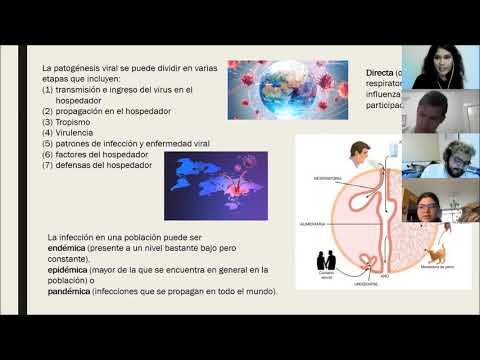
- Transmission Process: The stages include transmission into the body, propagation within it (via blood, nerves, etc.), and identifying target cells for infection (cellular tropism).
- Virulence Factors: Discusses how virulence relates to a virus's replication capacity and its patterns of infection. Host factors also play a role in susceptibility based on demographics like age or race.
Host Susceptibility and Immunity
Unique Immune Responses
- Immunity Examples: Some individuals are immune to HIV due to incompatible CD4 receptors despite potential exposure; they can carry but not develop the disease.
- Asymptomatic Carriers: Similarities drawn with asymptomatic COVID carriers who may unknowingly spread the virus without showing symptoms. This highlights the need for better sexual education regarding infections.
Epidemiological Perspectives on Infections
Types of Infections
- Endemic Infections: These are localized infections found in specific regions; understanding geography aids in diagnosis (e.g., West Nile Virus).
- Epidemic vs Pandemic: Epidemics affect large populations across regions (like H1N1), while pandemics spread globally (e.g., COVID-19). Current examples include HIV and coronavirus variants.
Modes of Transmission
- Direct Contagion: Certain viruses require close contact for transmission (e.g., respiratory viruses), emphasizing personal interaction as a key factor in spreading infections.
- Indirect Contagion Methods: Other infections can spread via contaminated objects or vectors like insects, highlighting diverse pathways for viral transmission within epidemiology studies.
Understanding Infection Rates and Transmission
Key Concepts of Infection Rates
- The infection rate measures how frequently a virus infects individuals within a population, indicating both the contagiousness of the virus and its effectiveness in spreading.
- Virulence refers to the severity of disease caused by a virus, often measured by fatality rates among infected individuals.
- Incidence is defined as the number of new cases occurring in a specific population over a designated time period, such as daily or annually.
Mechanisms of Virus Transmission
- Common transmission methods include aerosols (e.g., sneezing), contaminated food and water, contact with inanimate objects, and direct contact through bodily fluids like saliva or blood.
- Quarantine is highlighted as an effective method for controlling infections during epidemics or pandemics, despite potential mental challenges associated with isolation.
Historical Context and Current Implications
- The Spanish flu pandemic serves as an example where quarantine measures were crucial; people remained isolated for extended periods to curb spread.
- Factors influencing infection rates include age, immune status, travel history to endemic areas, lifestyle choices (e.g., childcare settings), and seasonal variations affecting vector-borne diseases.
Modes of Viral Entry
- Various entry routes for viruses are discussed: respiratory (saliva), gastrointestinal, cutaneous (skin), genital/urinary tracts, physiological pathways (animal bites), and bloodborne routes from shared needles.
- Specific examples illustrate how certain viruses utilize these pathways; for instance, varicella primarily spreads via respiratory means but can also be transmitted through skin lesions.
Understanding Communicability and Incubation Period
- Communicability refers to how effectively a virus spreads through secretions. This varies significantly between different viruses.
- The incubation period—the time before symptoms appear—can range widely; influenza typically shows symptoms within two days while hepatitis C may take up to 160 days.
Understanding Viral Infections and Their Mechanisms
The Onset of Leukemia and Viral Infections
- Discusses how a person infected with a virus in their twenties may develop leukemia by the age of 40, indicating that viral infections can lead to cancer development.
- Introduces the concept of viremia, which refers to the presence of viruses in the bloodstream, highlighting its role in causing immunological symptoms.
Transmission Pathways of Viruses
- Explains various transmission methods for viruses, including vertical transmission during childbirth (e.g., hepatitis virus, cytomegalovirus).
- Notes that different viruses cause distinct organ damage; for instance, liver infections lead to hepatocyte damage and hepatic dysfunction symptoms.
Diagnostic Approaches in Virology
- Mentions the importance of morphology in diagnosing viral infections like cytomegalovirus through pathological examination.
- Emphasizes that once a virus replicates locally (e.g., rabies), it can be treated effectively if caught early.
Viremia Types and Their Implications
- Differentiates between primary viremia (virus only in blood) and secondary viremia (virus infecting specific organs), leading to more severe symptoms.
- Provides examples such as neurological symptoms from rabies or renal failure from hepatitis due to secondary viremia.
Factors Influencing Viral Infection Severity
- Discusses how factors like immune status, nutrition, age, sex, and genetics affect infection severity.
- Highlights why varicella is more dangerous for adults than children due to stronger immune responses leading to complications like pneumonia.
Immune Response Variability Across Ages
- Explores why children's developing immune systems make them more susceptible compared to adults who have fully developed immune responses.
- Concludes with an explanation of how adult immune systems aggressively attack respiratory viruses like varicella, potentially causing severe lung damage.
Understanding the Severity of Chickenpox in Adults
Differences in Immune Response
- The severity of chickenpox is greater in adults than in children due to differences in immune response; children can combat the virus more effectively, leading to milder symptoms.
- While children are affected by chickenpox, their immune systems respond less aggressively, resulting in fewer long-term complications compared to adults.
Pathogenicity and Virulence
- The discussion highlights how different viruses have unique methods of attack; understanding these mechanisms is crucial for grasping their pathogenicity and virulence.
- Pathogenicity refers to a virus's ability to cause disease by altering cell morphology or damaging infected cells.
Impact on Lung Health
- A comparison between healthy lung radiographs and those affected by COVID-19 illustrates significant damage caused by pneumonia, which can lead to necrosis and hinder lung regeneration.
- Necrosis results from viral infections like COVID-19, causing lasting respiratory issues such as difficulty breathing and fatigue.
Vaccination Strategies Against Viral Infections
Types of Vaccines
- Live attenuated vaccines utilize weakened forms of viruses; examples include the MMR vaccine (measles, mumps, rubella).
- Some vaccines contain only parts of the virus; for instance, yellow fever vaccines use small sections rather than whole viruses.
Understanding Viral Infections
- Various types of viral infections exist: abortive (failed replication), lytic (cell destruction), persistent (virus remains without complete elimination), recurrent, and latent infections.
Oncogenic Viruses and Their Implications
Cancer-Causing Viruses
- Certain viruses can transform cells into oncogenic ones; human papillomavirus (HPV) is a notable example that leads to various cancers.
Examples of Oncogenic Effects
- HPV types 16 and 18 are particularly oncogenic, associated with endometrial cancer and penile cancer. Hepatitis B also has similar implications for liver cancer.
Understanding Viral Replication and Oncogenesis
Chronic Friction and HIV Manifestation
- Chronic friction can delay the manifestation of AIDS due to the slow replication rate of the virus, which varies by patient.
- DNA viruses have a unique capacity for transformation, integrating into host cell genomes, leading to oncogenic effects.
Permissive vs. Non-Permissive Cells
- Within our bodies, there are permissive cells that allow viral replication (e.g., CD4 T-cells for HIV) and non-permissive cells that do not support this process.
- Neuronal cells are typically non-permissive; they cannot replicate themselves, contributing to myths about neuronal regeneration.
Neuronal Regeneration and Plasticity
- While neurons do not replicate, surviving neurons can form new connections after damage, demonstrating neural plasticity.
- The nervous system has regenerative capabilities despite neuron loss; however, extensive damage leads to significant functional impairment.
Histological Indicators of Viral Infection
- Histological examination reveals signs of viral infection such as nuclear inclusion bodies and chromatin margination.
- Viruses like HPV or Herpes Simplex Virus can prevent apoptosis in infected cells, allowing continued viral replication even in damaged cells.
Mechanisms of Viral Replication
- The dual mechanism allows viruses to replicate within both original and newly transformed cells, increasing their presence in the host.
- Certain viruses destroy host cells entirely; for instance, Herpes Simplex Virus causes lytic infections characterized by visible cellular destruction.
Characteristics of Giant Multinucleated Cells
- Giant multinucleated cells result from the fusion of infected cells and are indicative of specific viral infections.
Latent Infections and Long Incubation Periods
- Some viruses remain latent within host genomes for extended periods before reactivation; HIV can stay dormant for up to 20 years in some cases.
Progression of Cervical Disease Related to HPV
- Observations during gynecological exams reveal stages from healthy cervical tissue through inflammation to cancerous changes associated with HPV infection.
Understanding Viral Pathogenesis and Immune Response
Viral Influence on Cellular Health
- Viruses can alter metabolism and deplete nutrients from healthy cells, contributing to conditions like cancer.
- Epstein-Barr virus is linked to lymphoid leukemia; other viruses, such as herpesvirus 8, are also identified as potential carcinogens.
Host Defense Mechanisms
- The human body employs innate immunity as the first line of defense against viral infections, including barriers like skin and macrophages.
- If innate immunity fails, adaptive immunity kicks in through lymphocytes that present antigens and mount a targeted response against infected cells.
Immune Responses Explained
- Interferons are crucial proteins that respond early in viral infections; their elevation indicates an ongoing infection.
- Cytokines also rise during viral infections, leading to common symptoms like fever and malaise.
Distinctions Between Immune Cells
- Natural killer (NK) cells act indiscriminately by destroying infected cells without needing antigen presentation.
- In contrast, lymphocytes require specific antigen recognition for targeted action against infected cells.
Adaptive Immunity Dynamics
- Lymphocytes play a significant role in activating macrophages through interferon gamma; they become more aggressive if initial defenses fail.
- CD8 T-cells need antigen presentation from CD4 helper T-cells to effectively target and eliminate infected cells.
Types of Immunity: Active vs. Passive
- Active immunity develops when the body encounters a virus and builds a defense mechanism for future protection.
- This contrasts with passive immunity, which does not involve direct exposure to pathogens but rather relies on antibodies acquired from another source.
Immunity and Vaccination Insights
Understanding Natural Killer Cells and Passive Immunity
- Natural killer (NK) cells possess memory, which aids in recognizing and combating previously encountered viruses.
- Passive immunity can be acquired without prior infection, such as through maternal antibodies during breastfeeding, providing temporary protection.
Vaccine Development and Types
- The foundation for vaccine creation relies on understanding different types of immunity; vaccines can be made from live attenuated viruses or killed viruses.
- Live attenuated vaccines generally offer longer-lasting immunity and are more effective at preventing infections compared to inactivated virus vaccines. However, they carry a small risk of reactivation into pathogenic forms.
Dosage and Efficacy of Vaccines
- Inactivated virus vaccines often require multiple doses due to their shorter duration of effectiveness compared to live attenuated ones. This is crucial for maintaining immunity over time.
- Second doses are particularly common with inactivated virus or protein-based vaccines because they tend to provide less durable immunity than live attenuated options.
Gene Therapy Applications in Cancer Treatment
- Gene therapy using viral vectors can target tumors by injecting "suicidal genes" that induce apoptosis specifically in cancer cells, showcasing an innovative approach to treatment.
- Ongoing studies aim to refine these therapies further, indicating potential advancements in cancer treatment methodologies using genetic engineering techniques.
Previous Infections and Immune Response
- Prior infections contribute to what is termed "pre-existing immunity," where the body retains memory of past pathogens like varicella (chickenpox), which can reactivate later as herpes zoster (shingles).
- The varicella-zoster virus remains dormant within nerve cells post-infection, potentially leading to painful outbreaks later in life due to its connection with the nervous system.
Immune System Overactivity Risks
- An overly active immune response can lead to pathological conditions; adults with chickenpox are more susceptible to complications like pneumonia due to heightened inflammatory responses.
- Increased levels of interferons during immune activation may cause symptoms such as fever and malaise, which are common indicators across various infections including rabies and measles before specific symptoms manifest.
Understanding Immune System Responses
The Butterfly Rash and Immune Response
- The term "butterfly rash" refers to a facial rash resembling a butterfly, often associated with immune system overactivity, particularly involving CD4 and CD8 cells.
- Immunosuppressants can help regulate immune responses but cannot fully control them; individual patient factors play a significant role in outcomes.
Risks of Excessive Immune Activity
- Overactive immune responses can lead to organ damage, including kidney and liver issues, potentially resulting in renal failure or the need for transplants.
- Factors influencing susceptibility include age (children and elderly are more vulnerable), viral load, and genetic predispositions.
Infection Types and Their Impacts
- Infections may present with clear symptoms or be subclinical; the absence of specific symptoms does not equate to being asymptomatic.
Viral Infection Dynamics
- Acute infections like the common cold have rapid onset and resolution. Complicated acute infections (e.g., measles) show initial rapid symptom development followed by potential complications if untreated.
- Latent infections such as chickenpox can reactivate later (e.g., shingles), while chronic infections like hepatitis B persist without resolution.
Progressive Diseases and Immune Suppression
- Chronic conditions like HIV progressively increase viral load over time until symptomatic disease manifests.
- Prion diseases are degenerative conditions caused by misfolded proteins leading to severe neurological decline over time.
Conclusion of Session
- The session concludes with reminders about upcoming classes on viral diagnostics that will be available online for review.