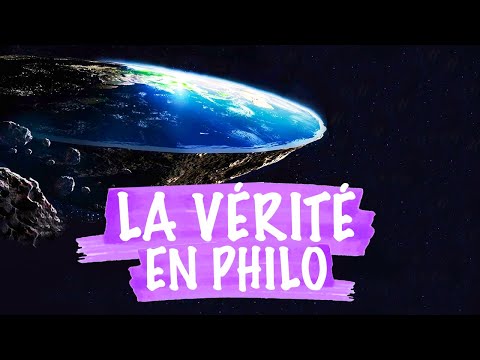
La Vérité - Philosophie - Terminale
New Section
The discussion delves into the concept of truth, exploring whether there can be multiple truths and the relationship between truth and perception.
Truth and Perception
- The debate revolves around whether everyone's perspective can be considered true, leading to a discussion on individual truths.
- Two fundamental questions are posed: Can each person have their own truth, and is truth subjective?
- Reference is made to individuals who believe in a flat Earth, highlighting the diversity of perspectives that exist.
- Truth is defined as the correspondence between thought and reality, emphasizing that truth is based on one's representation of reality.
- The notion of absolute truth is challenged by historical examples where scientific theories were later proven false, questioning the existence of a single absolute truth.
New Section
This segment explores the evolving nature of knowledge and challenges the idea of absolute truths.
Evolution of Knowledge
- Historical instances are cited where widely accepted beliefs were later debunked, illustrating how perceptions of truth evolve over time.
- The example of the sun revolving around the Earth historically showcases how scientific understanding can change drastically.
- The discussion raises questions about whether reality is shaped by our perspectives and if there can be multiple valid truths based on differing viewpoints.
New Section
Delving into relativism versus absolutism in defining truth and knowledge.
Relativism vs. Absolutism
- Exploring relativism as the belief that truth is relative to individuals, contrasting with absolutism where truths are independent and unchanging.
- Factors influencing individual perspectives are discussed, including spatial position, physical constitution, psychological makeup, personal experiences, desires, and interests.
New Section
Distinguishing between what exists objectively versus subjectively in relation to individual perceptions.
Objective vs. Subjective Existence
- Drawing parallels between what exists objectively (independent existence) versus subjectively (perceived existence), reflecting on how personal viewpoints shape interpretations.
Facteurs Influant sur le Point de Vue
This section discusses various factors that influence one's perspective and how viewpoints evolve over time.
Factors Influencing Perspectives
- Perspectives change over a lifetime, influenced by personal growth and experiences.
- Education and culture shape viewpoints, with language impacting how individuals perceive reality.
- Reality is subjective as it depends on individual perception, leading to the concept of subjective truth.
- Constant change in perspectives highlights the absence of absolute truth.
- Language facilitates communication of viewpoints, suggesting the existence of an objective reality.
Subjectivity vs. Objectivity in Truth
This section delves into the distinction between subjective opinions and objective truths.
Subjectivity vs. Objectivity
- Contradiction arises when claiming multiple truths exist simultaneously.
- Distinguishing between subjectivity and objectivity is crucial for understanding truth.
- Plato's analogy of finding directions emphasizes the difference between opinion and knowledge.
- Knowledge based on experience reflects scientific certainty, contrasting with mere beliefs or opinions.
Tolerance and Diversity of Opinions
The discussion shifts towards tolerance, diversity of opinions, and their implications on societal discourse.
Tolerance and Diversity
- Embracing diverse opinions is fundamental for democracy and societal progress.
- Acknowledging multiple truths prevents authoritarianism but requires discernment to avoid intellectual complacency.
Allégorie du Monde de l'Apparence et de l'Opinion
The discussion revolves around the allegory of the world of appearance and opinion, highlighting how individuals often mistake appearances for truth and the implications of breaking free from such illusions.
Allegory Interpretation
- The freed individual in the allegory realizes the illusory nature of his existence in a cave, facing challenges when trying to enlighten others.
- Opinion is portrayed as a comfortable confinement, hindering individuals from seeking true knowledge and understanding.
- Tolerance towards diverse opinions may not always lead to genuine freedom or respect for liberties, emphasizing the importance of transcending comfort zones to pursue truth.
Tolérance et Vérité: Une Perspective Philosophique
Delving into the complexities of tolerance and truth, exploring how differing opinions intersect with notions of absolute truth and relative perspectives.
Perspectives on Truth
- Acknowledging relative truths while recognizing moments where consensus can be reached, especially in areas like science versus politics.
- Contrasting absolute versus relative truths through philosophical lenses such as Protagoras' "man is the measure of all things" and Aristotle's metaphysical concepts.
- Exploring contradictions within the idea of "each to their own truth" by delving into metaphysical discussions by Aristotle and Plato.
La Nécessité Pratique de la Tolérance
Discussing practical applications of tolerance concerning diverse truths, balancing ideological acceptance with critical thinking.
Practical Considerations
Turn any video into a summary like this
YouTube links, meetings, lectures — with transcripts, search, and chat.