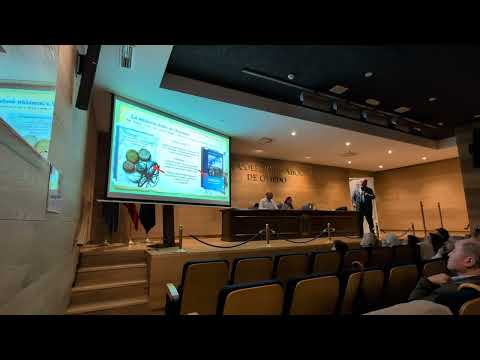
«Regnum Asturorum sin motos ni tópicos» Dr. Aguado Blázquez
Welcome and Introduction to the Conference
Opening Remarks
- The speaker expresses gratitude and welcomes attendees to the inaugural event organized by the Association of Friends of the Kingdom of Asturias, titled "Encounters with the History of the Kingdom of Asturias."
- The association has been active for a year, aiming to provide educational and informative activities, including monthly talks starting from this event.
Upcoming Events
- The next talk is scheduled for November 20th, with further details provided by Sema Castillo, the secretary of the association.
Details on Today's Conference
Title and Venue
- Today's conference is titled "Simple Chronicle of a Medieval Kingdom Facing Islam: The Kingdom of Asturias Without Myths or Stereotypes."
- Acknowledgment is given to the Oviedo Bar Association for their support in hosting these events.
Speaker Introduction
- The first speaker is introduced as a multifaceted individual who is not only part of the association but also serves on its board.
- He holds a doctorate in medicine from Oviedo University, with his thesis focusing on Byzantine iconoclasm during a significant historical period coinciding with Muslim conquests in Spain.
Speaker's Academic Background
Educational Achievements
- Highlights include a master's degree in forensic medicine and numerous publications related to medical history.
- His research primarily focuses on medieval history, particularly articles about Constantinople and Byzantium.
Contributions to Historical Studies
- He has published several books on Byzantine history and has contributed significantly to academic journals.
Personal Insights into Speaker's Journey
Passion for History
- The speaker's passion for history began in adolescence while exploring local historical sites in Asturias.
- His extensive personal library reflects his dedication to historical research, which he pursued alongside his medical career.
Professional Affiliations
- He is affiliated with various historical societies focused on medicine and Byzantine studies due to his contributions to these fields.
Conclusion Before Conference Begins
Final Thoughts
- The speaker emphasizes his commitment to applying scientific methods in historical research.
Introduction to the Presentation
Overview of Future Exhibitions
- The presentation aims to clarify essential aspects of a historical period while addressing myths and topics that threaten objective understanding.
- Dr. Francisco expresses gratitude towards the Colegio de Abogados for hosting the event, emphasizing its historical significance as it is located above what was once King Alfonso's palace.
Acknowledgments and Context
- He thanks the Asociación de Amigos de Asturias and its board for granting him the privilege to initiate these discussions, which he believes will be enriching for attendees.
- Dr. Francisco intends to provide a general introduction without delving into intricate details, setting the stage for future presentations.
The Importance of Rational Understanding
Distinguishing Myths from Reality
- Emphasizes the need to recognize and dismiss certain myths that hinder rational understanding; acknowledges that while myths are part of human experience, they must not cloud reality.
Historical Context: The Arab Invasion
- Introduces the topic of the Arab invasion of Spain, suggesting that some modern interpretations may misrepresent this historical event.
Analyzing Historical Sources
Definition and Evidence of Invasion
- Defines "invasion" as an act involving forceful occupation; references numerous Islamic sources documenting this event.
- Mentions recent archaeological findings related to Islamic conquest, including artifacts like seals used during warfare.
Understanding Imperialism in Context
Characteristics of Arab Conquest
- Discusses how the invasion was not merely a singular event but part of a broader imperialistic agenda by Arabs dating back to earlier conquests in regions such as Syria and Palestine.
Timeline of Conquests
- Details significant milestones in the conquest timeline, including key cities taken by 714 AD, illustrating rapid territorial expansion.
The Nature of Arab Imperialism
Defining Imperialism
- Describes imperialism as a state's tendency to extend control over others through military means; contextualizes this within early Islamic conquests starting from 634 AD.
Historical Continuity
- Highlights that by 711 AD, there had been nearly a century’s worth of successful military campaigns leading up to their arrival in Hispania.
Consequences on European History
Impact on Neighboring Regions
- Discusses how battles against empires like Byzantium shaped regional dynamics; notes critical battles such as Talas (751 AD), which prevented further Muslim expansion into China.
Significance in Broader Historical Narrative
The Impact of Islamic Conquest on Hispania
Overview of Devastation and Historical Accounts
- The speaker describes the devastation, terror, and fear experienced during the Islamic conquests in Hispania, referencing an Armenian account that highlights the horrors inflicted upon the region.
- The discussion includes a mention of a British chronicler who notes that Islamic proselytism during this period was characterized by coercion and warfare rather than peaceful preaching.
- A chronicle from 754, attributed to a Mozarabic author living in Hispania, echoes sentiments of despair regarding Spain's ruin, comparing it to its former allure.
Similarities Among Chroniclers
- The tone and language used by various chroniclers—including Armenian, British, Byzantine—are noted as being strikingly similar in their descriptions of Hispania's decline.
- Almari’s modern account details the conquest of Córdoba, illustrating how resistance groups were cornered and faced dire choices between conversion or death.
Mechanisms of Conquest
- Two primary mechanisms employed by Muslim forces are identified: surrender for protection or armed conquest leading to death or slavery.
- The speaker defines colonialism within the context of conquest—highlighting large-scale immigration from colonizers and control over local labor and resources.
Colonial Structure Post-Conquest
- Following conquest, there was significant immigration from Berber tribes and Arabs into Hispania. This led to new taxation systems aimed at exploiting local populations for labor.
- The newly acquired territory eventually took on a distinct identity as part of an emirate before evolving into an independent caliphate structure.
Emergence of Resistance
- Amidst imperialism and colonization efforts arose a rebellion that contributed to the formation of the Kingdom of Asturias around 717–722 AD.
- Pelayo is identified as a key leader in this rebellion; he is described as having military experience due to his noble lineage within Visigothic society.
Strategic Locations for Resistance
- The area known as Picos de Europa is highlighted as a strategic location for resistance against both Roman and later Muslim conquests due to its agricultural capacity and defensible terrain.
The Arab Defeat at the Gates of Constantinople
Overview of the Battle
- A significant naval and land battle occurs near Constantinople, marking a tremendous defeat for the Arabs. The professor refers to this event as the "Stalingrad of the Arabs," indicating its critical impact on their military capabilities.
- Following this battle, Arabs experience a substantial loss in offensive capacity. Documentation reveals that the caliph sends a note to the governor in Hispania, suggesting it may be prudent to abandon Spain and return.
Strategic Decisions Post-Battle
- Despite initial thoughts of retreating from Hispania, the governor responds that conditions are manageable and economically viable, leading him to stay.
- The narrative also includes another defeat at the Battle of Toulouse in 721, where Franco de la Gia defeats an Arab governor, further illustrating a pattern of setbacks for Arab forces.
The Battle of Covadonga
- Discussion shifts to the Battle of Covadonga; while some criticize its significance, it is portrayed as a crucial confrontation with potential for meaningful outcomes.
- This battle results in maintaining real independence for certain territories against Muslim control. Pelayo is recognized as a key figure during this period.
Historical Context and Sources
- The term "barbarian" used by Arabic sources when referring to Pelayo raises questions about translation accuracy; it often denotes non-Arabized individuals rather than implying savagery.
- Descriptions from Arabic sources generally portray Pelayo positively despite his non-Islamic status. His territory aligns with ancient diocesan boundaries in northwest Iberia.
Revelations About Pelayo's Leadership
- There are indications that there was an initial capitulation agreement between Arabs and local leaders before conflicts escalated.
- An Arabic chronicle describes Pelayo as having emerged victorious over Arabs who were forced to retreat from Asturias.
Proclamation and Legacy
- Pelayo’s rise to kingship is attributed not only to his lineage but also his military successes; he was proclaimed king by locals due to these achievements.
- Insights suggest that Pelayo had prior combat experience under previous rulers, enhancing his credibility as a leader during these turbulent times.
Critique of Asturian Chronicles
- The discussion highlights skepticism surrounding Asturian chronicles written between 881 and 900 AD. Critics question their authenticity given historical context.
- These chronicles face scrutiny due to perceived biases against them; they are often dismissed without consideration despite their historical significance.
Conclusion on Historical Narratives
Historical Perspectives on Asturias and Its Romanization
The Validity of Historical Chronicles
- The speaker emphasizes the importance of historical chronicles, acknowledging their inherent biases but asserting that they remain valid sources of information despite exaggerations or omissions regarding victories and failures.
The Myth of Indomitable Asturias
- A challenge is presented against the myth of Asturias as an eternally resistant region since the 3rd century BC. The speaker argues that Asturias was significantly Romanized, contrary to popular belief.
Evidence of Roman Influence
- The area is noted for its substantial Roman epigraphy, indicating a strong cultural influence from Rome. There are references to significant migrations into this territory during historical conflicts.
Formation of the Kingdom
- Discussion centers around the emergence of kingdoms through military successes and strategic decisions. The narrative suggests that many people rallied under leaders like Pelayo during times of conflict.
Early Christian Influences in Asturias
- An inscription from the now-destroyed Santa Cruz de Konis church highlights early Christian presence in Asturias, showcasing Latin usage and connections to figures like Constantine the Great.
The Role of Alfonso I in Asturian History
Military Successes and Territorial Expansion
- Alfonso I's reign is characterized by military achievements that solidified his kingdom's power. His campaigns extended into Galicia, reflecting strategic territorial gains.
Defensive Strategies Against Invaders
- The speaker discusses Alfonso I’s establishment of defensive strategies akin to Byzantine practices, aimed at preventing enemy logistics from threatening Asturian territories.
Challenges Faced by Armies
- Historical context reveals that armies relied heavily on local resources for sustenance; thus, controlling access to these resources was crucial for defense against invaders like Arab forces.
Environmental Factors Influencing Historical Events
Impact of Climate on Warfare
- Recent research indicates severe drought conditions during Alfonso I's time may have contributed to military movements and population shifts within regions affected by desertification.
Understanding Mozarabes and Their Cultural Integration
Definition and Characteristics of Mozarabes
- The term "mozarabes" refers to Christians living in Al-Andalus who had adopted Arabic culture, losing their original cultural identity.
- This cultural assimilation included adopting Arabic clothing, food, and even language over time, similar to how modern societies adopt dominant cultures.
Historical Context of Migration
- During the early stages of Islamic rule, there were no mozarabes; instead, there were "dines," or protected individuals who negotiated their status with Arab rulers.
- Migrants moving northward from Al-Andalus were primarily dines rather than Arabs, sharing similar languages and cultural traditions.
Factors Influencing Migration
- Economic pressures such as heavy taxation and social humiliation prompted migration.
- The capitation tax was imposed on Christian males post-puberty, varying based on wealth but often leading to arbitrary financial burdens.
Taxation System Under Islamic Rule
- The capitation tax created significant fear among Christians due to its unpredictable nature.
- Additionally, a land tax could take up to 50% of agricultural yields from Christian farmers, creating further economic strain.
Legal Framework for Non-Muslims
- The Pact of Omar established legal restrictions for non-Muslims (dhimmis), including dietary laws and obligations like hosting Muslims.
- These regulations often led to resentment among Christians due to their perceived harshness and the burden they placed on daily life.
The Appeal of the Kingdom of Asturias
Advantages Offered by Asturias
- The Kingdom of Asturias provided legal security through Roman-based laws that appealed to many fleeing oppression.
- A system known as "Dominic" allowed landowners (dominus) to lease lands while ensuring rights for those who worked them.
Settlement Incentives
- Policies encouraging settlement included granting property rights for cultivating unclaimed lands, fostering migration into Asturias.
Migration Patterns in Historical Context
Evidence of Migration Trends
- Historical records indicate that areas like Sarria were colonized by migrants from Toledo seeking refuge or new opportunities after fleeing oppressive conditions in Al-Andalus.
King Fruela's Role in Expansion
Leadership and Military Campaigns
- King Fruela is characterized as a strong leader who undertook military expeditions into regions like Alava and Vizcaya.
History of the Kingdom of Asturias
The Foundation and Early Challenges
- Discussion on the conditions necessary for establishing control over a territory, referencing historical figures like Kanga and Doo as precursors to significant projects in San Salvador.
- Mention of Alfonso II's testament where he reflects on his birth and baptism in Oviedo, indicating the existence of the church at that time.
- Overview of Fruela's military campaigns towards Galicia, including capturing Munia, who is noted as Alfonso I's mother.
Political Turmoil and Military Conflicts
- Analysis of a major assassination that disrupted an important project, leading to a period marked by instability under rulers like Aurelio and San Martín.
- Notable mention of an exceptional rebellion during medieval times involving "cierros," indicating severe unrest within the region.
- Introduction of Mauregato, who is recognized for declaring Santiago as the patron saint of Hispania through an acrostic dedicated to him.
Leadership Changes and Warfare
- Description of Bermudo’s catastrophic defeat which led to his abdication in favor of Alonso II, marking a resurgence in military conflicts aimed at preserving the kingdom.
- Insight into ongoing wars characterized by attempts from Muslim forces to dominate Asturias, referred to as "dar al-harb" or house of war according to Islamic law.
Resistance Against Invasions
- Examination of Alfonso II’s reign during intense warfare; despite overwhelming odds, he managed to maintain resistance against continuous attacks from Muslim armies.
- Emphasis on how these conflicts were not merely territorial disputes but existential battles for survival between two civilizations over centuries.
The Role of Charlemagne
- Commentary on Charlemagne’s lackluster support for Alfonso II during critical periods; while he engaged in minor operations later on, substantial aid was absent when it was most needed.
Alfonso's Influence on Toledo and the Visigothic Tradition
The Foundation of Oviedo
- Alfonso is credited with not just founding Oviedo but effectively "refounding" it, as his father had already planned its establishment. This act mirrors the ceremonial significance of Toledo in the kingdom.
Religious Architecture and Patron Saints
- The construction of churches such as San Juan, Santa María, and San Salvador reflects Atanagildo's preferences for saints like San Julián and Santa Basilisa, indicating a strong connection to local patronage.
- Various churches dedicated to significant figures like San Pedro, Pablo, and los Santos Apóstoles highlight the religious landscape of Toledo during this period.
Historical Context of Religious Practices
- The tradition of dedicating churches to Christ can be traced back to the Council of Ephesus; this practice influenced both Byzantine and Western traditions.
- Alfonso’s actions are seen as a continuation of established rites rather than a radical departure from them.
Rites and Liturgical Changes
- Alfonso maintained the Hispanic Rite against pressures from Charlemagne's papacy that sought uniformity through Roman Rite adoption.
- Despite initial resistance within Spanish churches towards adopting Roman practices, Alfonso later introduced these changes in 1080 to align with European customs.
Legal Framework and Governance
- The Council of Frankfurt suggested that Islamic conquest was a punishment for Gothic heterodoxy; however, Alfonso did not seem deterred by this notion in his governance.
- He mandated that all monasteries adhere to Benedictine rules while maintaining traditional practices until late in his reign.
The Legacy After Alfonso I
Transitioning Dynasties
- Following Alfonso I’s death, a new dynasty emerged under Ramiro. His leadership style emphasized lawfulness and order based on historical accounts.
Ramiro's Leadership Style
Overview of the Kingdoms in Europe
The Establishment of León and Astorga
- Ordoño's reign marks significant advancements, establishing key cities like León and Astorga, which become crucial for territorial control.
- The Chronicle notes that Ordoño fortified these cities along with Tuy and Amaya, overcoming challenges posed by Arab incursions.
The Context of Al-Andalus
- During this period, Al-Andalus faced severe hardships; Sanio Córdoba describes a "mortiferous" time where people insulted the prophet to provoke martyrdom due to their dire circumstances.
- Many individuals preferred martyrdom over a corrupt life under oppressive conditions, highlighting the desperation felt among the populace.
The Reign of Alfonso III
Expansion and Military Successes
- Alfonso III is portrayed as a formidable king who expanded his territory significantly, focusing on regions like Zamora and Coimbra.
- His military victories at Polvoria and other battles were pivotal in solidifying Christian presence against Muslim forces.
Political Dynamics Post-Ordoño
- Following Ordoño's death, there was an attempted usurpation by Fuela; this indicates a lack of hereditary monarchy during this period.
- The Chronicle suggests that political power was not yet firmly established within dynastic lines but rather contested among local nobility.
Alfonso III’s Strategic Vision
Military Justifications for Rule
- Victory in battle was seen as divine approval; thus, military success became essential for legitimizing authority during Alfonso's reign.
Key Cities: León and Santiago de Compostela
- León served as a central hub with strong Roman walls that were frequently rebuilt after destruction. Its strategic importance grew under Alfonso III.
- Santiago de Compostela emerged as a European pilgrimage site under Alfonso III’s vision, aiming to enhance resources for further conquests across Spain.
Conclusion on Territorial Ambitions
Historical Significance of San Pelayo
The Importance of the Ancient Roman Road
- The speaker discusses the historical significance of the ancient Roman road, emphasizing its revival for pilgrims traveling from various regions such as France, Italy, and England.
- This revival is seen as a major success attributed to Alfonso III, highlighting the importance of safe travel routes for religious pilgrims.
Prophetic Chronicles and Reconquest
- A prophetic chronicle suggests that signs in the stars indicate impending doom for the Saracens and predicts Alfonso's reign over all Spain.
- The author expresses confidence in Alfonso's ability to reconquer Spain, reflecting a moment of optimism during military successes against Arab forces.
Legacy of San Pelayo
- Discussion shifts to San Pelayo, a martyr whose relics were brought to Asturias. His story intertwines with local history and religious significance.
- There are 96 place names associated with San Pelayo within territories once belonging to the Kingdom of Asturias, indicating his widespread influence.
Historical Context and Personal Stories
- The narrative includes details about how certain regions like Guipuzcoa may not have been part of Asturias based on historical records related to San Pelayo.
- An anecdote is shared about a priest who attempted to rescue a young boy named Pelayo from captivity but ultimately failed, leading to tragic consequences.
Relics and Cultural Heritage
- The story continues with Pelayo’s martyrdom; he resisted abuse which led to his brutal execution. His remains were later transported back to León.
- Emphasis is placed on visiting the church where these relics are kept. It serves as a reminder of cultural heritage tied closely with local history.
Connection Between Saints and Local Identity
- The speaker reflects on personal connections with saints like Eulalia while noting their geographical concentration in Asturias and Galicia.
Asturian Saints and Their Cults
Historical Context of Asturian Saints
- Matilde discusses the historical significance of the name "Eulalia" in Asturias, noting that it was common among women in the 17th and 18th centuries.
- Eulalia remains a patron saint of the Cathedral and diocese, with her feast day being celebrated in December, despite some complications regarding its timing due to other festivities.
- The absence of local dedications to saints like Meritens in their original regions (Toledo and Mérida) suggests that their cults were transferred to areas once part of the Kingdom of Asturias.
Transfer and Preservation of Relics
- The relics brought by settlers from Toledo and Mérida contributed to the establishment of Eulalia's cult in Asturias, as these practices continued where they had been relocated.
- The decline of Mozarabic culture led to the disappearance of certain cult practices; by the time Alfonso VI entered Toledo, many traditions had already faded away.
Martyrdom and Religious Persecution
- Matilde recounts a story about Eulalia, whose father was imprisoned during religious persecution. She bravely sought him out but faced tragic consequences at the hands of a Roman pretor.
- Eulalia's martyrdom is highlighted as she resisted abuse, leading to her execution—a significant event that solidified her status as a saint.
Influence on Asturian Christianity
- Following Eulalia's death, there was an effort to establish Christianity more firmly in Asturias. A notable figure sought relics for a basilica he built during this period.
- The acquisition of Eulalia’s relics marked an important moment for Asturian churches; they became symbols of protection and veneration within local communities.
Debates on Historical Narratives
- Matilde addresses contemporary debates among historians regarding whether Muslim invasions were purely military or involved elements of religious conversion—emphasizing that sources should be critically evaluated for accuracy.
Discussion on Conquest, Imperialism, and Colonialism
Concerns About Historical Interpretation
- The speaker emphasizes that the discussion is not just about conquest but also touches on imperialism and colonialism, indicating a historical context that extends far back in time.
- There is concern regarding the understanding of history by individuals with extreme ideologies and minimal historical knowledge, suggesting a need for critical engagement with historical narratives.
Academic Responsibility
- The speaker expresses deep concern over a university professor's views on these topics, highlighting the importance of academic integrity and responsibility in teaching history.
- The worry is not only about what is being published but also about who is publishing it, reflecting broader concerns about educational standards in universities.
Future Engagement
- An invitation is extended for further discussions scheduled for November 20th at the same time and place to continue exploring historical themes related to "the blue kingdom."