La diversitat climàtica i la vegetació a Catalunya i Espanya
Diversity of Climate and Vegetation in Catalonia and Spain
In this section, the speaker delves into the mechanisms influencing climate in the Iberian Peninsula, focusing on atmospheric circulation patterns and their impact on vegetation diversity.
Mechanisms Influencing Climate
- Global atmospheric circulation mechanisms play a crucial role in shaping regional climates.
- Factors such as solar influence and Earth's rotation contribute to atmospheric patterns.
- Atmospheric cells originating from the equator move towards higher latitudes, affecting climate zones.
Jet Stream Dynamics
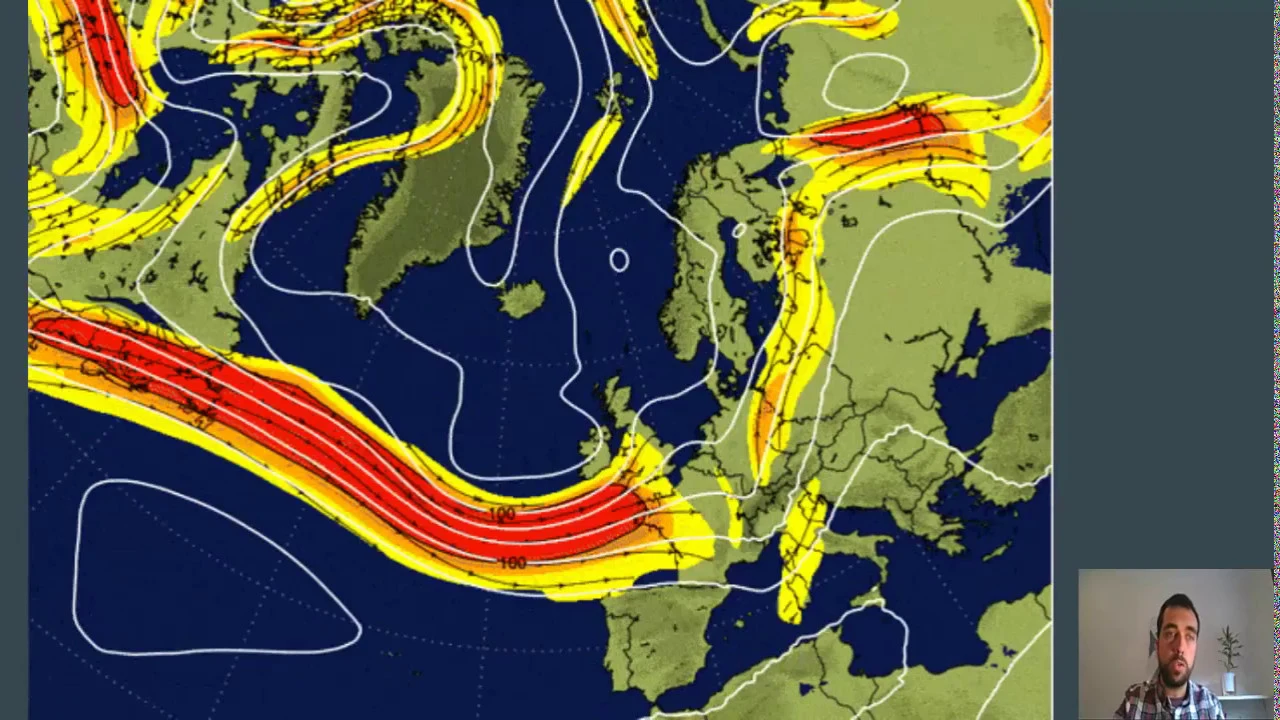
- Jet streams are high-altitude bands of fast-moving air that influence weather patterns.
- Subtropical jet streams occur between 30 and 45 degrees latitude, while polar jet streams are closer to 60 degrees latitude.
- These jet streams result from interactions between atmospheric circulation systems.
Surface Air Circulation Patterns
- The movement of jet streams influences surface air circulation patterns.
- Distinctive wave-like forms in surface air circulation extend from the Americas to Europe.
- These patterns create climatic zones at different latitudes, impacting local weather conditions.
Influences on Iberian Peninsula's Climate
This segment explores various factors influencing the climate of the Iberian Peninsula, including tropical influences, Atlantic circulations, and Mediterranean Sea effects.
Tropical Anticyclones and Seasonal Stability
- Tropical anticyclones stabilize the climate during summer over the Iberian Peninsula.
- Warm air masses from tropical regions lead to mild temperatures and stability during certain seasons.
Westerly Circulation Effects
- Westerly circulations bring depressions to higher latitudes like those of the Iberian Peninsula via Atlantic fronts.
- Regions near the Atlantic experience increased precipitation and milder temperatures due to these circulations.
Dynamic Interplay Between Latitudes
- The dynamic interaction between polar and tropical latitudes results in varied climatic conditions.
- Winter phenomena like cold air influxes can lead to continental polar air masses affecting temperature extremes.
Mediterranean Sea Influence
- The Mediterranean Sea plays a significant role in shaping the climate of the Iberian Peninsula due to its semi-autonomous behavior.
- During autumn months, interactions with incoming air masses can trigger weather events like "gota fría."
Climates of the Iberian Peninsula
In this section, the speaker discusses the various climates found in the Iberian Peninsula, highlighting factors such as relief, proximity to seas, and continental spaces that influence these climates.
Understanding Climate Types
- Four main climate types are highlighted: Oceanic/Atlantic climate along the Atlantic coast, Mediterranean climate covering regions like Catalonia and Valencia, Continental climate in central areas including parts of the Ebro Basin, and Subtropical climate found in the Canary Islands.
- Climatograms are essential tools for analyzing climates. These graphs display monthly average temperatures (red line) and monthly precipitation volume (blue bars), providing valuable insights into regional climatic conditions.
Oceanic Climate Characteristics
- The Oceanic climate is exemplified by Santiago de Compostela in Galicia with mild temperatures throughout the year and significant rainfall exceeding 1000 mm annually. Winters are not severe, nor are summers excessively hot.
- This climate type experiences over 150 rainy days per year with moderate temperatures ranging from 11 to 15 degrees Celsius. Prevailing westerly winds bring abundant rainfall, supporting short but regular rivers and traditional vegetation like meadows and forests.
Mediterranean Climate Features
- The Mediterranean climate is explored using Barcelona as an example. Contrasting with the Oceanic climate, it exhibits pronounced temperature variations across seasons. Precipitation levels are lower at around 600 mm annually.
- Summers witness drought periods while autumn brings torrential rains. Winds from the east (levante) dominate this region affecting agriculture with crops like vines, wheat, olives, and fruits thriving under these conditions.
Continental Climate Insights
- The Continental climate primarily affects Spain's interior regions characterized by distinct temperature fluctuations between winter lows and summer highs. This type is influenced by its location within the Spanish plateau.
- Notable for its extreme thermal oscillations reflected in climatograms showing low winter averages but higher summer temperatures compared to other regions like Mediterranean or Oceanic climates.
Detailed Climate Analysis of Catalonia
In this section, the speaker provides a detailed analysis of the climate in Catalonia, focusing on various aspects such as altitude, precipitation levels, vegetation types, and climatic influences.
Altitude and Precipitation
- The summer months in high-altitude areas like Banca experience significant heat with low precipitation levels.
- Cities like Vaceta at 700 meters altitude have similar climate patterns with low precipitation but very hot summers.
Vegetation and Climate Characteristics
- Vegetation in these regions includes pines, oaks, steppes, and vineyards typical of a subtropical climate.
- The Canary Islands exhibit a tropical dry climate influenced by trade winds from Africa that bring continental air resulting in low rainfall.
Temperature and Rainfall Patterns
- The Canary Islands maintain a relatively constant temperature throughout the year with an average of 17 degrees Celsius but exceptions occur in northern mountain slopes due to orographic effects.
- The relief features of the islands contribute to diverse climates ranging from lush forests due to horizontal rain to arid regions with minimal rainfall.
Climatic Domains of Catalonia
This section delves into the climatic domains present in Catalonia highlighting the influence of Mediterranean and oceanic climates along with regional variations.
Oceanic Climate Influence
- The Val d'Ellà Atlàntica region is unique for its oceanic climate within Catalonia while other parts are predominantly Mediterranean due to relief factors.