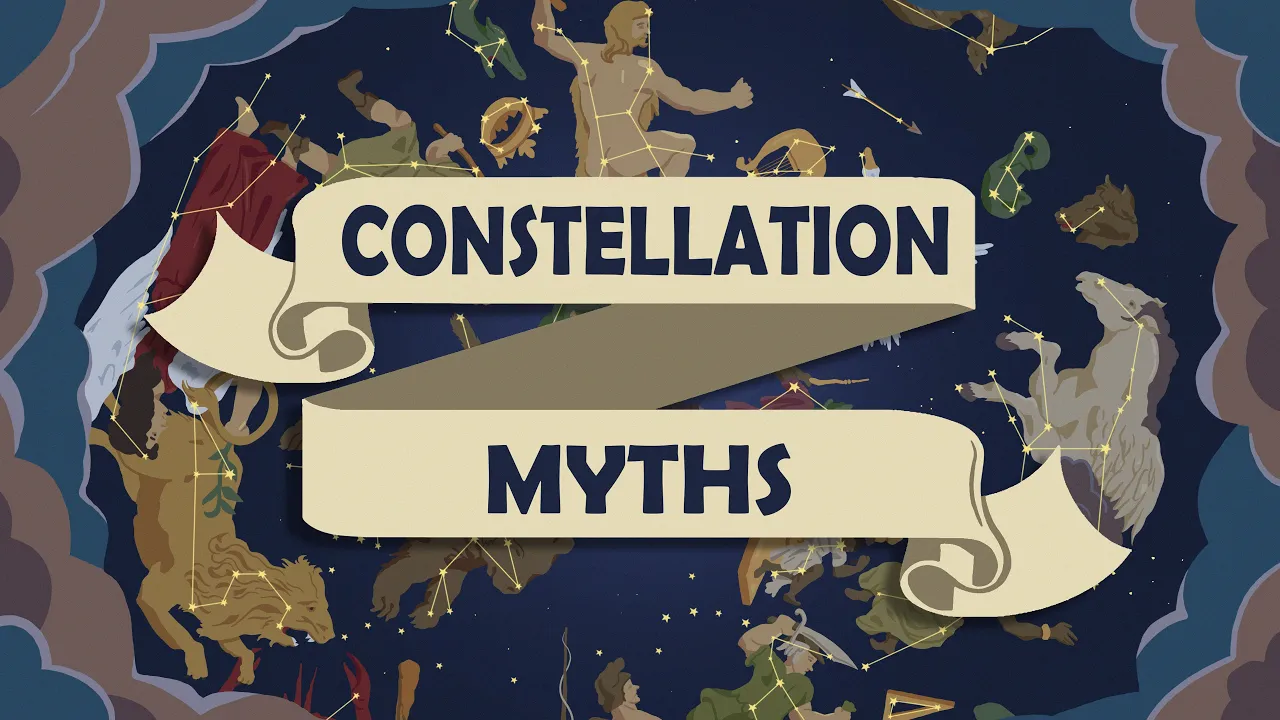
Star Myths: The Stories of the Constellations
Constellations and Their Myths
The video explores the significance of constellations, particularly focusing on Greek mythology and how these stories are reflected in the night sky.
The Importance of Constellations
- Constellations were used for navigation, fortunetelling, and storytelling by different cultures.
- Modern constellations primarily originate from ancient Greek myths.
Stories Behind Constellations
- Understanding constellation stories aids in better recollection and connection with the stars.
Myth of Perseus
- Perseus, a demigod son of Zeus, known for slaying Medusa and rescuing Andromeda.
- Pegasus, a winged horse born from Medusa's blood, plays a role in Perseus' myth.
Cepheus, Cassiopeia, and Andromeda
- Cepheus and Cassiopeia's roles in sacrificing Andromeda to save Ethiopia from destruction.
- Identifying Copia's distinctive W or M shape among constellations.
Hercules' Labors
- Hercules' constellation representing his heroic feats including slaying the Nemean Lion (Leo).
- Confronting the Lernaean Hydra with its regenerating heads as part of his labors.
Constellations in Greek Mythology
This section delves into the constellations associated with Greek mythology, focusing on Hercules's labors, the apples of the Hesperides, and myths of Jason and Orion.
Hercules's Labors
- Hercules captures the Cretan Bull as part of his labors. Poseidon sent the bull as a sacrifice, but Minos kept it for its beauty, angering Poseidon.
- The constellation Taurus represents the captured bull. Hercules easily retrieves it for King Eurystheus.
Apples of the Hesperides
- Hercules embarks on a quest for the golden apples guarded by nymphs. He encounters Prometheus and shoots down an eagle to free him.
- The eagle Aquila and Hercules's arrow Sagitta are placed in the sky by Zeus. The apples are guarded by nymphs and a dragon named Ladon.
Myths of Jason and Argonauts
- Jason seeks the Golden Fleece aboard the Argo ship with heroes like Hercules. The fleece is from a golden ram named Chrysomallus.
- Constellations Karina, Puppis, and Vela represent parts of Argo. Aries symbolizes Chrysomallus. Dioscuri Castor and Pollux are also part of this myth.
More Constellations in Greek Mythology
This section explores additional constellations linked to Greek myths such as Draco representing Ladon in Hercules's tale, Swan representing Zeus in Jason's story, and Orion's constellation depicting his tragic end.
Draco - Representing Ladon
- In one version of Hercules' tale, he tricks Atlas into getting apples; another version involves killing Ladon himself.
- Constellation Draco symbolizes Ladon guarding the golden apples from Hercules.
Swan & Gemini - Zeus' Sons
- Signis represents Zeus disguised as a swan seducing Leda while Gemini depicts Dioscuri twins Castor (mortal) and Pollux (son of Zeus).
- These constellations connect to Jason's myth through their roles in ancient Greece.
Orion: The Hunter
Orion is highlighted as a prominent constellation embodying a tragic story involving boasting about hunting prowess leading to his demise at Gaia's hands.
Orion - A Giant Hunter
- Orion boasts about hunting all beasts globally, angering Gaia who sends a scorpion to kill him.
- Artemis places Orion in the sky along with Canis Major & Minor (hunting dogs) and Lepus (hare), immortalizing his story through constellations.
Stargazing Reflection
Reflecting on how ancient stories are preserved through constellations that continue to inspire awe across generations.
Celestial Connections
- Stargazing connects us with ancient tales like those of Hercules, Jason, and Orion immortalized in constellations.