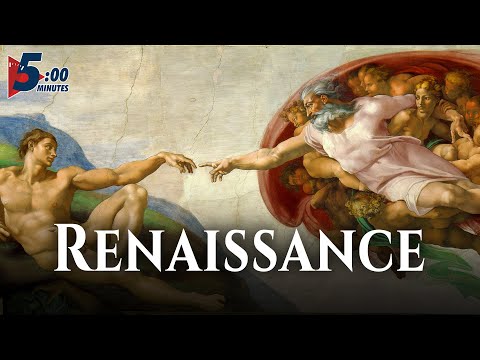
Brief History of the Renaissance | 5 MINUTES
Renaissance: A Rebirth of Culture and Thought
Overview of the Renaissance Period
- The Renaissance was a pivotal period in European history, primarily occurring in Italy from the 14th to the 16th century, marking a transition from the Middle Ages to modern civilization.
- The term "Renaissance" translates to "rebirth," specifically referring to the revival of classical Greek and Roman arts and philosophy after an era characterized by war, cultural decline, and pandemics like the Black Death.
Humanism: The Heart of Renaissance Philosophy
- Central to the Renaissance was humanism, a philosophy that celebrated human creativity and individual achievement while placing man at the center of his own universe rather than God. This contrasted sharply with medieval thought focused on divine authority.
- Humanism drew inspiration from classical texts, promoting a shift away from strict adherence to Catholic Church doctrines towards valuing personal intellect and creativity.
Economic Factors Influencing the Renaissance
- Florence emerged as a wealthy hub due to trade with the Ottoman Empire, which played a significant role in fostering Renaissance culture. Wealthy patrons like the Medici family supported public art for both recognition and aesthetic appreciation.
- Various theories suggest that reintroduced classical texts through scholars fleeing Constantinople's fall contributed significantly to this cultural movement alongside returning crusaders who encountered advanced Muslim civilizations.
Expansion of Literature and Arts
- The movement spread beyond Florence into other Italian city-states such as Venice, Milan, and Rome, aided by figures like Dutch philosopher Erasmus and advancements in printing technology by Gutenberg. This allowed early humanist works like Petrarch’s writings to reach wider audiences.
- Notable literary works from this period include Dante's Divine Comedy, Machiavelli's Prince, and Shakespeare's Hamlet, showcasing diverse themes reflective of human experience during this transformative time.
Artistic Achievements During the High Renaissance
- The apex of artistic talent occurred during the High Renaissance with masters such as Leonardo da Vinci, Raphael, and Michelangelo producing iconic works characterized by anatomical accuracy, emotional depth, naturalistic space depiction, and complex subject matter. Examples include Mona Lisa and The Last Supper.
Societal Changes: From Feudalism to Capitalism
- A significant societal transformation was marked by feudalism's decline alongside capitalism's rise; increased trade coupled with labor shortages post-black death led to a burgeoning middle class demanding better wages and living conditions.
- This economic shift encouraged questioning of traditional authorities including the Catholic Church; Martin Luther’s challenges against church practices initiated movements leading toward Protestant Reformation which further diminished church influence over society.
Scientific Advancements: Challenging Established Views
- The Age of Exploration saw Europeans seeking new trade routes for gold; Columbus' discovery of America (1492) exemplified this quest for expansion while Copernicus’ heliocentric theory revolutionized scientific understanding despite initial resistance from religious authorities like the Catholic Church.
- Galileo Galilei later provided evidence supporting heliocentrism through improved telescopic observations which laid groundwork for Newtonian physics regarding gravity despite facing censorship from church institutions due to heretical implications associated with these findings.
Decline of the Renaissance Movement
- By early 17th century factors such as invasions by neighboring powers into Italian territories along with stringent censorship imposed by Catholic authorities contributed significantly towards diminishing influence of renaissance ideals across Europe leading into subsequent historical periods marked more distinctly than before between Middle Ages & Modernity .
Historical Interpretation: A Cultural Movement vs Historical Period