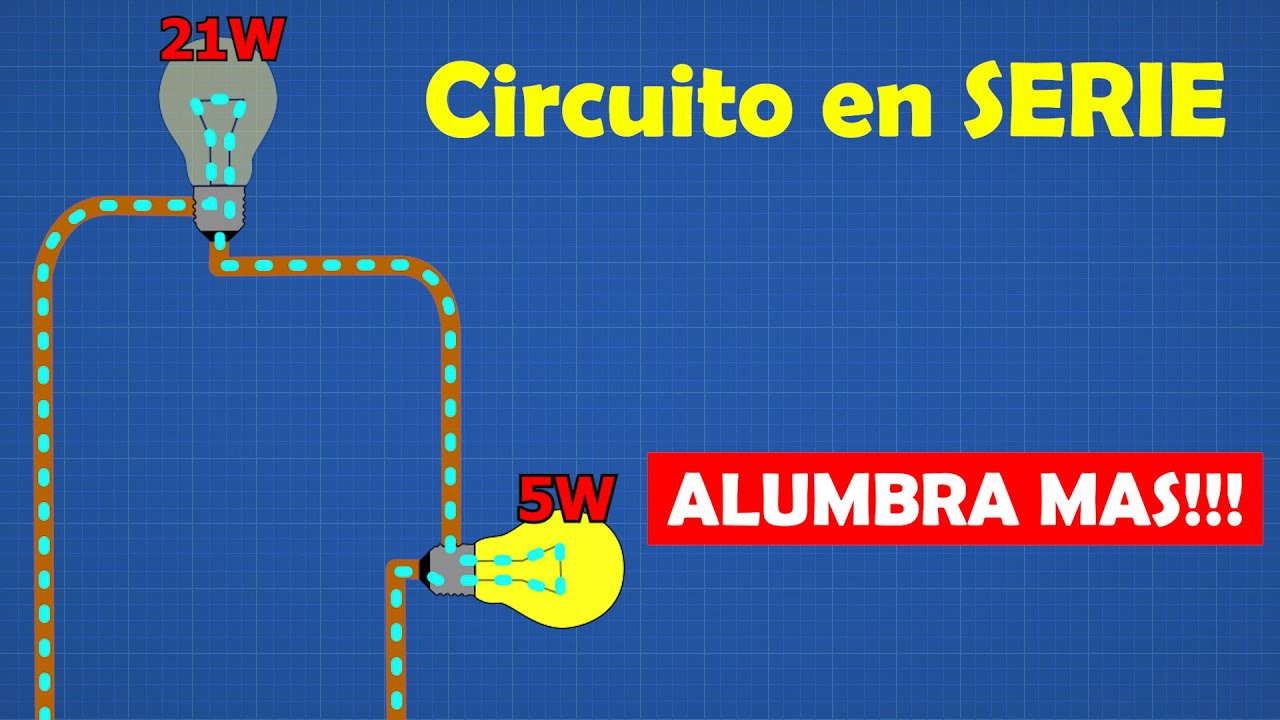
Circuito en SERIE- NADIE te lo EXPLICÓ ASÍ! 🤯
Circuit Basics Explained
In this section, the speaker introduces the concept of circuits in series and explains key principles related to voltage, current, and resistance.
Introduction to Circuits in Series
- The speaker discusses the characteristics of circuits in series and why a 5-watt bulb can shine brighter than a 21-watt bulb.
Understanding Ohm's Law
- Ohm's Law involves voltage, current, and resistance, with the formula I = V/R highlighting their relationship.
- Examples demonstrate how changing resistance affects current flow in a circuit based on Ohm's Law.
Circuit Model Analysis
- Transitioning to analyzing a circuit model with specific values for voltage, resistance, and current.
Resistances in Series
- Exploring resistances in series where the equivalent resistance is calculated as the sum of individual resistances.
- Characteristics such as total resistance equivalence are discussed using practical examples.
Implications of Series Connections
- The impact of connecting resistors in series on total resistance and current flow is explained.
Voltage Distribution in Series Circuits
This part delves into how voltage is distributed across components within series circuits.
Voltage Allocation in Series Setups
- The distribution of voltage across resistors within a series circuit is detailed through calculations and practical illustrations.
Consequences of Voltage Division
Understanding Series Circuits in Electronics
In this section, the speaker discusses the concept of series circuits in electronics, focusing on voltage division and current flow in resistors connected in series.
Voltage and Current Relationships in Series Circuits
- Resistances add up in series circuits, leading to an equivalent resistance.
- As more resistors are added in series, the total current decreases due to increased overall resistance.
- Increasing the number of resistors in a series circuit results in a decrease in current flow due to higher total resistance as per Ohm's Law.
Voltage Division and Brightness of Bulbs
- Voltages divide across resistors equally based on their values.
- Comparing different voltage scenarios for bulbs shows that higher voltage leads to brighter illumination.
Effect of Power Consumption on Resistance and Brightness
This part delves into how power consumption affects resistance and brightness in electronic components like light bulbs.
Relationship Between Power Consumption and Resistance
- Higher power-consuming components have lower resistance to allow more current flow.
- Illustration with 21W and 5W bulbs showcases how different power ratings influence brightness based on resistance levels.
Calculating Total Current and Voltage Drop
- Determining total current by considering equivalent resistance for multiple components.
- Calculating individual voltages across components based on their resistances for understanding brightness variations.
Brightness Discrepancy Explanation
- The bulb with higher wattage but lower resistance shines less due to needing less voltage compared to the bulb with lower wattage but higher resistance.
Exploring Parallel Circuit Connections
Transitioning from series circuits, this segment introduces parallel circuit connections as commonly used setups both domestically and industrially.
Introduction to Parallel Circuits