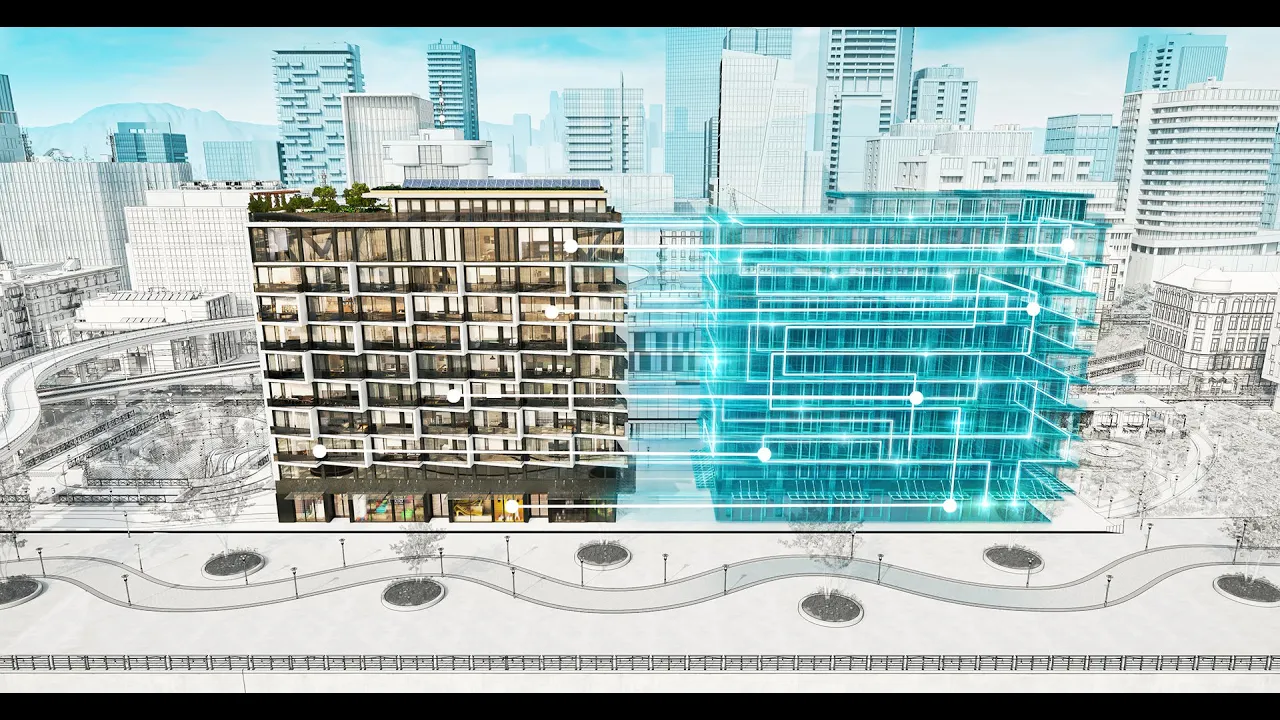
What is Digital Twin?
What is a Digital Twin?
This section introduces the concept of a digital twin, which is a digital version of a physical object or asset. It explains how data from the original asset is used to create and improve the digital twin.
Definition and Purpose
- A digital twin is a dynamic, up-to-date digital replica of a built asset or environment.
- It is created using building information modeling, artificial intelligence, machine learning, and internet of things technology.
- The purpose of a digital twin is to provide a precise and up-to-date model of its original counterpart.
- It helps designers, engineers, contractors, owners, and manufacturers in creating more efficient structures.
- Digital twins can assist with planning, design, construction, operations, and maintenance.
Example Scenario
- Imagine a building that has already been designed and constructed.
- Now imagine there's a digital twin of the entire facility from the roof to the HVAC systems.
- Sensors in the building provide real-time information to update the digital twin accordingly.
- Building owners can identify areas where the building is aging or faulty and make improvements on a larger scale.
Origins and Adoption
- In the 1960s, NASA was one of the first agencies to use mirroring technology for replicating systems in space.
- Dr. Michael Greaves introduced the concept of a digital twin at an American Society of Mechanical Engineers conference in 2002.
- The manufacturing industry quickly adopted digital twins followed by architecture, engineering, and construction industries with advancements like building information modeling (BIM).
Types of Digital Twins
This section explains different types of digital twins based on their level of detail and functionality. It discusses descriptive twins as live editable versions of design data, informative twins with operational data layers, and predictive twins that simulate future scenarios.
Descriptive Twins
- Descriptive twins are live editable versions of design and construction data.
- They provide a visual replica of assets or facilities.
- Descriptive twins are based on knowledge of the assets and spaces that make up a facility.
Informative Twins
- Informative twins have an added layer of operational and sensory data.
- As more data is added, the twin becomes richer and more strongly linked to its physical counterpart.
- These twins can leverage operational data for insights into the asset's performance.
Predictive Twins
- Predictive twins simulate future scenarios and consider "what-if" questions.
- They use the operational data gathered by informative twins to make predictions about potential outcomes.
Future Possibilities
This section explores the potential future advancements in digital twin technology. It discusses how autonomous digital twins could learn and act on behalf of users, contributing to building resilient cities and infrastructures.
Autonomous Twins
- In the future, digital twins may become autonomous, capable of learning and acting on behalf of users.
- They can gather key information about population growth, natural resource supply levels, historical environmental disasters, etc.
Resilient Cities and Infrastructures
- Digital twins can help build more resilient cities and infrastructures by gathering crucial information.
- An entire ecosystem of digital twins will help industries respond to global challenges with powerful simultaneous changes.
Current Applications
This section highlights current applications of digital twin technology. It explains how digital twins are helping operations and facility managers respond faster by removing the need for complex maintenance documents. It also mentions how professionals on-site can predict material and labor cycles, reducing waste and enhancing safety.
Operations Management
- Digital twins enable operations managers to respond faster by eliminating the need for complex and time-consuming maintenance documents.
- Owners can gather information from the design and build phases to make faster business decisions, lowering operational and maintenance costs.
On-Site Predictions
- Professionals on-site can predict material and labor cycles using digital twins, reducing waste and enhancing safety.
- Digital twins provide more insight into the inner workings of various industries.
These are the main points covered in the transcript.