ANATOMÍA: Vena Porta
Understanding the Vena Porta and Its Importance
Overview of the Vena Porta
- The video introduces the concept of the Vena Porta, discussing its formation and significance in the human body.
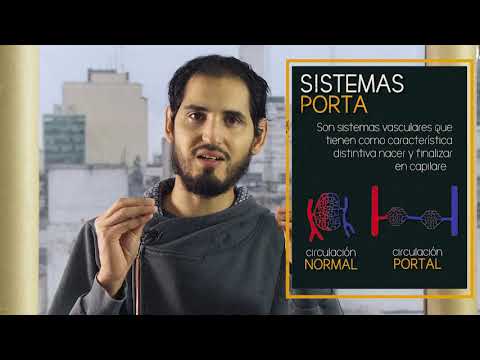
- It explains that to understand this vessel, one must first define what Portal Systems are.
Formation of Blood Vessels
- Blood vessels originate from the ventricles as large arteries, which then branch into medium-sized arteries and arterioles, ultimately leading to capillaries.
- In reverse, capillaries converge to form small veins, medium-sized veins, and finally large veins that lead to the atria.
Characteristics of Portal Systems
- Portal systems are vascular systems characterized by starting and ending in capillaries.
- While there are arterial portal systems (e.g., renal), the focus here is on the hepatic portal system represented by the Vena Porta.
Functionality of the Vena Porta
- The Vena Porta collects venous blood from several organs: spleen, pancreas, and subdiaphragmatic portions of the digestive tract (esophagus, stomach, small intestine, large intestine).
Composition and Pathway of Blood Flow
- The formation involves several veins: Superior Mesenteric Vein (from right colic veins and small intestine), Inferior Mesenteric Vein (from left colic veins), Splenic Vein (collecting gastric pancreatic and duodenal veins).