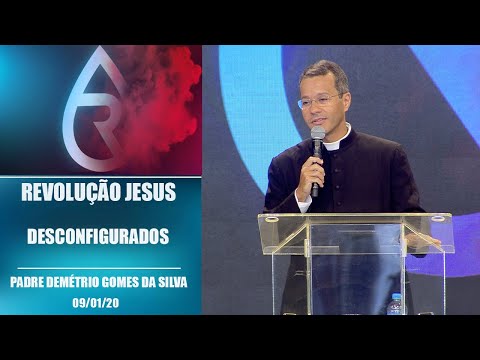
Desconfigurados - Padre Demétrio Gomes da Silva (09/01/20)
Introduction to the Camp and Its Purpose
Overview of the Event
- The event is introduced as a gathering for spiritual renewal, emphasizing the importance of invoking God's presence.
- The speaker highlights that this camp, "Revolução Jesus," is designed specifically for youth, distinguishing it from other camps by its focus on theological and spiritual formation.
Themes and Objectives
- Key themes will be explored throughout the camp, aiming to deepen understanding of fundamental aspects of Catholic faith.
- The intention is not merely intellectual enrichment but a transformative experience that encourages participants to engage deeply with their faith.
The Call for Spiritual Depth
Moving Beyond Surface Faith
- Many Catholics remain at a superficial level of faith; the camp aims to encourage deeper exploration and understanding.
- Participants are urged to approach discussions with humility and openness, shedding preconceived notions about their knowledge of faith.
Importance of Reflection
- A call for silence and attentiveness is made, recognizing the sacredness of the topics being discussed during the camp.
Addressing Global Issues
Common Concerns Among People
- There’s a shared sentiment among people regarding dissatisfaction with current global conditions; issues like social injustice are highlighted.
- Despite differing opinions on solutions, there’s consensus that change is necessary in various societal aspects including family dynamics and church practices.
A Story Illustrating Human Struggle
The Scientist's Dilemma
- A story about a social scientist illustrates personal struggles with societal issues while trying to balance work and family life.
- The scientist's attempts to improve society through research lead him to neglect his child's need for attention, showcasing common parental challenges.
Creative Solutions
Understanding Transformation Through the Story of a Puzzle
The Puzzle and Its Revelation
- A father observes his son playing with a puzzle, which leads to an unexpected outcome when the son shouts that he has completed it.
- The father's astonishment grows as he sees the world perfectly assembled from seemingly mismatched pieces, questioning how his son achieved this feat.
- The son explains that he used the image of a man on the reverse side of the puzzle pieces to construct a human figure first, which then allowed him to assemble the world correctly.
Insights on Human Transformation
- The father realizes that true transformation in the world begins with reforming humanity; without personal change, efforts for societal improvement are merely temporary fixes.
- Emphasizing that political or economic reforms alone cannot resolve global issues, he argues that individual conversion is essential for genuine change.
The Crisis of Humanity
- There is a crisis in humanity characterized by moral decay; true change requires individuals who embody virtue and can influence others positively.
- The speaker highlights society's loss of understanding regarding what it means to be human amidst increasing violence and immorality.
Understanding Man Through Faith
- The church provides guidance on understanding humanity through its teachings, emphasizing that knowledge about man is revealed through Christ.
- Referencing Pope John Paul II’s teachings, it is noted that Jesus exemplifies what it means to be truly human.
Returning to Origins for True Understanding
- To comprehend our current state as humans, we must revisit our origins as created beings made in God's image.
- An invitation is extended to explore foundational texts from scripture and church doctrine to deepen understanding of creation and humanity's purpose.
Creation According to Scripture
- The Catechism outlines creation symbolically over six days, culminating in rest on the seventh day; this narrative conveys divine truths rather than scientific details.
- It emphasizes that all creatures were created for God’s glory, highlighting man's unique position at the pinnacle of creation.
Man's Unique Role in Creation
- Humans are depicted as the apex of God's creative work; this perspective counters modern tendencies to equate humans with other animals.
The Hierarchy of Creation and the Fall of Man
The Value of Humanity in Creation
- The speaker argues that modern legislation often prioritizes animal rights over human dignity, suggesting a distortion of original creation values where humanity is seen as the pinnacle of God's creation.
- Emphasizing a divine hierarchy, the speaker asserts that humans hold greater value than animals because they are created in God's image and for His purpose.
- Humans were created good, embodying both body and soul, and initially existed in harmony with God and nature.
Original Justice and Communion with God
- According to Church teachings, Adam and Eve were created in a state of original justice, sharing in divine life and communion with God.
- This intimate friendship with God was intended to last indefinitely until the fall disrupted this harmony.
The Fall: Disobedience and Its Consequences
- The narrative shifts to Genesis 2:15, where God places man in Eden with a command not to eat from the tree of knowledge. This represents a test of freedom.
- The tree symbolizes humanity's recognition of their limitations as creatures dependent on their Creator; disobedience leads to spiritual death.
Temptation and Original Sin
- The speaker clarifies that the forbidden fruit is not specifically an apple but signifies man's challenge to respect divine boundaries set by God.
- Original sin stems from humanity's desire to live independently from God, leading them to disobey His command.
Aftermath of Disobedience
- The first sin is characterized by disobedience rather than sexual immorality; it reflects humanity's temptation towards pride—wanting divinity without dependence on God.
- Following this act, significant consequences arise for humanity; notably, Satan gains influence over mankind due to this initial transgression.
Influence of Evil Post-Fall
- As per catechism teachings, after original sin, the devil acquires some dominion over humanity while individuals remain free agents.
Consequences of Original Sin
The Disruption of Inner Harmony
- The original harmony among humans, established by justice, has been destroyed due to original sin, leading to a conflict between the spirit and the body.
- Paul highlights that the desires of the flesh oppose those of the spirit, illustrating an internal struggle where the soul yearns for God while the body seeks different realities.
Hostility in Creation
- Original sin has led to a breakdown in harmony not just within humans but also among all creation, resulting in hostility between creatures.
- A significant consequence of this rebellion against God's will is death's introduction into human history; death is portrayed as the price of sin.
Adam's Realization and Shame
- Adam recognizes a disfigurement in his nature post-sin and hides from God out of shame after losing his original sanctity.
- God's question to Adam ("Where are you?") transcends mere physical location; it reflects a deeper inquiry into Adam's spiritual state and loss of identity.
The Nature of Sin
- Sin is described as a force that diminishes humanity; it leads individuals away from their true essence as created beings meant to live in communion with God.
- An illustrative story about Leonardo da Vinci’s "The Last Supper" reveals how sin can transform one's identity over time.
Transformation Through Sin
- Da Vinci initially finds a model for Jesus but later discovers that his model for Judas had become unrecognizable due to life choices influenced by sin.
- This transformation serves as a metaphor for how sin distorts human identity, making individuals less recognizable even to themselves.
Understanding Original Sin
- The term 'sin' derives from Greek meaning "to miss the mark," indicating that straying from Christ-like perfection results in being less than one should be.
Understanding Original Sin and Human Nature
The Concept of Original Sin
- All humans are born into a state of original sin, which is not an act committed by individuals but rather a condition inherited from the first parents.
- This original sin inclines humanity towards evil, making us subject to death and demonic influence from birth.
Philosophical Perspectives on Human Nature
- The idea of the "noble savage," originating from philosophers like Rousseau, suggests that humans are inherently good but corrupted by society. This view is critiqued as it overlooks inherent human flaws.
- Acknowledging our internal conflict is crucial; we have both good (wheat) and bad (tares) within us, reflecting our struggle for holiness throughout life.
Implications for Education and Society
- Recognizing our flawed nature has significant implications in education and politics; societal influences can exacerbate inherent tendencies toward evil.
- Even isolated individuals carry original sin; it’s not merely societal influence that leads to moral failings.
Historical Context of Original Sin Doctrine
- The Church's understanding of original sin evolved through key historical moments: Augustine's debates with Pelagius in the 5th century and the Protestant Reformation.
- These discussions emphasized that concupiscence (the inclination to sin) is a direct consequence of original sin.
Luther's Perspective on Human Corruption
- Martin Luther argued that human nature was so corrupted post-original sin that all actions are sinful, even attempts at goodness.
- He famously stated that God can only cover human sins rather than transform them, likening humanity to dung covered by snow—still corrupt beneath the surface.
Scrupulosity and Misunderstanding Sin
- Some theological perspectives mistakenly equate natural inclinations towards sin with actual sinful acts, leading to scrupulous behavior where individuals feel guilty for benign thoughts or temptations.
- This misunderstanding can lead to spiritual distress, as people may believe they are constantly in a state of sin due to their natural inclinations.
Understanding Freedom and Dependence on God
The Nature of Freedom According to Luther and Pelagius
- The speaker critiques Luther's view that humans are not free, arguing instead that we are not merely captives of sin. They reference Pelagius, who believed in the inherent ability of humans to lead a good life without divine grace.
- According to Pelagius, original sin is seen as a poor example set by Adam rather than a hereditary flaw. He posits that human nature remains pure and capable of doing good if one chooses.
- The modern notion that "you can achieve anything if you just want it" is dismissed as false. The speaker emphasizes human limitations—physical, moral, and existential—that hinder our ability to fulfill every desire.
The Role of Grace in Achieving Holiness
- Acknowledging personal struggles with virtue, the speaker highlights the difficulty of imitating Jesus through natural strength alone. They argue that true holiness cannot be achieved without divine assistance.
- The call for holiness is framed as an impossible task when relying solely on human effort; thus, recognizing one's dependence on God's grace becomes essential for spiritual growth.
Embracing Total Dependence on God
- The speaker reflects on their own experiences with failure in striving for virtue, suggesting that reliance on personal strength leads to frustration and defeat.
- Jesus is presented not merely as a model but as a savior whose life must be internalized within us. True sanctity involves allowing Christ's presence to transform our lives from within.
Recognizing Our Impotence and Seeking Divine Help
- A historical theological journey culminates in acknowledging our complete dependence on God’s grace for authentic humanity. This recognition is vital for spiritual reformation.
- Sacraments, prayer, and supernatural means are deemed necessary tools for becoming 'another Christ' amidst life's challenges posed by internal evil—the 'old man' within us.
Transformation Through Humility and Grace
- Emphasizing humility before God does not diminish our worth; rather, it elevates us through divine support. Acknowledging our smallness allows God to lift us up.
- A call to action encourages individuals to seek God's transformative grace actively so they may become renewed beings reflecting Christ's image perfectly.