Sistemas de producción agropecuaria
Agriculture in Latin America: Understanding Agro-Pecuary Systems
Introduction to Agriculture
- The speaker greets the audience and wishes them success, introducing the topic of agriculture in Latin America, specifically focusing on agro-pecuary production systems.
- Emphasizes the complexity of agro-pecuary systems, which require consideration of numerous biological, environmental, political, economic factors.
Defining Agriculture
- Defines agriculture as "the art of cultivating the land," suggesting that this definition lacks depth and requires further exploration.
- Presents an alternative definition: agriculture is a human activity that cultivates land to produce food for the population, highlighting human intervention's critical role.
Economic Context of Agriculture
- Discusses how agriculture must align with global economic conditions and profitability laws; many countries depend on agricultural production for their economies.
- Notes that some nations face issues due to overproduction while others struggle with insufficient agricultural output.
Purpose and Perspectives on Agriculture
- Introduces the purpose of agriculture as meeting human needs or desires but acknowledges varying perspectives based on different stakeholders (farmers vs. consumers).
- Highlights that farmers focus on producing good harvests for sustenance and sales while recognizing broader implications like climate change.
Types of Agricultural Production
- Explains various forms of agricultural production including crops (agricultural), livestock (pecuaria), apiculture (beekeeping), aquaculture (fish farming), etc., emphasizing their roles in satisfying both nutritional and economic needs.
Agriculture and Animal Production: Understanding the Interconnection
The Purpose of Agriculture
- Agriculture is fundamentally about cultivating land, but not all practices, such as pig farming on concrete floors, qualify as agricultural activities.
- Pig farmers rely on feed sourced from crops grown by others, highlighting a network of interdependence between crop producers and livestock farmers.
Regulatory Framework in Agricultural Production
- Government bodies play a crucial role in overseeing agricultural production processes to ensure compliance with regulations. Examples include various Colombian organizations like ICA and Fedegán.
- These regulatory entities are essential for maintaining standards within the agricultural sector, including animal husbandry practices.
Importance of Animal Production
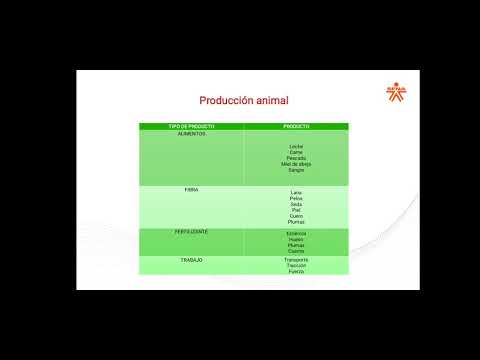
- Animal production serves multiple human needs beyond food; it also contributes to other aspects of life through various products derived from animals.
- Key products from animal production include meat, milk, fish, honey, and numerous processed items like sausages and cheese that stem from these primary sources.
By-products of Animal Production
- Beyond food, animal production yields fibers (e.g., wool), leather goods (e.g., wallets), and even fertilizers made from animal waste or by-products like bones and feathers. This illustrates the extensive utility of animal resources in agriculture.
- Specific examples include high-quality hats made from rabbit fur that require specific breeds raised in colder climates for optimal quality. This emphasizes the importance of environmental conditions in livestock management.
Composting and Fertilizer Production
- Fertilizers can be produced using industrial by-products or livestock waste materials such as manure or feathers, showcasing sustainable practices within agriculture through composting methods.
- The integration of animal labor (e.g., oxen for plowing) further demonstrates how traditional methods still play a vital role in modern agricultural systems today.
Understanding Agricultural Systems
- Recognizing farms as interconnected systems is crucial; they combine both crop cultivation and animal husbandry to create a holistic approach to agriculture that maximizes resource use efficiency.
Understanding Systems in Agriculture
Characteristics of a System
- A system's most important characteristic is its ability to react as a whole when receiving stimuli directed at any part. Examples include a car, the digestive system, or even a fence.
Components and Relationships within Systems
- For objects to act as a system, there must be relationships and connections among the individual parts. For instance, components like wire, battery, and controller do not form a system until assembled into an electric fence.
Defining Agricultural Production as a System
- The agricultural production process can be viewed as a system with defined boundaries that include inputs (like food and oxygen for chickens) and outputs (such as waste).
Interaction of Subsystems
- When considering systems like a chicken inside a box, external factors such as heat interaction can alter the system's boundaries. The box becomes part of the overall system while the chicken acts as a subsystem.
Identifying Components in Agricultural Systems
- In agricultural contexts, components may include livestock (cows), crops (grass), water sources, fences, buildings, workers, and machinery. Each plays an integral role in analyzing the farm as an entire system.
Understanding Subsystems within Agriculture
- Within larger agricultural systems exist subsystems; for example, grass cultivation serves specifically to feed livestock but is also part of the broader agro-production framework.
Example: Dairy Farming System
- A dairy farm exemplifies an agricultural production system where inputs (fertilizers, medicine) are crucial for operation. Knowledge about these elements is essential for effective management.
Resource Management in Dairy Production
- Key resources include calves (offspring), labor force, fertilizers, machinery—each contributing to overall productivity. Environmental factors like precipitation also play significant roles.
Outputs from Dairy Farming Systems
- Outputs from dairy farming consist of milk production and sales from older cows or male calves that do not contribute to milk yield but can still generate income through sale.
Understanding Agricultural Management Systems
The Role of a Steward in Agricultural Management
- As stewards, it is crucial to understand the income sources and record-keeping systems within the farm. This includes knowing how often to purchase fertilizers and concentrated feed, as well as their costs.
- Stewards are responsible for controlling various aspects of the agricultural system, ensuring that operations run efficiently to maximize productivity.
Defining Agricultural Systems
- The discussion introduces nine questions aimed at guiding the development of effective agricultural systems, which will inform training and operational strategies.
- Key components of an agricultural system include its purpose, boundaries, resources, inputs (insumos), outputs (egresos), and by-products. Understanding these elements is essential for effective management.
Focus on Dairy Production
- The primary goal in dairy production is economic profitability through efficient resource use. This involves analyzing market strategies for selling milk—whether raw or processed into products like cheese.
- Strategic limits such as farm boundaries define the scope of dairy production and determine available resources like land, soil quality, and equipment.
Biological and Economic Interactions
- Effective management requires understanding biological interactions among living organisms on the farm as well as technical parameters related to livestock production.
- Economic factors involve analyzing income versus expenses to ensure sustainable financial health within farming operations. A cost-benefit analysis is vital for decision-making processes.
Resource Management in Agriculture
- Resources can be categorized into three types: natural resources available on the farm, purchased inputs like fertilizers, and produced goods from the farm itself.
- Short-term resources include daily necessities such as water and electricity; medium-term resources encompass labor and supplies; long-term resources involve livestock investments that contribute to ongoing productivity.
Understanding the Agroecological System
The Interconnection of Biological and Economic Systems
- The agroecological system integrates biological resources and economic inputs, emphasizing the importance of both for sustainable farming practices.
- Biological inputs are derived from living organisms within the agricultural ecosystem, which generate biological outputs essential for maintaining ecological balance.
- Various biological systems such as livestock (bovines, porcines), crops (bananas, rice, corn), and pastures interact within an economic market framework.
- Biological production leads to economic returns that facilitate further investment in resources like livestock or feed, creating a cyclical relationship between biology and economics.
- Selling livestock can fund improvements in genetic quality or feed supply, reinforcing the interconnectedness of biological outputs and economic viability.
Classification of Natural Resources
- Natural resources are categorized into renewable (biological and physical) and non-renewable resources; understanding this classification is crucial for sustainable management.
- Renewable resources include sunlight, wind, air, water (physical), soil, animals, and plants (biological); these are vital for ongoing agricultural productivity.
- Non-renewable resources encompass minerals and fossil fuels; over-extraction can lead to depletion issues affecting agricultural sustainability.
- Water can become a non-renewable resource if aquifers are depleted through poor management practices like deforestation or excessive extraction during dry seasons.
Resource Management in Agriculture
- Effective resource management hinges on financial capital as it enables proper utilization of biological infrastructure within agriculture.
- Prioritizing objectives is essential; understanding what products (meat, milk, eggs) serve human consumption helps define resource allocation strategies.
- The production goals dictate how scarce resources should be managed to meet consumer demands effectively while ensuring sustainability.
- Identifying limited resources allows farmers to supplement them appropriately during critical periods like summer when pasture availability may decline.
Understanding Agroecological Systems
Integrating Resources for Sustainable Farming
- The speaker discusses the importance of combining economic, biological, and environmental resources on a farm to optimize productivity. This integration is crucial for effective agroecological systems.
- Emphasis is placed on utilizing both monetary investments and biological resources available within the farm ecosystem to create a comprehensive agricultural system.
Classification of Cattle Production Systems
- A general classification of cattle production systems is introduced, categorizing them based on their primary output: beef, milk, or dual-purpose (both). This classification helps in understanding different farming practices.
- Specific regions such as Casanare and Meta are highlighted as areas where these cattle production systems are prevalent, indicating geographical influences on farming practices.
Genetic Improvement in Livestock
- The discussion includes specialized cattle breeding focused on genetic quality, particularly in high-value breeds like Charolais and Brahman. Selling genetically superior animals can significantly increase revenue for farmers.
- The potential profit from selling well-bred calves at weaning age is noted, with examples given of prices that reflect the value of good genetics in livestock production.
Weaning Strategies Impacting Growth
- Two distinct weaning strategies—early (precoz) and late (tardío)—are compared regarding their effects on animal growth rates and health outcomes. Early weaning may hinder weight gain due to physiological factors related to rumen development.
- The physiological differences between monogastric behavior at birth versus ruminant development are explained, emphasizing the need for proper nutrition during early life stages to ensure optimal growth later on.
Economic Implications of Weaning Practices
- Late weaning allows for better rumen development leading to larger animals with improved daily weight gains and fewer digestive issues compared to those weaned early. This has significant implications for profitability in meat production systems.
- Differentiating between management systems based on weaning age can lead to varying economic returns; thus, careful consideration must be made by farm managers when deciding which system to implement.
Parameters for Developing Meat Production Systems
- Key parameters influencing meat production systems include animal load (low, medium, high), age at weaning (ranging from 5 months up), breed types (e.g., Brangus hybrids), and supplementation strategies used during feeding periods. These factors contribute significantly to overall productivity and efficiency in farming operations.
Classification of Agricultural Systems
Overview of Agricultural Activities
- The classification of agricultural systems is based on primary products and activities, including forestry (e.g., eucalyptus wood) and food production.
- Current agricultural practices include the cultivation of African palm for biodiesel and agrotourism farms, highlighting diverse agro-industrial activities.
Ruminant Production Systems
- Ruminants are classified into various categories: buffalo, cattle, goats, sheep, and wild camelids (including Peruvian llamas).
- Wild ruminants like deer are also considered in this classification due to their physiological adaptations for rumination.
Factors Influencing Production
- Key production factors include technical aspects (topography, soil), ecological elements (vegetation, pests), and human resources (education levels).
- Resources can be endogenous (local knowledge and skills) or exogenous (infrastructure and policies), impacting overall productivity.
Control Levels in Agricultural Systems
Environmental Control Factors
- Certain environmental factors such as temperature, rainfall, solar radiation, prices, credit availability, government policies, regional infrastructure, and natural vegetation are beyond immediate control.
- These uncontrollable variables necessitate interaction with broader systems to manage pricing effectively.
Management Objectives
- Effective management involves controlling objectives like pasture division and labor skills while recognizing that some factors remain difficult or impossible to manage.
Common Agricultural Systems in Central and South America
Important Crops and Livestock
- Major crops include coconut, coffee, cocoa, banana, plantain, sugarcane, rubber; significant livestock includes cattle and pigs.
- Livestock feed consists of natural pastures along with crop by-products from annual commercial crops like rice and corn.
Types of Farming Systems
- Extensive farming systems focus on large-scale beef production without significant crop integration; primarily rely on natural pastures.
- Intensive farming systems involve medium to large-scale operations producing improved pastures alongside grains for livestock feeding.
Mixed Farming Practices
Understanding Agricultural Systems
Overview of Livestock Production
- The discussion begins with the importance of natural grass as a food source and the utilization of by-products from forage crops in livestock production.
- A significant example is provided about "La Fazenda," Colombia's largest pig farming operation, which cultivates vast areas of corn and sorghum to feed its pigs, covering all stages from breeding to market-ready animals.
- La Fazenda operates a comprehensive system that includes national-level refrigeration facilities for processing animals, highlighting the integration of capital investment and biological systems in agriculture.
Economic Aspects of Farming
- The owners of La Fazenda are noted for their substantial financial resources, allowing them to maintain an active investment strategy that supports both biological and economic subsystems within their operations.
- The company also engages in value-added processes by selling vacuum-packed meat products, showcasing innovative approaches to enhance profitability.
Systemic Understanding of Agriculture
- Emphasis is placed on understanding agricultural operations as complete systems. This includes recognizing inputs such as environmental factors, economic conditions, and human resources that influence productivity.
- The speaker encourages farmers to define their goals clearly—whether it's food production or improving quality of life—and understand how these objectives impact income generation within their agricultural systems.
Conclusion on Agricultural Practices