Why you should define your fears instead of your goals | Tim Ferriss | TED
Introduction and Personal Experience
The speaker introduces themselves and shares a personal experience of being in a happy state in 1999, followed by a difficult period where they contemplated suicide.
- The speaker shares a photo from 1999 when they were happy and in college.
- About a week and a half later, the speaker was sitting in their minivan on campus, contemplating suicide.
- They quickly went from deciding to planning for it.
- They came very close to the edge but didn't go through with it due to lucky coincidences.
- The element of chance scared them the most after the incident.
Battling Bipolar Depression
The speaker discusses their experience with bipolar depression and how they have learned from it.
- The speaker has bipolar depression which runs in their family.
- They have had over 50 depressive episodes so far.
- They have become methodical about managing their ups and downs and have learned a lot from their experiences.
Stoicism as a Tool for Emotional Well-being
The speaker introduces stoicism as an effective tool for emotional well-being and decision-making.
- Stoicism has been instrumental in helping the speaker manage their emotional struggles.
- Stoicism is often associated with being boring or unemotional, but it can be seen as an operating system for thriving in high-stress environments.
- Many successful individuals, including Bill Belichick and the Founding Fathers, have embraced stoicism for mental toughness training.
Origins of Stoicism
The origins of stoicism are discussed, highlighting its focus on separating what can be controlled from what cannot be controlled.
- Stoicism originated in Athens around 300 BC with Zeno of Citium teaching lectures on a painted porch called "stoa."
- Stoicism was used as a comprehensive system for various purposes in the Greco-Roman world.
- One key aspect of stoicism is training oneself to separate what can be controlled from what cannot be controlled.
- This helps decrease emotional reactivity and enables better decision-making.
The Power of Stoicism in Personal Life
The speaker shares how stoicism transformed their life during a challenging period.
- In 2004, the speaker experienced the loss of a close friend and the end of a significant relationship.
- They were working long hours and feeling trapped.
- Discovering stoic teachings, particularly Seneca's quote about suffering in imagination, had a profound impact on them.
- Stoicism helped them simplify their life and find answers to their struggles.
Conclusion
The speaker concludes by emphasizing the importance of stoicism as a tool for personal well-being and decision-making.
- Stoicism provides valuable tools for navigating high-stress environments and making better decisions.
- It has been instrumental in helping the speaker overcome challenges and improve their life.
- Stoicism should be seen as an operating system rather than something boring or unemotional.
Fear-Setting: The Most Powerful Exercise for Overcoming Fear New Section
In this section, Tim Ferriss introduces the concept of fear-setting as a powerful exercise for overcoming fear and making important decisions. He explains the three pages involved in fear-setting and how it can help identify and address fears.
Introduction to Fear-Setting
- Fear-setting is a written exercise similar to goal-setting that helps capture thoughts and fears on paper.
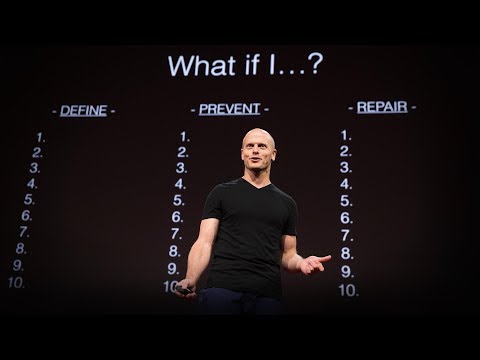
- It consists of three pages: "What if I...?", "Prevent", and "Repair".
Page 1: "What if I...?"
- This page focuses on identifying fears, anxieties, or tasks that are causing hesitation. Examples include asking someone out, ending a relationship, or starting a company.
- The first column, "Define," involves writing down all the worst things that could happen if you take that step. Aim for 10 to 20 worst-case scenarios.
- Examples of worst-case scenarios could be getting depressed during a vacation or missing an important letter from the IRS.
Page 1: "Prevent"
- In the second column, "Prevent," you brainstorm ways to prevent each of the identified worst-case scenarios from happening or at least decrease their likelihood.
- For example, taking a portable blue light to combat depression during a trip or changing your mailing address with the IRS to ensure important paperwork reaches your accountant instead of your UPS address.
Page 1: "Repair"
- The third column, "Repair," focuses on what actions can be taken to repair any damage caused by the worst-case scenarios or who can be asked for help in such situations.
- Examples include going to Spain for some sun if a trip to London becomes depressing or seeking advice from a lawyer or law professor in case of IRS-related issues.
Page 2: "Benefits of Attempt or Partial Success"
- The second page explores the potential benefits that can arise from attempting or partially succeeding in overcoming fears. This includes building confidence, developing skills, and experiencing personal growth.
Page 3: "The Cost of Inaction"
- The third page emphasizes considering the cost of inaction and maintaining the status quo. It prompts individuals to envision how their lives might look like in the future if they avoid taking action or making important decisions.
- Detailed exploration of emotional, financial, and physical consequences can help motivate individuals to take necessary steps.
Personal Experience and Conclusion
- Tim Ferriss shares his personal experience with fear-setting, where he took a trip despite fears and experienced positive life-changing impacts. None of the worst-case scenarios came true, and it led him to further success and opportunities.
- Fear-setting has become a regular practice for Tim Ferriss, helping him make important decisions and avoid potential disasters. While not all fears may be unfounded, fear-setting provides clarity and perspective on risks involved.
- Fear-setting does not eliminate hard times or choices but can make them easier by providing a structured approach to address fears and uncertainties.
The Impressive Life of a World Champion
This section provides an overview of the impressive life of a four-time world champion in Olympic weightlifting who is also a political refugee and published poet.
Life Achievements and Background
- He is a four-time world champion in Olympic weightlifting, known for his remarkable skills.
- Despite being 62 years old, he still possesses incredible strength and could outperform most people in the room.
- He has experienced various challenges throughout his life but remains resilient and successful.
Personal Journey
- The individual spent significant time seeking advice on life and training from him, often engaging in deep conversations on his porch (stoic philosophy).
- He was part of Solidarity, a nonviolent movement for social change that faced violent suppression by the government. As a result, he lost his career as a firefighter and witnessed the kidnapping, torture, and murder of his mentor, a priest. Threatened himself, he had to flee Poland with his wife, leading to a period of displacement across different countries.
- Eventually, they found refuge in the United States with very limited resources and had to sleep on floors before settling down in Woodside, California. Despite these hardships, he managed to rebuild his life successfully.
Remarkable Success
- Among the thousands of people encountered by the speaker throughout their life, this individual stands out as one of the top ten individuals in terms of both success and happiness.
- Surprisingly, when asked about Stoic philosophy via text message recently, he responded with two pages of text - an unusual occurrence for someone typically concise in communication. This revealed not only his familiarity with stoicism but also his application of it in making important decisions and standing up for his principles and ethics.
- He expressed that he couldn't imagine a more beautiful life than that of a Stoic, emphasizing the value he finds in this philosophy.
Mantra for Life
- The individual shared his mantra, which he applies to everything in life: "Easy choices, hard life. Hard choices, easy life." This highlights the importance of facing difficult decisions and challenges rather than avoiding them.
- The speaker encourages the audience to consider where defining their fears may be more crucial than defining their goals in their current lives.
Turn any video into a summary like this
YouTube links, meetings, lectures. With transcripts, search, and chat.