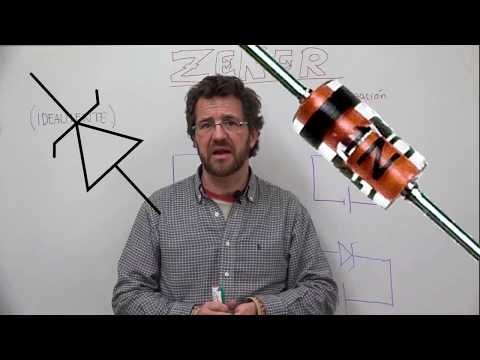
El diodo ZENER (1/4)
Introduction to Cener Diode
Overview of the Cener Diode
- The speaker introduces the Cener diode, describing it as a friendly and easy-to-understand component that will be encountered in circuits.
- A normal diode is explained, emphasizing its function when connected in direct polarity, allowing current to pass through like a switch.
- In reverse polarity, the diode prevents current flow, acting as a barrier against unwanted current direction.
Characteristics of Normal Diodes
- When conducting, standard diodes have a forward voltage drop typically around 0.7 volts; they do not conduct if the voltage is below this threshold.
- Exceeding the maximum current rating can damage diodes; they may fail due to excessive heat or electrical stress.
The Creation of the Cener Diode
Innovations Introduced by Cener
- The speaker discusses how the Cener diode was developed to allow conduction even when reverse-polarized, which is contrary to traditional diodes' behavior.
- The unique feature of the Cener is highlighted: it conducts in both directions under certain conditions while maintaining safety from damage.
Functionality and Applications
- The speaker humorously refers to the Cener as "the gay brother of diodes," indicating its versatility compared to standard diodes.
- When operating normally, it behaves like a regular diode but has specific characteristics when reverse-polarized that are adjustable based on design specifications.
Technical Specifications and Usage
Voltage Ratings and Design Flexibility
- The Cener can be manufactured with various voltage ratings (e.g., 3V, 5V), providing flexibility for different applications while ensuring consistent performance across designs.