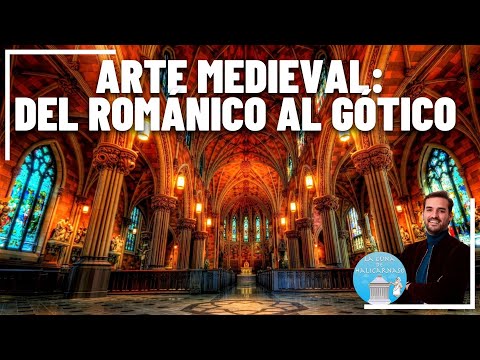
ARTE ROMÁNICO Y GÓTICO | Historia medieval ESO 🏰
Introduction to Romanesque and Gothic Architecture
The Awe of Medieval Churches
- The speaker reflects on childhood experiences in medieval churches, noting their solemnity and grandeur designed to inspire thoughts of God as something magnificent.
Overview of Artistic Styles
- Introduction by Juan de Colonia, an architect from the Burgos Cathedral, who will discuss the characteristics of Romanesque and Gothic styles.
Romanesque Architecture
Development and Characteristics
- The Romanesque style emerged in feudal Europe during the 11th to 13th centuries, following a period of population growth after major invasions. This led to the construction of numerous parishes and churches across Christian Europe.
- Key features include:
- Latin cross-shaped floor plans symbolizing Christ's crucifixion.
- Semicircular apses and solid barrel vaults supported by thick walls and large pillars.
- Towers were commonly added for calling worshippers to prayer or serving as watch towers. Windows featured semi-circular arches often adorned with decorative capitals.
Art Beyond Architecture
- Romanesque art included religious paintings and sculptures that served didactic purposes, teaching biblical stories through expressive yet simple imagery. Common themes included representations of Christ (Pantocrator) prominently displayed in church apses.
Transition to Gothic Architecture
Emergence of Gothic Style
- Gothic architecture began in France around the mid-12th century, gradually replacing Romanesque styles due to urbanization driven by a growing bourgeoisie class alongside ecclesiastical power. This shift resulted in grand cathedral constructions reflecting city wealth and influence.
Key Features of Gothic Cathedrals
- Notable characteristics include:
- Pointed arches allowing for taller structures.
- Ribbed vaulting creating complex ceiling designs.
- External buttresses reinforcing walls while allowing for larger windows filled with stained glass that illuminated interiors dramatically.
- The experience inside a Gothic cathedral was intended to evoke feelings of spirituality through height, light, and intricate decorations depicting saints and biblical narratives, contrasting with the more rigid forms seen in Romanesque art.
Evolution in Sculpture and Painting
Artistic Movements: A Look at Medieval Influence
Overview of Italian and Flemish Painting
- The discussion highlights the significance of naturalistic and expressive styles in painting, particularly focusing on the Italian and Flemish schools.
- It clarifies that "flamenco" refers to the art from present-day Netherlands, known for its detailed craftsmanship and oil painting techniques.
Reflection on Medieval Art
- The speaker concludes a review of Romanesque and Gothic medieval art, emphasizing its lasting impact on contemporary culture.
- They express pride in the artistic achievements of their era, countering any claims that significant works were not produced during that time.
Audience Engagement
- The speaker invites viewers to share their preferences between Romanesque and Gothic styles in the comments section.