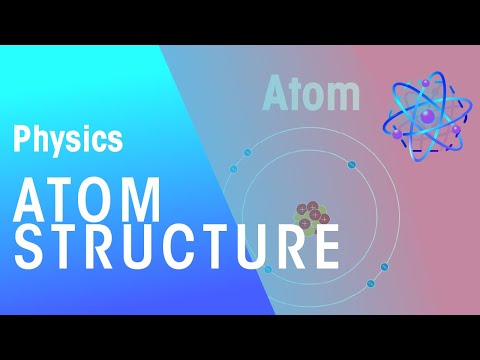
Atom Structure | Matter | Physics | FuseSchool

Atom Structure | Matter | Physics | FuseSchool

Understanding Atoms, Elements, Ions, and Isotopes

Introduction to Atoms and Elements

  • The video begins by reviewing the structure of atoms and the concept that elements are different types of atoms.
  • It emphasizes the overlap between physics and chemistry in understanding these concepts.
  • The periodic table is introduced as a tool for distinguishing elements based on their protons, neutrons, and electrons.

Protons, Electrons, and Atomic Structure

  • The number of protons in an atom defines its element; no two elements share the same proton count.
  • Each element's symbol in the periodic table serves as an abbreviation (e.g., "C" for carbon).
  • The atomic number indicates the number of protons while the mass number represents the total of protons and neutrons.

Calculating Neutrons

  • To find the number of neutrons in an atom, subtract the atomic number from the mass number.
  • This calculation highlights how neutrons contribute to mass but not charge.

Ions: Charged Atoms

  • An atom becomes an ion when it gains or loses electrons, resulting in a positive or negative charge.
  • In neutral atoms, protons equal electrons; this balance changes when ions form.

Types of Ions

  • A negative ion results from gaining electrons (more negative charge), while a positive ion results from losing electrons (less negative charge).

Isotopes: Variants of Elements

  • Isotopes are forms of elements with identical proton counts but differing neutron numbers, leading to varying mass numbers.
  • Examples include three isotopes of hydrogen: protium (0 neutrons), deuterium (1 neutron), and tritium (2 neutrons).

Turn any video into a summary like this

YouTube links, meetings, lectures. With transcripts, search, and chat.

Video description

Atom Structure | Matter | Physics | FuseSchool In our other video "What is an atom?" you've leant about the structure of an atom. https://youtu.be/pNroKeV2fgk I this video you will see how we can use the periodic table to tell us more about the differences between elements, including the different numbers of protons, neutrons and electrons they possess. CREDITS Animation & Design: Joshua Thomas jtmotion101@gmail.com Narration: Dale Bennett Script: Eleanor Trezise SUBSCRIBE to the FuseSchool YouTube channel for many more educational videos. Our teachers and animators come together to make fun & easy-to-understand videos in Chemistry, Biology, Physics, Maths & ICT. VISIT us at www.fuseschool.org, where all of our videos are carefully organised into topics and specific orders, and to see what else we have on offer. Comment, like and share with other learners. You can both ask and answer questions, and teachers will get back to you. These videos can be used in a flipped classroom model or as a revision aid. Find all of our Chemistry videos here: https://www.youtube.com/playlist?list=PLW0gavSzhMlReKGMVfUt6YuNQsO0bqSMV Find all of our Biology videos here: https://www.youtube.com/playlist?list=PLW0gavSzhMlQYSpKryVcEr3ERup5SxHl0 Find all of our Physics videos here: https://www.youtube.com/playlist?list=PLW0gavSzhMlTWm6Sr5uN2Uv5TXHiZUq8b Find all of our Maths videos here: https://www.youtube.com/playlist?list=PLW0gavSzhMlTKBNbHH5u1SNnsrOaacKLu Instagram: https://www.instagram.com/fuseschool/ Facebook: https://www.facebook.com/fuseschool/ Twitter: https://twitter.com/fuseSchool Access a deeper Learning Experience in the FuseSchool platform and app: www.fuseschool.org Follow us: http://www.youtube.com/fuseschool Befriend us: http://www.facebook.com/fuseschool This is an Open Educational Resource. If you would like to use the video, please contact us: info@fuseschool.org