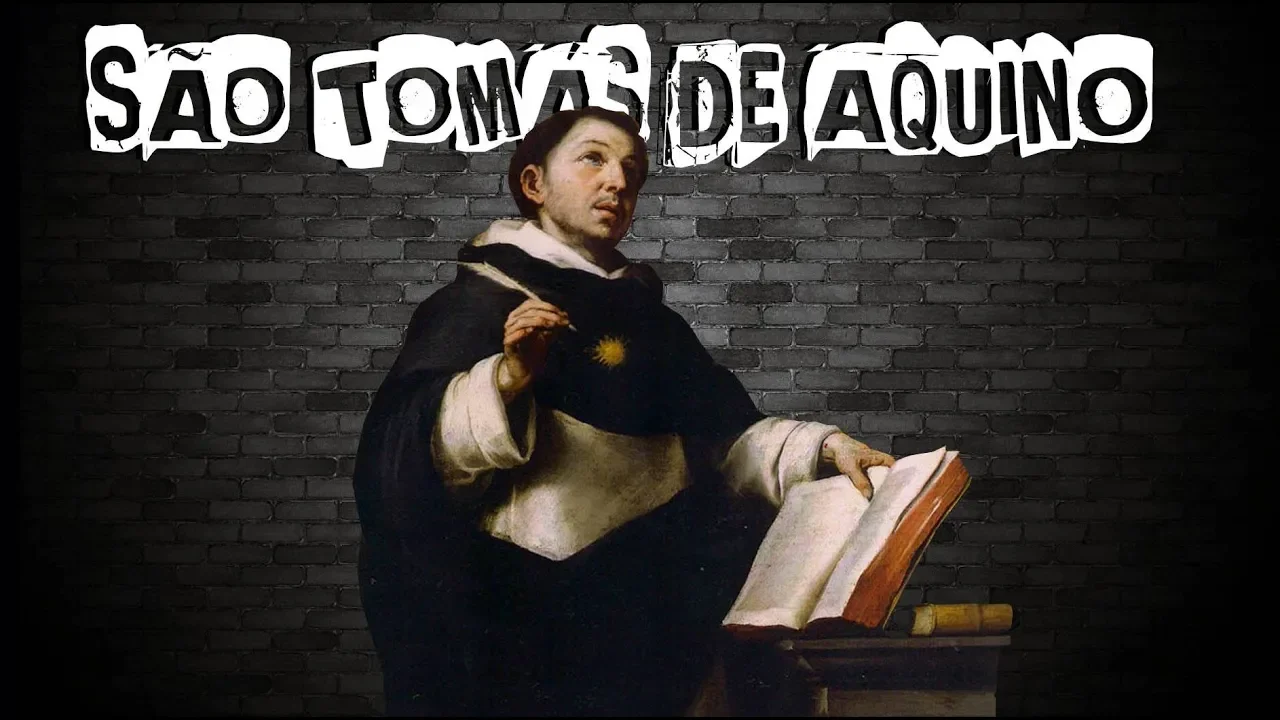
SÃO TOMÁS DE AQUINO
Introduction to São Tomás de Aquino
Welcome and Context
- The speaker welcomes viewers to a new video on philosophy, specifically focusing on the teachings relevant for various entrance exams.
- Celebrates reaching 70,000 subscribers, emphasizing the importance of democratizing education and expressing gratitude towards the audience.
Overview of São Tomás de Aquino
- Introduces São Tomás de Aquino as a significant medieval philosopher associated with Christian ideals, following discussions about Santo Agostinho.
- Highlights the historical context of the 12th and 13th centuries during the transition from feudalism and challenges faced by the clergy.
The Role of São Tomás de Aquino in Philosophy
Historical Significance
- Discusses how São Tomás de Aquino represents a shift in Christian thought during a time when traditional structures were being questioned.
- Emphasizes his role in reshaping Christian doctrine amidst changing societal paradigms.
Contributions to Theology
- Notes that his most important work is "Suma Teológica," which significantly influenced Catholic doctrine.
- Explains that being named a "Doctor of the Church" signifies his substantial contribution to shaping Christian dogma.
Concílio de Trento and Its Impact
Importance of Concílio de Trento
- Describes how "Suma Teológica" was influential during the Council of Trent in the 16th century, which addressed Protestant Reformation challenges.
- The Council aimed to redefine Catholic doctrine in response to emerging Protestant ideas led by figures like Luther and Calvin.
Philosophical Schools: Escolástica vs. Patrística
Transition Between Philosophical Schools
- Distinguishes between two philosophical schools: Patrística (associated with Santo Agostinho) and Escolástica (linked with São Tomás de Aquino).
- Identifies Escolástica as pivotal for defining Catholic doctrine moving forward, marking a departure from earlier philosophical frameworks.
Integration of Aristotelian Thought
- States that São Tomás de Aquino is known for "Christianizing" Aristotelian ideas, similar to how Santo Agostinho integrated Platonic concepts into Christianity.
Understanding Knowledge and Faith in Christian Philosophy
The Nature of Knowledge
- The discussion begins with the idea that knowledge can be generated through our experiences in the world, contrasting Aristotle's view with Plato's notion that only the intelligible realm produces knowledge.
- Saint Thomas Aquinas emphasizes that the sensible world (the realm of human experience) is capable of generating knowledge, unlike Augustine who prioritizes faith over reason.
Faith vs. Reason
- Aquinas positions reason as a crucial tool for understanding God, suggesting that humans are agents who must engage with their earthly existence to gain knowledge.
- In contrast, Augustine is characterized by his belief that faith precedes understanding; he views faith as foundational to knowing God.
The Existence of God
- Aquinas argues for a closer relationship between faith and reason than Augustine does, asserting the importance of living well within this earthly realm while acknowledging a heavenly kingdom.
- Augustine posits that questioning God's creation is unnecessary since it stems from divine goodness; he asserts God's role as creator of time itself.
Proving God's Existence
- Aquinas claims it is possible to prove God's existence through observations in our tangible world, whereas Augustine believes true understanding comes only after death in heaven.
- Aquinas outlines five ways to demonstrate God's existence, starting with two key arguments: the "First Mover" and "Efficient Cause."
Key Arguments for God's Existence
First Mover Argument
- The first argument focuses on motion; everything in motion must have been set into motion by something else, leading back to an initial mover—God.
Efficient Cause Argument
- The second argument states there cannot be an effect without a cause. Everything we observe has a cause which ultimately leads back to God as the primary cause.
Contingent vs. Necessary Being
- The third argument discusses contingent beings (those that exist but could not have existed), suggesting there must be a necessary being (God) responsible for their existence.
Degrees of Perfection Argument
Existence of God and the Philosophical Arguments
The Need for a Comparison Point
- The speaker discusses the concept of perfection, emphasizing the need for a parameter or unit of comparison, which is ultimately found in God, who is considered greater than everything else.
Thomas Aquinas' Justifications for God's Existence
- Pedro Janot introduces Thomas Aquinas' arguments, stating that he views himself as small in comparison to God, who embodies greatness. This leads into Aquinas' fourth way of justifying God's existence.
- The speaker highlights Aquinas’ fifth argument regarding the supreme governance or purpose behind existence, suggesting that life must have meaning beyond mere physicality.
Addressing Atheism and Meaning in Life
- The discussion shifts to atheism's rise during the 13th century and questions about life's meaning if one believes only in chemical reactions without a higher purpose.
- Emphasizing the necessity of seeking something greater (God), the speaker notes that many find discomfort in this search but acknowledges its importance.
Understanding Augustine's Influence
- The speaker references Augustine’s perspective on creation and knowledge acquisition through earthly experiences, asserting that understanding God can be achieved through our worldly interactions.
- Augustine is portrayed as someone who integrates Aristotelian ideas into Christian thought while addressing contemporary challenges faced by the Church.
Scholasticism and Its Role
- As philosophical thought expands beyond traditional boundaries, it becomes crucial to engage with societal transformations questioning church authority amidst historical events like feudalism and crusades.
- Thomas Aquinas is recognized for attempting to make Catholic doctrine more adaptable while maintaining its political power within society.