¿Qué es el IMPERIALISMO? 🗺️
What is Imperialism?
Introduction to Imperialism
- The discussion begins with the historical context of imperialism, highlighting how a few countries dominated much of the planet, leading to widespread use of languages like English, French, and Spanish.
- Alba joins the conversation to explore imperialism as a key concept in international relations, indicating that it will generate significant commentary and debate.
Defining Imperialism
- The definition of imperialism is presented: it is the doctrine advocating for one nation or state’s dominance over others through territorial acquisition or political/economic control.
- The British Empire serves as an example; its influence extended globally, showcasing how states can exert authority beyond their borders.
Historical Context of Imperialism
- While imperialism may seem recent, empires have existed throughout history. Conquest and domination are described as longstanding human dynamics.
- The term "imperialism" often refers to a specific historical period when it was foundational to global systems—specifically from the late 19th century until World War I.
Characteristics of Empires
- Empires are characterized by extensive territories and significant influence. Examples include ancient empires like Rome and more modern ones.
- The era known as "the age of empires" saw various forms of governance coexisting with imperialist ideologies.
Examples and Implications
- Discussion includes whether certain empires (e.g., Spanish and Portuguese) fit into the framework of imperialism based on their historical contexts.
- By the late 19th century, many nations were engaged in imperialistic practices; some were declining (like Spain), while others (like Britain and France) were at their peak.
Global Impact by 1914
- By 1914, European powers controlled vast portions of the globe; only Ethiopia and Liberia remained independent in Africa.
- The narrative emphasizes that not only Europeans practiced imperialism; Japan also expanded its influence during this time.
Understanding Imperialism and Colonialism
The Nature of Imperialism
- The concept of imperialism is multifaceted, with various forms existing globally. It often manifests in a structured manner, particularly evident in the division of Africa, where borders were drawn arbitrarily.
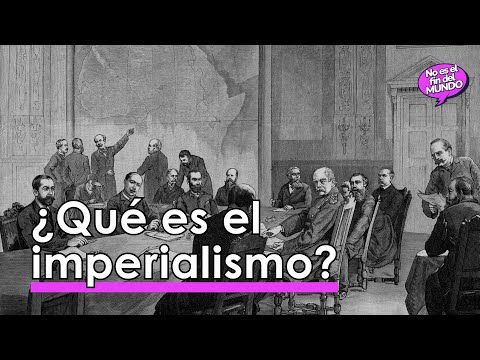
- European powers recognized the need for agreement to prevent conflict over colonial expansion in Africa. This led to the Berlin Conference (1884-1885), organized by German Chancellor Otto von Bismarck, where rules for colonization were established.
- Not all nations present at the conference ended up with African territories, but it marked a significant moment known as the "Scramble for Africa," highlighting how artificial borders were created.
Rules Established at the Berlin Conference
- The conference set forth regulations such as free navigation on rivers like Congo and Niger and a ban on slavery. However, these rules did not stop violence or exploitation within colonies.
- A principle called "effective occupation" was introduced, requiring countries to demonstrate actual control over territories before claiming sovereignty—essentially needing physical presence and settlers.
Distinguishing Between Imperialism and Colonialism
- The terms imperialism and colonialism are often confused; however, they represent different concepts. Colonialism refers to a political and economic system where a 'metropolis' dominates another people (the colony).
- Imperialism is viewed as the overarching doctrine that drives this domination. While colonialism is one method of implementing imperialist policies, not all imperialist actions require colonial structures.
Historical Context and Consequences
- Despite initial stability from agreements like those made at the Berlin Conference, tensions eventually escalated into conflicts such as the Fashoda Incident (1898), leading to World War I's upheaval of imperial systems.
- Post World War II saw decolonization efforts that dismantled empires but also transformed imperialistic practices into new forms that persisted beyond traditional colonization methods.
Modern Implications of Imperialism
- Some argue that while formal colonies may no longer exist, modern forms of imperial control persist through economic dependencies and political influence—termed neocolonialism.
- Examples include relationships between European nations and their former African colonies or U.S. interventions abroad reflecting contemporary imperial dynamics through military power combined with cultural influence.
Understanding Imperialism and Upcoming Topics
Overview of Imperialism
- The discussion highlights the complexity of imperialism, noting that it is a broad term that has defined entire historical periods.
- The speaker acknowledges that many aspects of imperialism could be explored in depth, indicating the potential for extensive content on its various forms and implications.
Transition to Future Topics
- The conversation shifts towards upcoming episodes, specifically mentioning a focus on narcotrafficking in the next installment.
- A humorous reference is made to Diego Maradona's famous quote "no to drugs," contrasting it with his personal struggles, which sets a tone for discussing narcotrafficking's complexities.
Insights on Narcotrafficking
- The speaker emphasizes the historical and geographical breadth of narcotrafficking, suggesting it has evolved significantly over time and across different regions.
- There is an anticipation for exploring the intricate networks involved in narcotrafficking, hinting at an engaging analysis in future discussions.
Closing Remarks
- Gratitude is expressed towards listeners across various platforms (Spotify, iVoox, Amazon, Apple Podcasts), reinforcing community engagement.