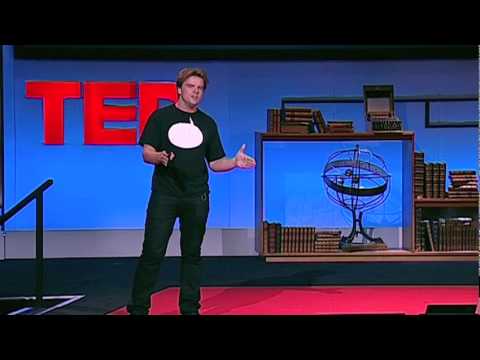
Bjarke Ingels: 3 warp-speed architecture tales
The Power of Storytelling in Architecture
In this section, the speaker discusses the importance of storytelling in architecture and how it can be used to convey the evolution and adaptation of projects.
Using Comic Books as a Format for Architectural Stories
- The public debate about architecture often focuses only on the final result, without considering the stories behind the projects.
- The speaker and their team wanted to find a format that could effectively tell these stories, combining images, drawings, and words.
- They discovered that comic books already existed as a medium that could fulfill this purpose.
- They created a comic book called "Yes is More" to showcase the behind-the-scenes evolution of their projects.
Evolutionary Approach to Architecture
- The speaker emphasizes their interest in evolution rather than revolution when it comes to architectural design.
- They believe that projects gradually evolve through adaptation and improvisation in response to real-world challenges and opportunities.
- Darwin's theory of evolution is seen as an inspiration for their design process, with each project going through multiple generations of design meetings where ideas are refined and selected.
- A project for a library and hotel in Copenhagen is used as an example of how an idea evolved through a struggle for survival into a design that harmonizes with its surroundings.
Embracing Diversity in Design
- The speaker highlights the importance of not discarding ideas that may not work in one context but could be valuable for another client or culture.
- Their office functions as an archive of architectural biodiversity, keeping all ideas for potential future use.
Case Study: Adapting to Chinese Culture
The speaker shares a story about adapting their design for a building in China based on cultural symbolism.
- While designing a building for Sweden, they noticed similarities between their design and the mascot of the Shanghai World Expo named Haibao.
- A Chinese businessman pointed out that their design resembled the Chinese character for "people," which sparked their interest.
- They scaled up the building to Chinese proportions and presented it as a bridge between ancient wisdom and progressive future in China.
- The mayor of Shanghai saw the potential of the design to connect with Chinese roots but later faced corruption charges.
[t=0:00:54] Rethinking Architectural Avant-Garde
In this section, the speaker challenges the negative perception often associated with the architectural avant-garde and proposes a different approach.
Questioning Negative Definitions
The speaker questions the common perception of the architectural avant-garde as being defined by what or who they are against.
- The radical architect is often portrayed as an angry rebel against established norms.
- Instead, the speaker advocates for an approach focused on evolution rather than revolution.
Evolutionary Approach vs. Revolutionary Approach
The speaker expresses their preference for an evolutionary approach to architecture, inspired by Darwin's theory of evolution.
- They believe that gradual adaptation and improvisation lead to better designs that can respond effectively to changes in the world.
- Rather than discarding ideas, they embrace diversity and keep them in their office archive for potential future use.
Challenging Cliches
The speaker challenges cliches associated with architects, such as misunderstood geniuses frustrated by a lack of understanding from the world.
- They emphasize their interest in collaboration, openness to new ideas, and optimism in times of crisis.
- By redefining these cliches, they aim to create a more positive image of architects and their role in society.
Sustainable Life and Quality of Life
The speaker discusses the perception that sustainable life is less enjoyable than normal life and proposes exploring examples where a sustainable city can actually enhance the quality of life.
Sustainable City Examples
- The speaker suggests focusing on examples where a sustainable city improves the quality of life.
- Denmark, symbolized by the swan, has cultural elements integrated into Chinese culture through fairy tales by Hans Christian Anderson.
- Copenhagen has embraced bicycles as a mode of transportation, with a third of all people commuting by bike. They have introduced a free system called City Bike for visitors to borrow bikes. The idea is to reintroduce bicycles in China by donating 1,000 bikes to Shanghai.
- Copenhagen's clean harbor water allows swimming, while Shanghai faces traffic congestion and restrictions on bicycles. As part of their exhibition at the expo, they plan to sail a million liters of harbor water from Copenhagen to Shanghai for people to experience its cleanliness firsthand.
Danish Pavilion at Expo
The speaker describes their plans for the Danish pavilion at the expo in Shanghai, which aims to provide real experiences rather than just propaganda.
Pavilion Features
- The pavilion will showcase the actual Little Mermaid statue from Copenhagen alongside sailing a million liters of harbor water from Copenhagen to allow visitors to dive in and experience its cleanliness.
- Afterward, they will invite a Chinese artist to reinterpret the Little Mermaid. The architecture of the pavilion will feature exhibitions and bikes, allowing visitors to explore using bicycles provided at the Danish pavilion.
Challenges and Political Issues
The speaker discusses some challenges faced during their project, including censorship and political debates.
Censorship and Political Issues
- The Chinese state censored their exhibition board, requesting corrections such as adding Taiwan to the map and changing the comparison of the swan to a panda.
- In Denmark, there was opposition to moving the national monument, the Little Mermaid. The National People's Party tried to pass a law against it, leading to a debate in the National Parliament.
- The speaker humorously mentions that if people want to see the Little Mermaid from May to December next year, they should go to Shanghai instead of Copenhagen. There may even be an installation by Ai Weiwei or a panda if the Chinese government intervenes.
Distinctive Architecture and Design
The speaker shares details about their own apartment building's unique design and architecture.
Unique Apartment Building Design
- The speaker's apartment has a view of triangular balconies that form a vertical backyard where neighbors can interact within close proximity. The building is designed with zigzag patterns to ensure all apartments have straight views.
Due to limitations in available content, this summary covers only a portion of the transcript provided.
New Section
In this section, the speaker discusses the concept of turning apartments into penthouses and creating a unique architectural design.
Turning Apartments into Penthouses
- The idea is to turn all the apartments into penthouses and place them on a podium of cars.
- Due to Copenhagen's flat landscape, creating a south-facing slope with a view requires individual effort.
- The volume of the building is cut up to avoid blocking views from certain apartments.
Unique Architectural Design
- The parking area occupies the deep space underneath the apartments.
- On top, there is a single layer of apartments that combines suburban lifestyle elements with metropolitan views and dense urban location.
- The parking facade is perforated for natural ventilation, which also allows for creating a large rasterized image using different hole sizes. A photo of Mount Everest was used for this purpose.
- Inside the building, there are corridors leading to an urban oasis with gardens and green spaces. The wood from the apartment interiors extends outside as part of the facades.
- Rainwater is collected and used for automatic irrigation, transforming the landscape into lush gardens resembling Cambodian temple ruins covered in greenery.
New Section
In this section, the speaker talks about adapting to opportunities as an architect and gives an example of designing a Nordic national bank.
Adapting as an Architect
- Architects need to adapt and improvise based on opportunities and accidents that arise in their field.
- Setting agendas or proposing specific projects may not always lead to commissions.
- Flexibility and adaptability are key in the architectural profession.
Designing a Nordic National Bank
- The speaker's team won a competition to design a Nordic national bank located in Iceland.
- However, the excitement was dampened as it was the national bank of Iceland, not Denmark.
- During this time, a minister from Azerbaijan visited their office and got excited about the concept of creating mountains through architecture.
New Section
In this section, the speaker discusses an urban master plan project in Azerbaijan that aims to recreate the silhouette of significant mountains.
Urban Master Plan in Azerbaijan
- The minister from Azerbaijan proposed an urban master plan on an island outside the capital that would resemble the silhouette of seven significant mountains in Azerbaijan.
- The team took on the commission and created a small movie showcasing their vision for this project.
- Baku overlooks the island of Zira, which resembles the crescent bay and is represented by their flag's diagram.
- The main idea is to sample and reinterpret the topography of Azerbaijan's mountains into urban and architectural structures on the island.
- The entire island is designed as a single ecosystem, utilizing wind energy for desalination plants and using water's thermal properties for heating and cooling buildings. Excess freshwater wastewater is filtered organically into the landscape, transforming it into a green oasis.
- The buildings not only invoke mountain imagery but also function like mountains by providing shelter from wind and accumulating solar energy and water. This transforms the entire island into a self-sustaining ecosystem.
- The master plan has been approved, and construction documents for two initial mountains will begin soon. The project aims to create the first carbon-neutral island.
Turn any video into a summary like this
YouTube links, meetings, lectures. With transcripts, search, and chat.