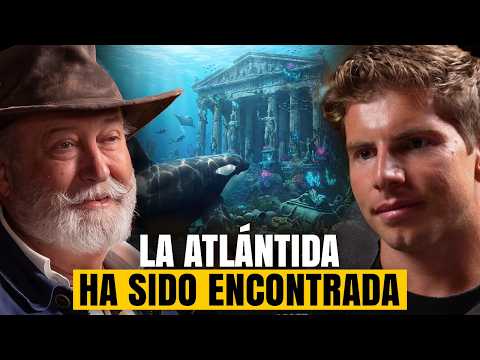
La Atlántida Existió: “Han Querido Borrar Nuestra Verdadera Historia”
La Atlántida: Un Imperio Olvidado
Concepto de la Atlántida
- La Atlántida no era solo una ciudad, sino un vasto imperio con una capital que se ubicaba en lo que hoy es territorio español.
- El cataclismo que puso fin a la civilización atlántica ocurrió hace aproximadamente 12,000 años y afectó gravemente su desarrollo.
Avances de la Civilización Atlante
- Se menciona que muchas obras sobre la Atlántida han desaparecido, excepto las de Platón, sugiriendo un encubrimiento histórico.
- El invitado del podcast es un zoólogo y biólogo con experiencia en documentales y libros sobre el tema, destacando su interés por compartir conocimientos.
Teorías sobre la Ubicación de la Atlántida
- Se prefiere referirse a ella como "civilización atlántica" para evitar prejuicios académicos.
- Platón mencionó que la civilización atlántica estaba situada en las columnas de Hércules (actualmente el Estrecho de Gibraltar).
Implicaciones Históricas
- La civilización atlante abarcaba múltiples ciudades y territorios, similar al imperio español del siglo XV.
- Hay reticencia a aceptar que España pudo haber sido el hogar de esta antigua civilización debido a prejuicios históricos.
La Historia Oculta del Norte de África
Desconocimiento Histórico
- A menudo se ignora el papel del norte de África en las narrativas históricas tradicionales; se ha minimizado su importancia cultural.
- En tiempos antiguos, esta región era rica en recursos naturales antes de convertirse en desierto.
Cambios Climáticos y Su Impacto
- Los cambios climáticos han influido significativamente en el desarrollo y declive de civilizaciones a lo largo del tiempo.
Intersección entre Ciencias Naturales e Historia
Conexión entre Biología e Historia
- Es fundamental entender cómo los recursos alimentarios influyen en el crecimiento y sostenibilidad de las civilizaciones.
Limitaciones Alimentarias
- Las proteínas son esenciales para mantener grandes poblaciones; algunas culturas antiguas enfrentaron problemas graves por su escasez.
Cataclismos y sus Consecuencias
Eventos Catastróficos
- Un cataclismo geológico registrado hace 12,000 años marcó el final de la capital atlante ubicada bajo Doñana.
Supervivencia Cultural Post-Cataclismo
- Aunque hubo destrucción masiva, fragmentos culturales sobrevivieron y evolucionaron hacia nuevas civilizaciones como Egipto o Minoica.
Legados Lingüísticos y Culturales
Toponimia como Evidencia Histórica
- Nombres geográficos actuales pueden ser vestigios lingüísticos que revelan conexiones con antiguas culturas perdidas.
Revisión Crítica del Neolítico
Evolución Cultural vs. Genética
- A pesar del cambio al neolítico, nuestra genética no ha cambiado significativamente desde entonces; muchos comportamientos actuales tienen raíces paleolíticas.
Cataclismos Magnéticos
Teorías sobre Inversiones Polares
- Se discute cómo cambios menores en los polos magnéticos podrían provocar desastres naturales significativos.
Corrientes Oceánicas e Influencias Climáticas
Efectos Ambientales
- Cambios menores pueden alterar corrientes oceánicas cruciales para climas regionales, afectando así ecosistemas enteros.
Manipulación Histórica
Diferenciación entre Historia e Historiografía
- Es importante distinguir entre lo que realmente ocurrió (historia), frente a lo que nos cuentan (historiografía).
The Secrets of the Red Tuna and Orcas
Migration and Reproduction of Red Tuna
- The red tuna, specifically, migrates through a 14 km funnel in the Atlantic to spawn, particularly in the Balearic Sea.
- Historical spawning locations include specific areas throughout the Mediterranean, which are named after tunas and orcas.
Predation Dynamics
- Orcas follow red tuna during their migration; they are significant predators that impact tuna populations.
- When attacked by orcas, red tuna dive deep to escape but can be frightened into shallow waters due to orca behavior.
Escape Mechanisms of Red Tuna
- Experiments show that red tuna panic at the sight of orca bellies, leading them to flee towards shorelines like Barbate and Tarifa.
- Panic causes some large tunas (up to 1000 kg) to beach themselves while trying to escape from orcas.
Human-Orca Interaction
- Humans learned to exploit this relationship with orcas for easier access to red tuna by setting nets that guide fish into traps.
- This mutual benefit allowed both species—humans could catch more fish while orcas had easier feeding opportunities.
Cultural Significance and Technology
- The knowledge about where and how to catch red tuna was closely guarded; only certain locations were effective due to ocean currents.
- Almadrabas (fixed net traps for catching tunas), still used today, reflect ancient practices based on orca guidance.
Preservation Techniques
- Tunas were preserved in amphorae filled with salt and sealed with cork for long-term storage, crucial for feeding empires like Rome.
- Cork oak trees were essential for creating these containers; their limited distribution made them valuable resources.
Secrecy of Knowledge
- The secretive nature surrounding the fishing techniques was akin to proprietary formulas like Coca-Cola; only select individuals understood it.
Atlantis Hypothesis
- The concept of Atlantis is linked with advanced aquaculture practices involving circular canals designed for capturing live tunas brought by orcas.
Intelligence of Orcas
- Orcas are highly intelligent creatures capable of complex social interactions and collaboration with humans during fishing activities.
Historical Context from Plato's Works
- Plato’s accounts provide detailed descriptions of Atlantis' culture, including its conflicts with Athens as a real historical event rather than mere myth.
Influence on Greek Civilization
- Many aspects attributed to Greek civilization may have originated from Atlantean culture, including religious practices and societal structures.
Symbolism in Ancient Cultures
- Various symbols associated with deities across cultures can trace back their origins related to marine life such as tunas and orcas.
Linguistic Connections
- Names like "esparte" (orca in local dialect), connect historical figures such as Spartans back to marine symbolism prevalent in ancient societies.
This structured summary captures key insights from the transcript regarding the relationship between red tuna, orcas, human interaction over time, cultural significance tied into historical narratives about Atlantis, all while providing timestamps for easy reference.
Cultural Behaviors of Orcas
Understanding Orca Culture
- Orcas exhibit cultural behaviors, which are learned and not instinctual. This includes the ability to invent new practices and share them within their pods.
- An example is an orca in Vancouver that started balancing a dead salmon on its head, leading others in the pod to imitate this behavior over several days before it ceased. This illustrates the concept of culture among orcas.
Unique Hunting Techniques
- Orcas in Península Valdés, Argentina, have developed a unique hunting technique for sea lion pups by learning to beach themselves temporarily to catch prey. This method was initiated by one female orca who taught others in her pod.
- The learning process for these techniques can take years, with young orcas practicing repeatedly under supervision from experienced members of their pod. Scientists estimate it takes about three years to master this skill without any actual prey involved during training sessions.
Communication and Language
- Orcas communicate using a complex system of clicks and whistles that function similarly to human language, allowing them to convey basic commands and emotions within their pods. They have been observed using specific sounds as names for individual orcas.
- Recent advancements in artificial intelligence have enabled researchers to analyze these vocalizations more effectively, revealing patterns associated with different social interactions such as feeding or mating behaviors.
Theories on Human-Orca Interaction
Historical Connections
- A hypothesis suggests that early human language may have been influenced by observing orca communication patterns, indicating a long-standing relationship between humans and these marine mammals dating back thousands of years when both species coexisted closely along coastlines.
- The idea posits that during prehistoric times, intelligent marine animals like dolphins and orcas were likely the most advanced beings on Earth while early humans were still evolving physically and socially.
Modern Observations
- In contemporary settings, wild dolphins often approach humans playfully; instances where they bring gifts like fish or objects have been documented but remain unexplained scientifically despite being recorded multiple times across various locations worldwide. These interactions suggest an ongoing bond between species rather than predatory instincts towards humans.
Orca Behavior Towards Other Animals
Predatory Nature
- Despite their friendly demeanor towards humans, orcas are apex predators capable of taking down large prey such as great white sharks and even blue whales through coordinated group hunting strategies that showcase their intelligence and teamwork skills in the wild environment.
Orcas and Their Hunting Techniques
Hunting Strategies of Orcas
- The orcas mimic training techniques used in hunting whales, specifically targeting the blue whale's tail to immobilize it.
- They bite the caudal fin of the blue whale, rendering it unable to escape, which allows them to consume its tongue and other parts.
- The blue whale is noted as the largest mammal ever, reaching lengths of 25 meters and found in various locations including Spain.
Comparison with Sailing Vessels
- Orcas apply similar tactics when encountering sailboats, recognizing their fusiform shape and keel resembling a whale.
- From below, an orca perceives a sailboat as a pseudo-whale due to its elongated form and fin-like structures.
- This practice serves as training for orcas; they bite the rudder of sailboats to simulate disabling a whale.
Consequences of Interaction with Sailboats
- When orcas damage a boat's rudder, it can lead to flooding and sinking—an unintended consequence since they do not wish to destroy their practice target.
- Orcas are intelligent creatures capable of complex behaviors such as "spy hopping" while hunting seals on ice platforms.
Cultural Behaviors of Orcas
Learning Through Play
- Evidence suggests that orcas engage in play by practicing hunting techniques without consuming their prey, indicating cultural learning.
Communication Among Pods
- The discussion transitions into broader themes about historical narratives like the Black Legend regarding Spanish conquests in America.
The Black Legend: Historical Context
Misrepresentation of Spanish Conquests
- The Black Legend portrays Spanish conquests negatively, emphasizing violence against indigenous peoples while ignoring positive aspects of cultural integration.
Influence on Modern Narratives
- This narrative has been perpetuated by Anglo-Saxon interests aiming to discredit previous empires while promoting their own superiority.
Linguistic Heritage from Canary Islands
Connection Between Canaries and Latin America
- Many accents across Hispanic America trace back to Canary Island settlers; this connection highlights shared cultural roots among Spanish-speaking populations.
Racial Diversity Within Hispanic Culture
- Hispanic culture encompasses diverse racial backgrounds, challenging simplistic categorizations often imposed by external narratives.
Interpretation of Historical Terms
Conquest vs. Colonization
- The term "conquistador" carries negative connotations compared to "conquest," reflecting biases in historical interpretations shaped by modern perspectives.
Erasure of Historical Complexity
- There exists a significant gap between conquest and independence that is often overlooked in mainstream historical accounts.
Atlantis: Myths and Realities
Origins of Atlantean Legends
- Early myths surrounding Atlantis were influenced by various cultures including Phoenicians and Greeks who distorted original narratives for political purposes.
Archaeological Discoveries
- Ongoing archaeological efforts aim to uncover remnants linked to Atlantis beneath layers from different civilizations throughout history.
Conclusion on Cultural Legacy
The discussions highlight how both natural behaviors observed in orcas reflect complex social structures akin to human societies while also addressing how historical narratives have been shaped over time through selective storytelling.
The Influence of Greek National Consciousness
Origins of Greek Identity
- Discussion on the necessity of creating a national consciousness in Greece, emphasizing that all cultural elements were perceived as originally Greek.
- Historical context provided about ancient explorers and writers who often relied on wealthy patrons to fund their expeditions and writings.
Patronage in Exploration
- Example given of Dr. Livingston, who had a patron funding his journey to find the sources of the Nile under specific conditions.
- Modern adaptation where the speaker organizes trips by gathering multiple contributors to finance explorations.
Meteorite Expedition
- Description of a successful expedition to find a meteorite in the Kalahari Desert, highlighting its significance and unique properties.
- Mention of markings on the meteorite resembling ancient codes found in Altamira caves, suggesting potential historical connections.
Epigenetics: A New Understanding
Introduction to Epigenetics
- Transition into discussing epigenetics after being prompted during the podcast; defined as a relatively new term in genetics.
- Contrast drawn between Darwin's genetic theories and Lamarck's ideas about life experiences affecting genetic inheritance.
Genetic Expression
- Recent studies indicate that life choices can alter gene expression, impacting future generations beyond mere genetic inheritance.
- Examples provided showing how cultured or athletic lifestyles can influence offspring traits through gene expression rather than direct inheritance.
Social Preferences and Evolutionary Psychology
Attraction Patterns
- Observations made regarding female attraction preferences related to male physical characteristics like height and facial hair.
- Noted that women generally do not prefer shorter men, which is supported by cross-cultural studies indicating an innate preference for taller partners.
Cultural Implications
- Discussion on societal perceptions around height and attractiveness, with anecdotal evidence from social interactions reinforcing these patterns.
Language and Cultural Misinterpretations
Orcas vs. Killer Whales
- Examination of linguistic discrepancies surrounding orcas (killer whales), including etymology and cultural implications tied to their naming conventions.
- Critique of how mislabeling has led to negative perceptions about orcas due to translation errors from Basque fishermen.
Scientific Naming Conventions
- Highlighting issues within scientific literature where researchers are compelled to use "killer whale" instead of "orca," reflecting deeper biases in nomenclature practices.
Historical Contextualization Through Names
Etymology Insights
- Exploration into place names such as Canarias (linked incorrectly with dogs instead of sheep), revealing historical inaccuracies tied to language evolution.
Broader Linguistic Connections
- Further discussion on Mediterranean place names linked back to historical contexts involving marine life, particularly focusing on tuna-related terminology.
This structured summary encapsulates key discussions from the transcript while providing timestamps for easy reference.