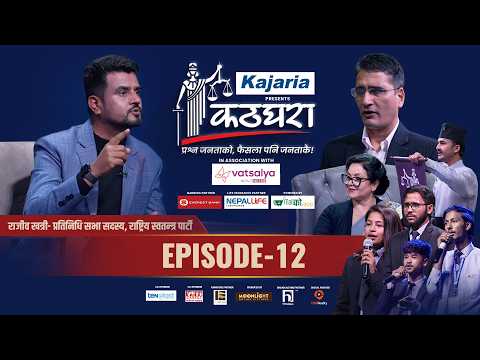
Kathghara कठघरा || Rajib Khatry, Member, RSP || Episode 12 || Tikaram Yatri || Mithila Sharma
Connecting the World by Taz
Introduction and Sponsors
- The program is introduced with a focus on its sponsors, including Everest Bank as a banking partner and Nepal Life Insurance as a life insurance partner.
- Mention of Malco Store providing free delivery across America, emphasizing convenience for viewers.
- Highlighting trusted choices in plumbing and carpet purchases, indicating the importance of reliable products in daily life.
Key Participants and Context
- The session is set to begin with the presence of newly elected MP Rajiv Khatri from Bhaktapur 2, who will address public concerns.
- Acknowledgment of Judge Mithila Sharma's attendance at the event, signifying the formal nature of proceedings.
Allegations Against Rajiv Khatri
- Rajiv Khatri faces several allegations from the public:
- Rapidly transitioning from being a candidate in Kathmandu 10 to running in Bhaktapur 2 raises questions about his commitment to constituents.
- Accusations of spending money on fake reactions on social media to create an illusion of popularity.
- Criticism for using journalism merely as a stepping stone into politics rather than for societal change.
- Engaging more in digital stunts than substantive policy reforms, which reflects a culture focused on superficial popularity rather than genuine governance.
Opening Remarks and Questions
- The main facilitator encourages an open dialogue with Khatri regarding public inquiries about his political journey and decisions made during his campaign.
- Emphasis on accountability as this marks Khatri's first response to constituents since taking office; he expresses readiness to engage with questions directly.
Political Strategy Discussion
- Khatri discusses his strategic decision-making process regarding constituency selection, revealing that he was initially inclined towards Kathmandu but was directed by party leadership to contest in Bhaktapur instead.
- He reflects on past political dynamics within his party and how they influenced his candidacy choice amidst competition from other candidates like Mahesh Basnet from UML (Communist Party).
- Acknowledges that despite personal preferences for Kathmandu due to established community ties, party directives ultimately shaped his electoral path toward Bhaktapur 2.
This structured summary captures key discussions surrounding Rajiv Khatri's political journey while addressing public concerns about transparency and accountability within Nepali politics.
Discussion on Political Dynamics and Personal Accountability
The Reluctance to Name Individuals in Politics
- The speaker expresses a reluctance to name specific individuals, indicating that discussions about political figures can be sensitive. They reference a previous statement made by Balen Shah regarding not wanting to publicly debate with KP Oli.
Personal Election Experience and Responsibilities
- The speaker reflects on their electoral victory in Bhaktapur, emphasizing that they did not enter the race to defeat anyone but rather to represent all constituents. They acknowledge the presence of valid issues from opponents while asserting their own legitimacy as an MP.
Legal Challenges and Accountability
- A mention is made of past legal challenges where police would not register complaints, highlighting a shift in accountability standards. The speaker challenges accusations against them, demanding proof in court for claims made by others.
Judicial System and Political Integrity
- Discussion revolves around the judicial system's role in ensuring accountability. The speaker argues that if allegations are serious enough for public discourse, they should also warrant legal scrutiny through proper channels.
Commitment to Public Service
- The speaker emphasizes their commitment to serving the people of Bhaktapur, stating that they will prioritize community concerns over personal or party interests. They express confidence in being judged fairly by the electorate based on their actions.
Political Landscape and Voter Sentiment
Emergence of New Political Forces
- There is commentary on unexpected political shifts, particularly regarding new alliances like Balen Shah and Rabindra Mishra's unification which was previously unforeseen due to prior circumstances such as imprisonment.
Motivation Behind Entering Politics
- The speaker clarifies their motivation for entering politics was not driven by personal ambition but rather a desire for intervention and reform within the political landscape.
Historical Context of Journalism and Politics
- A historical perspective is provided on journalists transitioning into politics, citing Krishna Prasad Bhattarai as a pioneer. This trend has evolved significantly over recent decades with various journalists taking active roles in governance.
Popularity vs Professionalism in Politics
- The discussion touches upon how some journalists turned politicians have gained popularity beyond their professional credibility, raising questions about maintaining integrity within political spheres.
Voter Behavior and Electoral Outcomes
Factors Influencing Election Results
- Analysis of voter behavior reveals that many voters may lack familiarity with candidates or policies, often relying solely on recognizable symbols or names during elections.
Frustration with Traditional Parties
- Voter frustration towards established parties is highlighted as a significant factor influencing electoral outcomes. This sentiment has led many voters toward newer parties promising change.
Impact of Candidate Recognition
- It’s noted that recognition plays a crucial role; had traditional leaders been more recognized under different symbols, they might have fared better electorally.
This structured summary captures key insights from the transcript while providing timestamps for easy navigation back to specific points discussed.
Political Dynamics and Public Sentiment in Nepal
The Role of Trust and Expectations
- The speaker discusses the uncertainty surrounding new political possibilities, emphasizing that trust in borrowed votes reflects public sentiment.
- Ravi Lamichhane's tenure as Home Minister is highlighted, noting that his actions raised public expectations which influenced current political dynamics.
- The metaphor of light in a dark room illustrates how even small signs of hope can capture public attention amidst political uncertainty.
Political Allegories: Pandavas vs. Kauravas
- A comparison is drawn between the National Freedom Party (NFP) and the Pandavas, while traditional parties are likened to Kauravas, suggesting a struggle for justice within Nepali politics.
- The speaker asserts that this political conflict resembles a "religious war," referencing Mahabharata themes to illustrate the gravity of current challenges faced by citizens.
Electoral Outcomes and Public Agency
- Emphasizing that the resolution of this 'war' must come through democratic means, specifically via ballots rather than violence or armed conflict.
- The recent electoral results are framed as a victory for the Pandavas (NFP), indicating a shift in power dynamics based on public voting behavior.
Change and Transformation in Politics
- There is an acknowledgment of societal demand for change; regardless of party affiliation, there was an expectation for transformation within governance structures.
- Personal experiences from media work are shared to highlight how candidates' images resonate with voters across different regions.
Voter Perception and Candidate Recognition
- Observations about voter recognition indicate that many candidates lack visibility or connection with their constituents, impacting electoral outcomes.
- The discussion points out that despite individual candidate efforts, broader party identities may overshadow personal attributes during elections.
Hope Amidst Disappointment
- A duality of hope and disappointment is presented regarding public expectations from elected officials; past performance influences current sentiments towards governance.
- Concluding remarks suggest ongoing struggles between hope for change versus disillusionment with existing political frameworks.
This structured summary captures key discussions from the transcript while providing timestamps for easy reference.
Development Model for Bhaktapur-2
Vision for Bhaktapur's Development
- The speaker emphasizes the need to develop Bhaktapur using a unique model tailored specifically for the area, rather than adopting foreign models like Singapore or Switzerland.
- There is a call to respect and integrate the cultural heritage of Bhaktapur into its development plans, particularly in areas like Madhyapur Thimi, which should maintain its identity as a cultural city.
Cultural Preservation vs. Modernization
- The speaker argues that modernization efforts must not erase local culture and heritage; instead, they should enhance and preserve it.
- Concerns are raised about the loss of certain cultures and traditions due to modern encroachments, highlighting the importance of safeguarding these elements during development.
Infrastructure Challenges
- The lack of proper drainage systems in Bhaktapur is identified as a significant issue affecting development; flooding remains a problem despite ongoing growth.
- Encroachment on public land by influential figures complicates community efforts to protect cultural sites and infrastructure.
Economic Implications for Local Communities
- The speaker discusses how local artisans, particularly from the Prajapati community who create clay pots, face economic challenges due to double taxation when transporting materials.
- Facilitating support for these communities could lead to job creation and preservation of traditional crafts that define their identity.
Broader Cultural Context
- The discussion extends beyond Bhaktapur 2, suggesting that policies should consider cultural heritage across various regions from Mechi to Mahakali.
- Emphasizing inclusivity in policy-making can help uplift diverse ethnic groups within Nepal while preserving their unique identities.
Political Dynamics and Community Expectations
- The speaker reflects on political expectations from constituents in Bhaktapur 2 while acknowledging broader implications for other ethnicities and languages within Nepal.
- Acknowledgment of systemic issues faced by various communities highlights the need for comprehensive solutions that address shared problems across different regions.
Reflection on Recent Events
- Commentary on recent political developments suggests a shift away from previous governance narratives towards more inclusive approaches.
- Notable figures are mentioned regarding their roles in shaping current political discourse; there’s an emphasis on understanding tone over mere words during discussions about sensitive topics.
This structured summary captures key insights from the transcript while providing timestamps for easy reference.
Discussion on Political Accountability and Legal Processes
Natural vs. Unnatural Anger in Politics
- The speaker discusses the naturalness of anger expressed by certain groups, emphasizing that it is not an unnatural reaction to political circumstances.
- There is a clear distinction made between fear and accountability, suggesting that those who instill fear are identifiable.
Investigative Responsibility
- The need for thorough investigation is highlighted, with a call for clarity in reports to address public concerns regarding political accountability.
- Concerns are raised about the influence of political parties on judicial processes, indicating a pattern of interference during legal proceedings.
Rule of Law and Equality
- A critical point is made about the existence of two laws within one country, questioning fairness when different individuals face varying legal consequences.
- The discussion touches upon the application of maximum legal measures against certain individuals while questioning why others have not faced similar scrutiny.
Judicial Independence and Political Influence
- The speaker argues against any potential manipulation of investigative commissions or judicial outcomes by political entities.
- It’s noted that if specific individuals had not been released from custody, current electoral conditions would be significantly different.
Public Trust and Government Promises
- A question posed by Yogesh Upadhyay addresses government commitments regarding cooperative savings refunds within a specified timeframe.
- The response emphasizes the complexity surrounding financial restitution to citizens affected by cooperative mismanagement.
Cooperative Management Issues
- Discussion revolves around past incidents involving cooperatives and their impact on public trust; highlighting failures in management leading to financial losses for depositors.
- An example is given where an individual was unable to repay debts due to incarceration, raising questions about victimization among depositors.
State Responsibility in Financial Failures
- The conversation shifts towards state accountability for errors leading to cooperative failures, stressing that previous governments' mistakes should be rectified by current authorities.
- Emphasis is placed on finding solutions through reconciliation efforts rather than solely relying on punitive measures against responsible parties.
This structured summary captures key discussions from the transcript while providing timestamps for easy reference.
Leadership and Political Dynamics in Nepal
National Independence Party's Role
- The discussion highlights the involvement of the National Independence Party, particularly under the leadership of Surya Thapa and Shishir Khanal, emphasizing their influence on cooperative investments.
- It is suggested that if cooperatives manage their investments wisely, they could potentially cover two-thirds of their debts. This indicates a strategic approach to financial management within political frameworks.
Consequences of Unpopular Decisions
- A warning is issued regarding unpopular decisions leading to potential revolts, especially concerning cooperatives and their stakeholders. This reflects the sensitivity of public opinion in governance.
- The speaker notes that many political parties are currently facing backlash from cooperative members who feel marginalized in decision-making processes. This underscores the importance of inclusivity in politics.
Voting Systems and Youth Engagement
- The conversation shifts to voting systems practiced in over 60 countries, with Nepal also exploring similar methods for expatriates, raising questions about representation for youth abroad.
- There is an acknowledgment that while some parties have gained clear majorities, there remains skepticism about whether votes from overseas Nepalis will be effectively counted or recognized. This points to ongoing challenges in electoral reforms.
Addressing Electoral Challenges
- The speaker emphasizes that if local elections do not adapt to include expatriate votes within the next year and a half, it could lead to significant political repercussions for all involved parties. This stresses urgency in electoral reform discussions.
- Concerns are raised about historical fears among older political parties regarding losing control over expatriate voting dynamics, indicating a shift towards more inclusive practices may be necessary for future stability.
Constitutional Amendments and Legislative Processes
- Discussion around constitutional amendments reveals complexities within legislative procedures between the House of Representatives and the National Assembly; failure to pass legislation can result in reverting back through parliamentary channels for re-evaluation.
- Emphasis is placed on transparency and clarity when communicating changes or benefits derived from new laws to ensure public understanding and support—critical for maintaining trust between government entities and citizens.
Federalism Debate Within Political Parties
- The dialogue touches upon differing views within political factions regarding federalism; past statements by leaders suggest a reluctance towards regional structures despite current participation in local elections indicating possible contradictions in party policies on federalism issues.
- Questions arise about whether individual opinions reflect broader party stances or personal beliefs; this distinction is crucial as it shapes public perception of party unity on key issues like federalism versus centralization debates.
Institutionalizing Party Policies
- There’s an assertion that once institutionalized policies are established through democratic processes within parties, individual opinions become secondary; this highlights the importance of collective decision-making over personal viewpoints within party structures moving forward into governance strategies.
Discussion on Federalism and Local Governance
The Need for Federalism
- The speaker references Harka Gurung's past statement about the sufficiency of 40 districts for the country, indicating a historical perspective on federalism.
- There is a discussion on whether to reduce the number of local units or enhance their powers, emphasizing the need for thoughtful consideration in governance.
Current Political Context
- The speaker mentions that with their party holding a two-thirds majority, there is an expectation to form a new government within 15 days, highlighting political urgency.
- Acknowledgment of potential distrust in government formation processes, referencing comments made by DP Aryal regarding understanding agreements and commitments.
Cabinet Formation Insights
- The Prime Minister's capability is emphasized; he should not engage in lobbying but rather focus on forming an effective cabinet based on legislative procedures.
- Agreement with Ganesh Parajuli’s view that party operations should adhere to established laws and policies rather than personal opinions.
Personal Experiences and Political Dynamics
- Discussion includes personal interactions with Rab Lamichhane and Balen Shah during significant meetings, suggesting complexities in political relationships.
- Reflection on how public perceptions can be influenced by private discussions among political figures, indicating a disconnect between public statements and behind-the-scenes negotiations.
Challenges of Coalition Politics
- Emphasis on generational unity as crucial for coalition-building; Balen Shah's perspective suggests that alliances must consider broader societal contexts rather than just electoral strategies.
- Critique of previous agreements where promises were not fulfilled, leading to feelings of betrayal among party members like Kulman Ghising who felt sidelined during elections.
Discussion on Political Transformation and Identity
The Nature of Political Transformation
- The speaker reflects on the nature of political transformation, questioning whether it is merely a change in appearance or if deeper behavioral changes have occurred.
- Emphasizes that questions posed to government representatives today are similar to those asked as a journalist, indicating continuity in accountability despite role changes.
Social Media and Public Perception
- Acknowledges allegations regarding spending on fake reactions on social media, asserting that such claims were not directly made by him.
- Clarifies his stance on social media interactions, stating he prefers positive reactions and discourages negative ones from his supporters.
Cyberbullying Concerns
- Discusses accusations of cyberbullying linked to social media activities, highlighting the need for responsible online behavior.
Electoral Dynamics and Local Understanding
- Addresses perceptions of being labeled a "tourist candidate" when contesting elections outside one's home area, stressing the importance of understanding local culture and geography.
- Argues against the notion that party leaders label candidates as "tourist candidates," providing context about previous electoral comments made by other politicians.
Constitutional Rights and Representation
- Critiques individuals who disregard constitutional provisions regarding representation across different geographical areas within Nepal.
- Highlights that elected representatives serve not just their local constituencies but also contribute at a national level, emphasizing broader responsibilities.
Personal Political Journey
- Shares personal reflections on his political identity formation through local engagement in Bhaktapur 2, asserting his commitment to integrity in politics.
- Describes how his political journey began with support from Bhaktapur 2 residents while transitioning from journalism to active politics.
This structured summary captures key discussions around political transformation, social media dynamics, electoral perceptions, constitutional rights, and personal political identity based on the provided transcript.
Corruption and Governance in Nepal
Concerns of New Arrivals from the Hills
- Citizens from various regions express a common concern regarding corruption, good governance, and equitable development access across both areas.
Political Identity and Representation
- The speaker emphasizes that in five years, they should not be seen as a contractor or a politician involved in business but rather as a representative voicing the people's concerns.
Ravi Lamichhane's Controversial Release
- Discussion arises around Ravi Lamichhane's release from jail while ministers were reportedly fleeing by helicopter, highlighting perceived injustices within political dynamics.
Public Sentiment on Leadership
- There is skepticism about whether the public would accept leaders who are perceived to have fled during crises; this reflects broader issues of accountability and trust in leadership.
Security Failures During Crisis
- The narrative suggests that when security forces abandoned their posts, it created an unsafe environment for prisoners, leading to potential mass escapes if not contained. This raises questions about systemic failures within law enforcement.
Political Manipulation and Allegations
- The speaker recounts how allegations against them were exaggerated for political gain, emphasizing their transparency with financial documentation submitted to the Election Commission. They argue that these accusations stemmed from attempts to undermine their credibility.
Clarity Amidst Accusations
- Despite facing serious allegations, the speaker insists on having provided all necessary documents to clarify their position regarding financial matters related to Nepal Scouts. They stress that misinformation has been used strategically against them.
Media Influence on Public Perception
- The discussion touches upon how media narratives can distort public perception of politicians based on unfounded claims or sensationalism rather than factual reporting. This highlights the role of journalism in shaping political discourse.
Popularity vs Substance in Politics
- A critical observation is made regarding contemporary politics being driven more by populism than by substantive debate or facts, suggesting a shift away from principled governance towards popularity contests among leaders.
Discussion on Political Dynamics and Youth Perspectives
Short Lifespan of Political Figures
- The speaker reflects on the brief tenure of political figures, questioning the effectiveness of past parties compared to current ones. They suggest that previous administrations were marred by corruption and inefficiency.
Generational Shifts in Expectations
- There is a discussion about how the current generation's expectations differ from those of their predecessors. The speaker emphasizes that younger generations are less patient and demand immediate results from political leaders.
Current Political Climate
- The speaker describes the stagnation in politics, likening it to a stagnant pool where issues accumulate. They advocate for allowing political processes to flow naturally rather than being obstructed.
Changing Media Consumption Habits
- Acknowledging shifts in media consumption, the speaker notes that today's youth prefer quick content over lengthy formats, indicating a need for politicians to adapt their communication strategies accordingly.
Election Strategies and Market Trends
- The conversation touches on election strategies, highlighting three key elements: algorithms, candidate image, and roadshows. The speaker critiques these methods as outdated compared to previous practices involving tangible goods like alcohol or clothing.
Youth Aspirations and Political Engagement
Demand for Substance Over Style
- Emphasizing action over mere promises, the speaker insists that voters expect politicians to demonstrate their capabilities rather than just talk about them.
Disillusionment with Traditional Party Loyalty
- The discussion highlights a generational shift away from inherited party loyalty. Younger individuals are more inclined to seek out parties based on current values rather than familial ties.
Search for Developmental Foundations
- Today's youth prioritize foundational development over superficial comparisons with countries like Switzerland or Singapore. They seek substantial progress rather than idealistic aspirations.
Constitutional Adherence and Future Directions
Commitment to Constitutionalism
- The speaker asserts a commitment to upholding constitutional principles while acknowledging existing flaws within the constitution that require rectification once they achieve a two-thirds majority in governance.
Balancing Tradition with Modern Governance
- There is an acknowledgment of traditional sentiments regarding monarchy and religion among certain demographics which cannot be dismissed outright but must be navigated carefully in modern governance discussions.
Audience Interaction and Questions
Engaging with Public Concerns
- As questions arise from the audience regarding various topics including party ideologies and public sentiment, there is an emphasis on addressing these concerns transparently during discussions.
Transitioning from Journalism to Politics
Integrity in Professional Transition
- A question arises about maintaining journalistic integrity after transitioning into politics. The individual responds by affirming their commitment to both fields separately while engaging actively in political discourse now.
This structured summary captures key insights from the transcript while providing timestamps for easy reference back to specific points discussed during the session.
Political Dynamics in Nepal
Overview of Political Landscape
- The speaker discusses the lack of differing opinions in Nepali politics, emphasizing that individuals who have been involved for over 3,435 years are often blamed for the country's failures.
- There is a mention of social media and viral videos questioning the actions of current politicians, particularly focusing on Rab Lamichhane's tenure as Home Minister and his accountability.
Party Affiliation and Questions Raised
- The speaker expresses a preference for joining the Rastriya Janata Party (RJP), citing fewer questions about its leadership compared to other parties.
- Acknowledges minor human errors within the party but asserts that there are no significant mistakes that would cause major damage.
Concerns About Governance
- The speaker raises concerns about public fear regarding checks and balances within government institutions, indicating a need for accountability among leaders.
- Criticism is directed towards political figures like Mahesh Basnet and KP Oli, suggesting they may not represent true democratic values or accountability.
Media Influence and Accountability
- The discussion touches on how media narratives can shape public perception of politicians' actions, especially concerning their legal troubles.
- Emphasizes that while some politicians face coercive circumstances leading to their decisions, it does not absolve them from responsibility.
Internal Party Dynamics
- The speaker mentions internal dissent within their party but stresses the importance of addressing issues privately before going public with criticisms.
- Highlights a commitment to reforming party practices from within rather than airing grievances externally.
Technological Advancements in Governance
Software Needs in Government Agencies
- A new participant raises concerns about software procurement across various ministries, highlighting inefficiencies due to reliance on different vendors.
Open Source Solutions
- Discusses the potential benefits of open-source software as a cost-effective alternative to proprietary solutions for government operations.
Digital Governance Priorities
- Questions arise regarding how future governments will prioritize digital governance initiatives amidst ongoing technological challenges faced by civil servants.
Employee Efficiency Through Technology
- Suggestion made that reducing bureaucratic staff could enhance efficiency if technology is utilized effectively; emphasizes smart working methods through tech adoption.
Security Concerns with Software Use
- Raises awareness about security implications when using varied software across departments; stresses careful consideration in implementation strategies.
Understanding Political Ideology and Commitment
Introduction to Political Engagement
- The speaker emphasizes the importance of utilizing technology in administration to enhance public service efficiency.
- A question is posed regarding the understanding of political ideology before joining a party, highlighting concerns about public perception of that ideology.
Clarifying Political Ideology
- The speaker defines their party's ideology as constitutionalism, stressing adherence to the constitution above all else.
- Discussion on various ideologies like socialism and Maoism, questioning their relevance in contemporary politics compared to constitutional adherence.
Legal Framework and Equality
- The necessity for equal application of laws is emphasized, with a call for focus on constitutional compliance rather than alternative ideologies.
- Acknowledgment of electoral success in Bhaktapur and encouragement for continued political engagement.
Personal Journey in Politics
- The speaker reflects on their recent entry into politics, addressing skepticism about their experience and commitment.
- Questions arise about accountability if they fail to deliver results during their term, indicating pressure from constituents.
Commitment to Promises
- Assurance is given that they will not betray voter trust; they reference a commitment letter outlining promises made during campaigning.
- Emphasis on fulfilling commitments without making unrealistic promises or assurances beyond capability.
Experience vs. Fresh Perspectives
- The speaker argues against the notion that only long-term politicians can understand politics effectively; fresh perspectives are equally valuable.
- They highlight personal experiences transitioning from journalism to politics, asserting that understanding comes from active participation rather than mere observation.
Generational Change in Politics
- Critique of traditional views on political maturity based solely on age or years spent in politics; effectiveness should be prioritized over tenure.
- Reference to global examples (e.g., New Zealand's Prime Minister), illustrating that youth can bring significant contributions regardless of experience length.
Demographics and Representation
- Statistics reveal a significant portion of Nepal's population is young (56% under 30), suggesting a need for representation reflecting this demographic shift.
Conclusion
Unanswered Questions in Nepal's Political Landscape
The Role of Money and Influence in Elections
- The speaker raises questions about the electoral outcomes, questioning why wealthy candidates like Binod Chaudhary lost despite their financial power.
- It is noted that social workers and popular figures, such as Mina Kharel and Rishi Dhamala, also faced defeat, prompting a discussion on the criteria voters use to select leaders.
Voter Awareness and Decision-Making
- Emphasis is placed on the unique backgrounds of candidates; however, there is a collective understanding among voters regarding what qualities are essential for leadership.
- The metaphor of a cart (baggage) being ahead of the horse (leader) illustrates how public perception has shifted towards demanding accountability from leaders.
Shifts in Political Dynamics
- A significant change is highlighted where voters have begun to hold politicians accountable rather than being misled by them as in previous elections.
- This election cycle saw citizens forming coalitions instead of traditional political alliances, indicating a shift towards grassroots involvement.
Public Engagement and Participation
- The speaker expresses gratitude to attendees for their active participation in discussions, emphasizing the importance of public engagement in democratic processes.
- Recognition is given to newly elected representatives for their popularity but cautions that true leadership will be determined by their actions moving forward.
Expectations from Elected Leaders
- There’s an expectation for elected officials to represent the voices of their constituents effectively while remaining aware of past criticisms they may have faced.
- The call for integrity and commitment to serving the people reflects a desire for genuine representation in governance.
Conclusion: A New Era of Accountability
- The speaker concludes with well-wishes for future endeavors, reinforcing the notion that successful governance should align with truthfulness and justice for all citizens.
- Acknowledgment is made towards those who supported this new political journey, marking it as a pivotal moment in Nepal's democratic evolution.