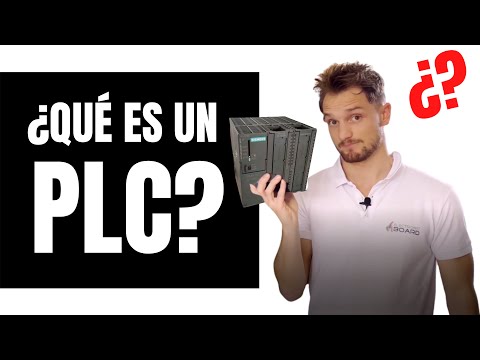
¿QUÉ ES UN PLC? ¿CÓMO FUNCIONA? | Diccionario Industrial #1
What is a PLC? Understanding Programmable Logic Controllers
Introduction to PLCs
- The video introduces the concept of an industrial dictionary series, focusing on explaining and defining various industrial equipment sold and repaired by Electronic Board.
Definition and Functionality of PLCs
- PLC stands for "Programmable Logic Controller," which is essentially an industrial computer designed to process data from machines. It acts as the brain of the machine, automating its actions.
- Before PLCs were invented in 1968, automation was achieved through conventional controls using a complex combination of cables and relays.
Conventional Control Systems vs. PLCs
- A conventional control system required extensive wiring; for example, activating a piston based on button presses involved numerous cables and relays.
- As conditions increased (e.g., multiple buttons or switches), the complexity grew significantly, making troubleshooting difficult due to tangled wires.
- Early electronic cards were also used but posed risks since a failure could disrupt the entire machine operation.
Structure and Operation of a PLC
- A typical PLC consists of three main components: inputs, outputs, and the CPU. Inputs can come from various sensors or devices like buttons or thermometers.
- The CPU processes incoming signals according to pre-loaded programs that dictate how inputs are transformed into outputs (e.g., activating motors or valves).
Programming and Flexibility
- Programs for PLC operations are created on computers using ladder diagrams before being uploaded to the device via Ethernet or RS232 connections.
- One significant advantage of using a PLC over traditional systems is flexibility; changes can be made easily by modifying software rather than rewiring complex setups.
Conclusion