Información en los prospectos de los medicamentos
Understanding Pharmacogenetics in Drug Information
Introduction to Pharmacogenetics
- The lesson focuses on how pharmacogenetic information is presented, using a drug package insert and a clinical report as examples.
- Emphasis is placed on the importance of extracting useful information from these documents, which may be mandatory in some countries like the US.
Example: Polynetol Leaflet Analysis
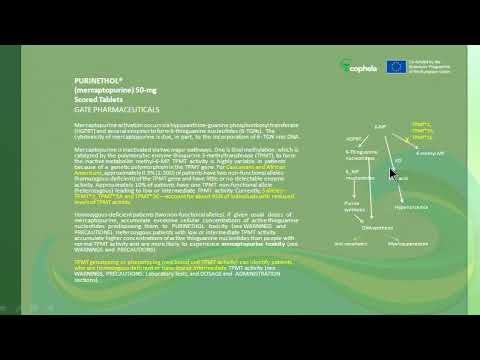
- The analysis begins with the leaflet for Polynetol from KPharmaceutica, highlighting that diagrams can aid understanding of complex texts.
- Key components typically included are the mechanism of action, metabolism details, pharmacogene variants of interest, and population risk factors.
Mechanism of Action
- Mercaptopurine acts as an anti-neoplastic agent by inhibiting DNA synthesis and cell proliferation, affecting both cancerous and non-cancerous cells.
- It has a narrow therapeutic margin requiring careful administration due to potential myelosuppression.
Metabolism Pathways
- Mercaptopurine is metabolized through three pathways:
- HPRT Enzyme: Converts mercaptopurine into active metabolites necessary for its efficacy.
- Xanthine Oxidase: Inactivates mercaptopurine by converting it into uric acid, potentially causing hyperuricemia.
- TPMT Enzyme: Polymorphic enzyme leading to varied responses among individuals; critical for pharmacogenetic studies.
Genetic Variants and Their Implications
- Three significant TPMT variants (*2, *3A, 3C) exist that result in low enzymatic activity affecting drug metabolism.
- Patients with these variants may require dose adjustments or alternative therapies to mitigate toxic effects due to increased drug levels.
Population Risk Factors
- Low activity variants are more common in Caucasians and African Americans; this highlights the need for targeted pharmacogenetic studies in these populations.
Recommendations for Analysis
- Genotyping before treatment is recommended for at-risk populations. Monitoring enzymatic activity can help manage potential toxic effects effectively.
Pharmacogenetic Information in Clinical Reports
Structure of Clinical Reports
- Clinical reports typically consist of three parts: pharmacology/pharmacogenetics overview, patient-specific findings, and usage recommendations.
Case Study: Simvastatin Report
- Simvastatin functions as an HMG-CoA reductase inhibitor impacting cholesterol synthesis but also poses risks such as myopathy due to its narrow therapeutic margin.
Understanding Simvastatin Metabolism and Its Implications
The Role of Cytochrome P450 in Simvastatin Metabolism
- Simvastatin is metabolized in the liver by a cytochrome P450 enzyme, which produces active compounds. This process varies among individuals due to genetic polymorphisms.
- Individuals with a polymorphic variant of low activity will experience reduced drug efficacy when simvastatin is administered, highlighting the importance of genetic factors in drug metabolism.
Impact of SLCO 1P1 Transporter on Drug Efficacy
- The transport of simvastatin into the liver is influenced by the SLCO 1P1 transporter, which is also subject to polymorphism. Low activity levels can hinder drug entry into the liver.
- Both poor metabolism and inadequate transport result in increased availability of simvastatin in circulation, potentially leading to heightened effects on non-target tissues such as muscle.
Patient Genotype and Treatment Recommendations
- A patient with a normal genotype (11 allele) shows typical metabolic function for CYP enzymes but has diminished function genotypes (1A15 and 1B5) for anion transporters.
- Recommendations include reducing the dose or selecting an alternative inhibitor that does not rely on impaired transport mechanisms, as this could mitigate adverse effects like myopathy.
Conclusion: Understanding Genetic Variability in Drug Response
- The case illustrates how genetic variability affects drug metabolism and response, emphasizing personalized medicine's role in optimizing treatment strategies for patients based on their unique genetic profiles.