The Beauty of Wildlife — and an Artistic Call to Protect It | Isabella Kirkland | TED
Palisades: A Reflection on Nature and Extinction
Introduction to the Painting "Palisades"
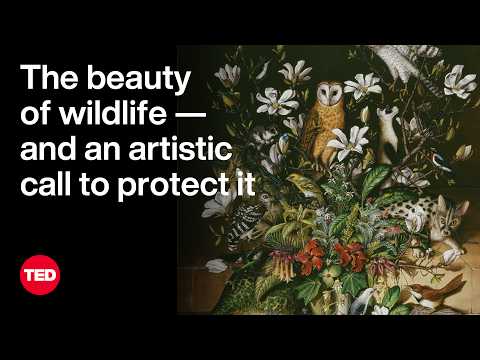
- The painting "Palisades" depicts the historical biodiversity along the Hudson River, north of New York City.
- Created to support a new park in Guatemala, it serves as a reminder of what has been lost in nature.
Artistic Practice and Research
- The artist's work investigates humanity's relationship with nature, focusing on both existing and extinct species.
- The painting "Understory" was developed through extensive research using a rubric and database rather than initial sketches.
- Complex paintings typically take about a year to complete, reflecting the artist's commitment to activism through art.
Value of Specimens
- Specimens like study skins from natural history museums serve as genetic libraries and contain valuable environmental data.
- Detailed studies of specimens are conducted to ensure accurate representation in artwork, aiming for a lifelike depiction.
Exploring New Species: "Canopy" and "Trade"
Discovery of New Species
- The painting "Canopy" features newly discovered species that are unfamiliar to Western science but known locally.
Risks of Collecting
- The concept of black market trade is explored in the painting titled "Trade," highlighting illegal wildlife sales driven by novelty and rarity.
- Despite regulations protecting wildlife, enforcement is inadequate due to overwhelming demand for exotic species.
Human Impact on Nature: Resilience and Extinction
Hope for Nature's Resilience
- The painting "Back" symbolizes hope for nature’s resilience amidst human exploitation.
Stories of Recovery
- Some species have been rediscovered or saved from extinction through significant efforts; others remain permanently lost.
The Weight of Extinction: Reflections on Loss
Depictions of Extinct Species
- Every element in certain paintings represents extinct species, emphasizing their irreversible loss from our world.
Artistic Techniques Inspired by History
- Influenced by Dutch still life masters, the artist employs traditional techniques combined with modern science to convey messages about biodiversity.
Art as an Alarm Clock: Urgency for Conservation
Environmental Snapshot Through Art
- Paintings act as snapshots or messages in bottles aimed at future generations regarding current biodiversity crises.
Historical Context and Current Crisis
- Reflecting on past environmental crises faced by figures like Audubon, the artist expresses concern over ongoing global ecological destruction.
The Importance of Documenting Biodiversity
The Role of Art in Advocacy
- The speaker emphasizes the urgency of addressing biodiversity loss, likening it to repeatedly hitting the snooze button on an alarm.
- They express a commitment to documenting at-risk biodiversity through painting, creating a visual record that advocates for conservation efforts.
- A critical question arises regarding the future impact of these paintings: what message will they convey to future generations?
- The speaker highlights the dual purpose of their work: both as documentation and as a means to inspire action towards biodiversity preservation.
Turn any video into a summary like this
YouTube links, meetings, lectures. With transcripts, search, and chat.