Johns Hopkins Psychiatry Grand Rounds | Functional Neurological symptom Disorder (FND)
Understanding Functional Neurological Disorder (FND)
Overview of FND
- The speaker's primary goal is to enhance care for individuals diagnosed with Functional Neurological Disorder (FND), aiming to share new insights and treatment approaches.
- The discussion will cover the definition of FND, its demographics, treatment methods, and the development of their program at Johns Hopkins.
Definition and Diagnosis of FND
- FND is characterized by altered sensory or motor functions that cannot be attributed to other medical conditions, as per DSM-5 TR criteria.
- Despite variations in terminology and criteria internationally, there is a consensus within the FND community on using "functional neurological disorder."
Terminology Shift from Conversion Disorder
- The term "conversion disorder" remains in parentheses in the DSM but has been largely replaced due to its implication of psychological causes for symptoms.
- Clinical experience suggests that up to 50% of patients diagnosed with FND do not fit the traditional conversion model linked to acute trauma or stressors.
Impact of Terminology on Patient Experience
- Using conversion disorder terminology can be unhelpful; many patients may reject this label if it does not resonate with their experiences.
- Mislabeling symptoms as stress reactions can lead to patient resistance towards diagnosis and treatment, hindering recovery.
Clarifications in New DSM Criteria
- The updated DSM criteria allow clinicians to specify whether a stressor is present or absent in cases of FND, aiding accurate diagnosis.
- Clinicians can also categorize subtypes of FND based on symptom manifestations such as functional seizures or movement disorders.
Common Manifestations and Diagnostic Challenges
- Common presentations include functional seizure-like episodes and persistent movement disorders like tremors or gait issues.
Understanding Functional Neurological Disorder (FND)
Definition and Misconceptions
- FND indicates that individuals are not willfully faking symptoms for personal gain, distinguishing it from malingering or factitious disorder.
- There is a perceived mismatch in the brain regarding voluntary and involuntary movements; patients feel their actions are involuntary despite originating from voluntary control.
Diagnostic Insights
- The confusion in brain signals leads to a lack of control perception, which therapy aims to address by restoring this sense of agency.
- Despite variability in terminology and criteria, the misdiagnosis rate for FND is low at about 4%, contrasting with higher misdiagnosis rates for other neurological conditions like epilepsy.
Clinical Features and Diagnosis
- Many patients diagnosed with conditions such as MS or Parkinson's may actually have FND instead, highlighting the importance of accurate diagnosis.
- Positive rule-in signs exist but are not mandatory for an FND diagnosis; they help clinicians explain the condition effectively to patients.
Key Signs in Functional Movement Disorders
- Three main positive rule-in signs include:
- Distractibility: Symptoms may improve when engaged in unrelated activities.
- Suggestibility: Discussing symptoms can exacerbate them.
- Trainability: Patients may show rhythmic movement patterns when prompted with their unaffected hand.
Additional Diagnostic Tools
- Variability is a significant marker for functional movement disorders, aiding both diagnosis and patient understanding of their condition.
- For functional seizures, continuous video EEG monitoring is considered the gold standard diagnostic procedure. Short-term EEG can also be effective when access to specialized units is limited.
Identifying Functional Seizures
- Positive signs for diagnosing functional seizures include:
- Eye closure during episodes,
- Long duration of episodes (over a couple of minutes),
- Preserved awareness during convulsions,
- Emotional responses like crying during or after events.
Understanding Functional Neurological Disorders (FND)
Key Features and Emerging Signs of FND
- The speaker discusses the importance of features like entrainment and variability in diagnosing FND, noting that these are regularly observed indicators.
- A reference is made to Dr. Mark Hallet's influential paper on FND, highlighting his role as a pioneer in the field and the significance of his contributions.
- New signs such as the "huffing and puffing" sign are mentioned, which movement disorder neurologists frequently observe as positive indicators for diagnosis.
- The discussion includes functional seizures, emphasizing positive rule-in signs like eye closure and prolonged attacks that aid in diagnosis.
- Epidemiological data reveals that FND can affect individuals across all ages, with a notable prevalence among females (60-80%).
Prevalence and Impact of FND
- FND is identified as the second most common new referral to neurology clinics, accounting for one out of six outpatient referrals.
- The speaker highlights significant levels of disability associated with FND, comparable to other neurological conditions, leading to high healthcare costs due to unnecessary treatments.
Causes and Mechanisms Behind FND
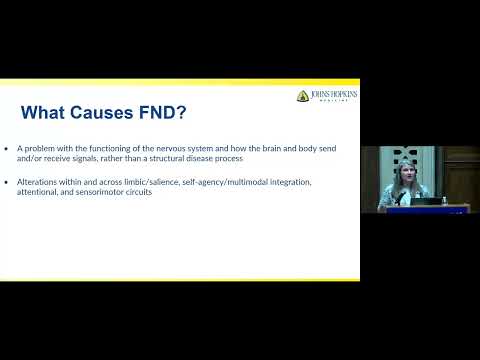
- The underlying cause of FND is described as a dysfunction in how the nervous system operates rather than structural issues within the brain.
- Neuroimaging studies suggest miscommunication between brain areas responsible for sensory information processing and motor control may contribute to symptoms.
Sense of Agency and Emotional Expression
- A key hypothesis posits that patients with functional movement disorders often feel a lack of control over their movements despite having it; therapy aims to restore this sense of agency.
- The speaker notes a common misconception about patients being overly emotional; many actually exhibit low emotional awareness or expression (alexithymia).
Therapeutic Approaches
- Therapy focuses on helping patients interpret their experiences better regarding emotions rather than simply attributing symptoms to stress or anxiety.
- Emphasis is placed on understanding individual patient experiences when diagnosing and treating FND.
Pathophysiology Insights
Understanding Functional Neurological Disorder (FND) and Its Treatment
Current State of Research on FND
- The research on FND is ongoing, with challenges such as small sample sizes and inconsistent methodologies. However, there are emerging leads that may help identify underlying issues related to treatment.
Factors Contributing to FND
- A complex interplay of factors contributes to the development of FND, categorized into three main types: predisposing, precipitating, and perpetuating factors. This framework helps in understanding why some individuals develop FND while others do not.
Predisposing Factors
- Genetic risk factors have been identified through studies aiming to pinpoint gene markers associated with FND. Life experiences such as trauma or exposure to neurological conditions can also play a significant role in predisposition.
Precipitating Factors
- Stressors that trigger the onset of symptoms are crucial for understanding conversion disorder models; these stressors can include personal life events or health-related issues experienced by patients or their families.
Perpetuating Factors
- These factors maintain the condition over time and are critical for developing effective treatment plans. They often involve psychological aspects like loss of agency or fear related to physical capabilities. Understanding these elements is essential for addressing ongoing symptoms effectively.
Misconceptions About Trauma in FND
- It is a common misconception that all individuals with FND have a history of severe trauma or abuse; studies indicate that while many do experience such backgrounds, a significant portion does not have this history at all (estimates range from 50% to 75%). This highlights the need for careful assessment rather than assumptions about patient histories.
Treatment Approaches for FND
- Accurate diagnosis is foundational for effective treatment and can sometimes lead to temporary symptom remission; however, it alone is insufficient without addressing other contributing factors like psychological interventions and physiotherapy.
Psychological Interventions
- Cognitive Behavioral Therapy (CBT) has shown promise in treating FND, but it’s important not to limit treatment options solely to CBT as various therapeutic frameworks exist that may be beneficial depending on individual cases. Collaborative efforts are underway internationally to establish consensus recommendations for psychotherapy approaches tailored specifically for FND patients using the Delphi Model methodology.
Physiotherapy Role
- Physiotherapy plays an important role in managing functional movement disorders associated with FND; however, its effectiveness varies based on specific patient presentations—less so in cases involving functional seizures compared to movement disorders where physiotherapy tends to yield better outcomes when combined with psychotherapy interventions simultaneously.
Goals of Treatment
- Establishing clear goals for treatment is vital—whether focusing on symptom reduction, improving quality of life, or alleviating depression and anxiety—these objectives guide therapeutic strategies tailored towards individual patient needs within the context of managing FND effectively.
Collaborative Treatment Approaches for Functional Neurological Disorders
Importance of Patient Collaboration in Treatment
- Emphasizes the significance of working collaboratively with patients to understand their treatment goals, which can evolve over time.
- Highlights that individual experiences and profiles are crucial in determining the most effective treatment approach for each patient.
Effectiveness of Psychotherapy
- Notes that psychotherapy is generally effective for individuals with Functional Neurological Disorders (FND), with an average improvement rate of about 50% when using empirically supported methods.
- Mentions the importance of considering prognostic factors that may influence recovery outcomes, indicating variability in patient responses to treatment.
Cognitive Behavioral Framework
- Discusses a cognitive behavioral framework developed by Dr. LaFrance, which has been adapted for broader use in treating FMD (Functional Movement Disorder).
- Stresses the necessity of having trained therapists guide this therapeutic approach alongside patients.
Resources at Johns Hopkins
- Introduces a new website aimed at providing information on resources available at Johns Hopkins for patients with FMD, including programs like Dr. Treisman's Meyer 6 service.
- Describes multidisciplinary approaches being implemented to evaluate and treat FMD effectively, involving collaboration between neuropsychologists and neurologists.
Outcomes and Community Support
- Shares positive outcomes from multidisciplinary programs at Johns Hopkins, noting improvements in patient understanding and hope regarding their conditions as measured by the Brief Illness Perception Questionnaire (BIPQ).
- Acknowledges contributions from mentors and the international FMD community that have supported program development and implementation.
Understanding Psychiatric Comorbidities in FND
Prevalence of Depression Among Patients
- Raises awareness about how common psychiatric comorbidities are among patients seeking neurological care for FND, particularly depression.
Variability Across Subtypes
- Indicates that psychiatric comorbidities are more prevalent in functional seizure subtypes compared to functional movement disorder subtypes, estimating 50%-75% prevalence rates.
Clinical Observations
Understanding Gender Differences in Neurological Conditions
Emergence of Functional Movement Disorders (FMD)
- The emergence of FMD shows variability based on different subtypes and potentially gender, though the reasons remain unclear.
- There is a noted parallel between gender differences in FMD and other neurological conditions, such as Multiple Sclerosis (MS).
Historical Perspectives on Gender and Trauma
- Historically, it has been believed that abuse, trauma, and sexual assault contribute to higher incidences of certain conditions in women compared to men.
- This perspective aligns with observed gender differences in mental health issues like depression and anxiety.
Challenges in Diagnosing Conversion Disorders
- Many patients do not conform to traditional conversion disorder models due to the absence of clear psychological stressors.
- The complexity of these cases raises questions about diagnostic criteria and treatment approaches.
Adherence to Treatment Protocols
- Studies indicate that adherence can be measured by attendance at a significant number of sessions (e.g., 8 out of 12), which appears sufficient for positive outcomes.