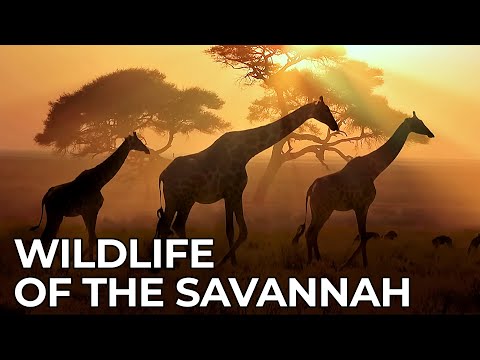
World of the Wild | Episode 2: Africa's Savannah | Free Documentary Nature
Nature is Our Home
This section emphasizes the importance of nature and its role as our home. It highlights how animals and insects blend into their surroundings using deception and disguises. The beauty and sounds of nature are also mentioned.
The Significance of Nature
- Nature is not just a place to visit, but it is our home.
- Animals and insects use deceptions, disguises, and lures to disappear into their surroundings.
- The sounds of nature, such as the call of an eagle or the hiss of Ocean Spray, contribute to its wonderful beauty.
The World of the Wild
This section introduces the African Savannah, covering almost half of Continental Africa. It describes the vast scale and diversity of life in this unique tropical grassland.
The African Savannah
- The African Savannah spans over 25 countries and covers nearly 13 million square kilometers.
- It consists of open woodlands, rolling grass plains, and supports a wide variety of wildlife.
- Lions, elephants, wildebeests, cheetahs, and giraffes are some famous residents found in the Savannah.
Appreciating the Savannah's Beauty
A brief expression of gratitude for the beauty found in the Savannah.
Acknowledging Beauty
- A simple "thank you" is expressed to appreciate the beauty found in the Savannah.
Encounter with Famous Residents
This section mentions encountering some well-known inhabitants of the Savannah: lions, elephants, wildebeests, cheetahs, and giraffes.
Famous Residents
- Lions are introduced as one of Africa's top predators.
- Elephants are described as being unmistakable due to their large size.
- Other notable residents include wildebeests, cheetahs, and giraffes.
The King of Beasts
This section focuses on the lion, known as the king of beasts, and highlights its characteristics and hunting behavior.
The Lion's Dominance
- Lions are the largest carnivores in Africa and are considered the continent's top predators.
- Due to their limited sweat glands, lions tend to be less active during the day and seek shade to manage the heat.
- Lions are creatures of leisure, sleeping around 20 hours a day but come alive at night.
Hunting Techniques
- Lions have excellent night vision and depth perception, making them effective hunters in low light conditions.
- They launch short, violent attacks from close range using their bulk and retractable claws to overpower prey.
- Lions use their muscular limbs and powerful jaws to pull down their quarry before asphyxiating them by closing off their airways.
Surviving in an Exposed Environment
This section discusses how lions adapt to survive in the Savannah's exposed environment.
Coping with Seasonal Fires
- Seasonal fires are common on the Savannah during the dry season.
- While animals can find safe refuge from these fires, hunting becomes more challenging due to reduced cover.
Opportunistic Behavior
- Lions are opportunistic hunters but also scavengers.
- They scan the skies for circling vultures that indicate fresh kills made by other predators.
- Lions live in family units called prides with distinct roles for each member: males defend territory while lionesses do most of the hunting.
Protecting Lion Numbers
This section emphasizes the need for protecting lion populations by preserving their habitat.
Historical Distribution
- Lions were once among the most widespread land mammals on Earth, second only to humans.
- Today, the African grassland is one of their remaining strongholds.
Threats and Conservation
- Human expansion poses a threat to lion populations and their habitat.
- Local enforcement of anti-hunting laws has been successful in preserving lion numbers.
- Protecting the Savannah itself is crucial for fully serving these kings of the wild.
The Majestic Elephants
This section focuses on elephants, particularly the Savannah elephant, highlighting their size and grazing habits.
Largest Terrestrial Creatures
- Africa is home to two of the world's three living species of elephants: the smaller Forest elephant and the larger Savannah elephant.
- Male Savannah elephants can reach heights of four meters and weigh over six tons.
Grazing Habits
- Elephants spend around 20 hours a day grazing to sustain their large frames.
- They consume vast quantities of vegetation, often hundreds of kilos per day.
Water as a Vital Resource
This section emphasizes the importance of water for elephants in the dry plains of the Savannah.
Water Requirements
- Elephants require significant amounts of water to survive.
- However, water can be scarce and unreliable in the arid conditions of the Savannah.
New Section
This section discusses the adaptations of elephants to their environment, including their trunk, ears, and brain.
Adaptations of Elephants
- Elephants use their trunks to detect water over 19 kilometers away.
- The enlarged ears of Savannah elephants not only enhance their sense of hearing but also help in cooling by transferring heat back to the environment. This can reduce their body temperature by up to 9 degrees Celsius.
- Elephants have the largest brain among land animals and are highly intelligent. They have a famous long memory that helps them navigate through times of drought and remember distant water and food sources. They also exhibit complex social behaviors associated with grief, humor, and possibly even language.
- The tusks of elephants, made of ivory, are used for various purposes such as clearing debris, digging for food, and in fighting. However, hunting for ivory has led to a decline in African elephant populations. Restrictions on the international ivory trade have helped stabilize elephant numbers, but poaching remains a threat.
New Section
This section focuses on wildebeests and their adaptations in the grassland habitat.
Wildebeest Adaptations
- Wildebeests have tough hides capable of speeds up to 80 kilometers per hour and possess vicious horns for defense against predators. They form herds that provide protection for vulnerable members by closing ranks when threatened.
- Wildebeests form mixed grazing groups with zebras, increasing collective awareness while decreasing individual chances of being attacked. They also rely on alarm calls from tree-dwelling birds and baboons as an early warning system to move when predators are nearby.
- The Great Migration is a defining event for wildebeests, where hundreds of thousands of them migrate northward in search of greener pastures. They face challenges such as river crossings and crocodile-infested waters but exhibit swarm intelligence to collectively overcome obstacles.
- Human developments like roads and fences pose barriers to successful migrations, but there is evidence that wildebeests are adapting their migration pathways to avoid human encroachment.
- Agriculture and competition with livestock have led to a decrease in wildebeest numbers, but their grazing habits contribute to soil fertility and fire risk reduction on the Savannah. Conservationists recognize the importance of wildebeests in sustaining the grassland ecosystem.
New Section
This section explores the adaptations of cheetahs for speed in the savannah.
Adaptations of Cheetahs
- Cheetahs are the fastest land-based animals, capable of speeds over 90 kilometers per hour. They have evolved purely for speed and can accelerate quickly during sprints.
- Life in the savannah is challenging even for cheetahs due to competition with other predators. Their speed helps them catch prey, but they still face difficulties in survival.
The transcript ends here without providing further information about cheetah adaptations or any additional sections related to other animals or topics mentioned earlier.
Please note that this summary only covers the available content from the provided transcript and may not include all details from the video if it continues beyond what was transcribed.
Stabilization
This section discusses the adaptations and challenges faced by cheetahs in their hunting and feeding behaviors.
Cheetah's Hunting Behavior
- Cheetahs are one of the smallest big cats and have a thin frame.
- They can only target medium-sized prey and are poorly equipped to defend themselves.
- Cheetahs lose around 50% of their kills to larger predators in the area.
- To avoid competition, cheetahs eat their kill immediately to maximize feeding time before being chased off.
- These adaptations to life on the Savannah make cheetahs successful in only about half of their hunts.
Challenges Faced by Cheetahs
- It was previously believed that cheetahs pulled out of chases due to overheating in the African sun, but this is incorrect.
- Body temperatures do rise when feeding, making cheetahs vulnerable to attacks from other carnivores competing for limited food resources.
- Any injury is potentially life-threatening for a cheetah as they rely entirely on speed and agility for survival.
Conservation Status
- Cheetahs are considered the least capable of adapting to change among the big cats.
- They face greater pressure from larger competitors and often come into conflict with farmers outside nature reserves.
- While small populations have made a comeback in certain countries, cheetahs still face extinction in many parts of Africa.
Giraffes: Tallest Animals on the Savannah
This section explores the unique adaptations of giraffes that allow them to thrive in the grassland environment.
Giraffe's Size and Camouflage
- Male giraffes can reach heights of up to five and a half meters.
- Their distinctive coat patterns help break up their outlines, allowing them to blend in with the Savannah Woodlands.
- Camouflage is particularly important for young giraffes, who are more vulnerable to predators.
The Mystery of the Giraffe's Neck
- The conventional explanation for the giraffe's extended neck is natural selection, as it allows them to feed on foliage that other herbivores cannot access.
- Some scientists propose that the neck may be more important in sexual selection, as male giraffes use their necks as weapons during fights for mating rights.
Unique Adaptations
- Giraffes have a massive heart that beats at 150 beats per minute, twice the rate of humans, to pump blood to their extremities.
- They display a preference for acacia trees and are well adapted to feeding in both wet and dry seasons.
- Giraffes consume around 34 kilograms of vegetation daily and get most of their liquid from the leaves they eat, minimizing the need for drinking water.
Conservation Efforts
- Expansion has affected giraffe numbers, but they have shown adaptability by grazing alongside cattle without directly competing with livestock.
- Giraffes can coexist with agriculture better than many other wild animals.
The Future of the Savannah
This section highlights the challenges faced by the grassland environment of the Savannah and emphasizes Africa's commitment to preserving it through nature reserves.
Threats to the Savannah Ecosystem
- Human expansion and changes in climate pose significant threats to the balance of the Savannah ecosystem.
- Preserving this grassland environment is crucial for maintaining biodiversity and protecting its inhabitants.
New Section
This section is a general introduction to the task of creating a comprehensive and informative markdown file from a given transcript. The goal is to structure the markdown file in a clear and concise manner, utilizing timestamps when available to aid in studying the transcript.
Creating Markdown Notes
- Use bullet points to summarize key points and insights from the transcript.
- Each bullet point should be linked to the corresponding timestamp in the video using format.
- Aim for clarity and conciseness, with each bullet point containing no more than 25 words.
- Organize your notes using subheadings and bullet points, following a chronological order.
Formatting Tips
- Keep each section limited to four bullet points or less.
- Use [] for timestamps and () for linking to specific parts of the video.
- Utilize subheadings and bullet points for better organization and readability.
- Include timestamps whenever possible, especially within bullet points.
Summary Tips
- Only include content from the transcript; do not add any additional information.
- Titles should be informative or pose questions that are answered in the video.
- Avoid drawing conclusions based on limited information from the transcript.
- Cite relevant timestamps by linking them using format within blocks of text or bullet points.
- Strive for conciseness while avoiding excessive sectioning.
The language used in this summary follows that of the original transcript.