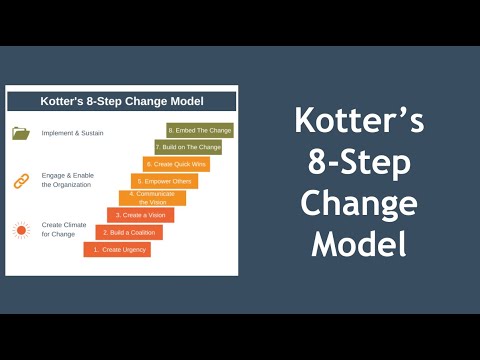
Kotter's 8-Step Change Model Explained
Introduction to Kotter's Eight-Step Change Model
Overview of the Model
- John Kotter's eight-step change model is a widely recognized framework for leading organizational change, first introduced in a 1995 Harvard Business Review article and later detailed in his 1996 book Leading Change.
- The model was developed through observations of various organizations attempting to implement change, identifying common success factors that were synthesized into this methodology.
Phases of the Change Model
- The model consists of three broad phases:
- Create a climate for change: Establishing a shared understanding of the need for change.
- Engage and enable the organization: Empowering teams to embrace and drive the change.
- Implement and sustain: Maintaining momentum after initial successes to fully integrate changes.
Step-by-Step Breakdown of Kotter's Model
Step 1: Create a Sense of Urgency
- Building urgency involves creating a compelling case for why immediate action is necessary, ensuring at least 75% management support for successful initiatives.
Step 2: Build a Coalition
- Forming powerful coalitions with influential individuals within the organization is crucial; these leaders should collaborate outside formal hierarchies to champion the initiative.
Step 3: Create a Vision
- A clear vision helps everyone understand the future state and necessity for change. All coalition members should be able to articulate this vision succinctly.
Step 4: Communicate the Vision
- Effective communication is essential; it should resonate emotionally with stakeholders, making them feel part of a mission rather than just executing a project. Utilize all available channels consistently.
Steps Five Through Eight
Step 5: Empower Others to Act on the Vision
- Remove barriers that hinder progress by providing training, restructuring as needed, setting up reward systems, and addressing resistance among team members.
Step 6: Create Quick Wins
- Achieving early visible successes can energize teams and build momentum. Structure initiatives into phases that deliver tangible benefits promptly while celebrating achievements widely.
Step 7: Build on the Change
- Continuous reinforcement is vital; repeat steps four through six regularly to ensure new approaches are ingrained in organizational culture and practices.
Step 8: Embed the Change
- For lasting impact, changes must become integral parts of daily operations and organizational culture, requiring embedding into systems and processes across all levels.
Advantages and Disadvantages of Kotter’s Model
Advantages:
- Focuses on securing buy-in from key employees.
- Aligns well with traditional organizational structures.
- Provides clear steps guiding through change processes.
Disadvantages:
- Being top-down may overlook opportunities due to lack of inclusive vision creation.
- Potential employee resistance if reactions to significant changes aren't considered.
- While effective at initiating change, it offers limited guidance on sustaining it long-term.
Conclusion
Summary Insights
- Changing organizations successfully is challenging; however, following Kotter's eight-step model can enhance chances for success by fostering an environment conducive to sustained transformation. Regularly revisiting these steps can help embed changes deeply within an organization's culture.