OFPPT Academy SOFT SKILLS : Gestion de stress PARTIE 6
Introduction and Overview
The speaker introduces the topic of stress management, focusing on understanding the three brains' reactions to stress and providing solutions for effective stress reduction.
Definition of Stress and Automatic Reaction
- Stress is an automatic reaction by the body in new or challenging situations.
- Stress involves responses produced by the body during difficult situations.
- The process involves a stimulus triggering emotions like anger or fear, leading to an emotional reaction.
- Stress is related to emotions that send messages to the body, eliciting emotional responses.
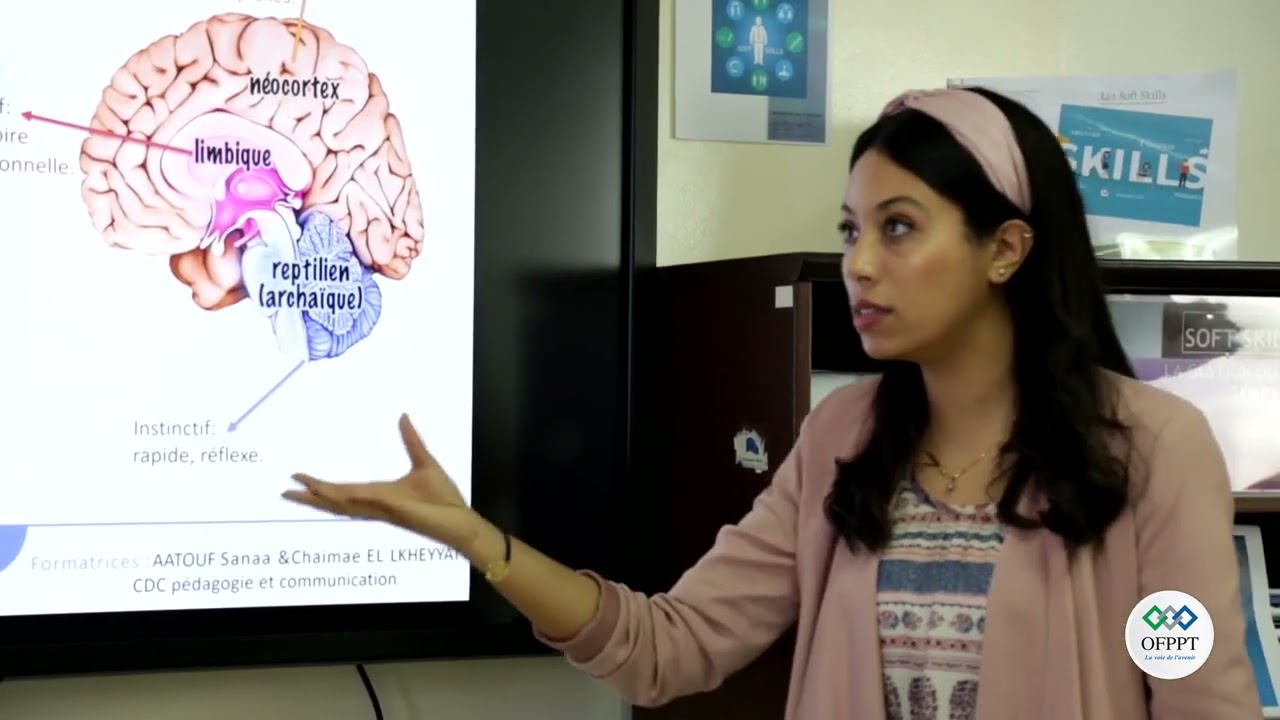
Three Brains: Reptilian, Limbic, and Cortex
- The reptilian brain reacts rapidly in survival situations.
- It focuses on reflexes and quick reactions for survival.
- The limbic brain governs emotions and emotional responses.
- It is responsible for processing emotions.
- The cortex brain handles logical functions but is hindered during stress.
- It deals with intellectual functions but struggles under stress.
Understanding Brain Reactions to Stress
Explores how each brain responds during stressful situations, emphasizing the impact on decision-making and rational thinking.
Reptilian Brain's Response
- When stressed, the reptilian brain reacts quickly by releasing adrenaline or cortisol.
- It triggers fight-or-flight responses due to perceived danger.
Cortex Brain's Impairment
- Under stress, the cortex brain struggles with logical reasoning and organization of thoughts.
- It becomes unable to function rationally during stressful moments.
Example: Speaking in Public Under Stress
Illustrates how each brain reacts when speaking in public under stress, showcasing exaggerated fears and impaired cognitive functions.
Three Brains' Responses During Public Speaking
- Reptilian brain exaggerates fears about public speaking abilities.
- It amplifies negative thoughts such as incompetence or fear of failure.
- Limbic brain intensifies emotional responses like panic or avoidance of questions.
Understanding the Brain Functions
In this section, the speaker discusses the different parts of the brain and their functions, emphasizing the importance of understanding how the brain processes stress.
The Cortex and Stress Management
- The cortex is highlighted as an essential part of the brain for processing stress.
- Understanding the mechanisms in the cortex can facilitate effective stress management.
- The speaker uses a diagram to explain neuroism, aiding in comprehending stress responses.
- Managing stress becomes easier when individuals grasp what occurs in their brains during stressful situations.
- There are instances where exaggeration of reactions is necessary, such as in specific circumstances requiring heightened attention.