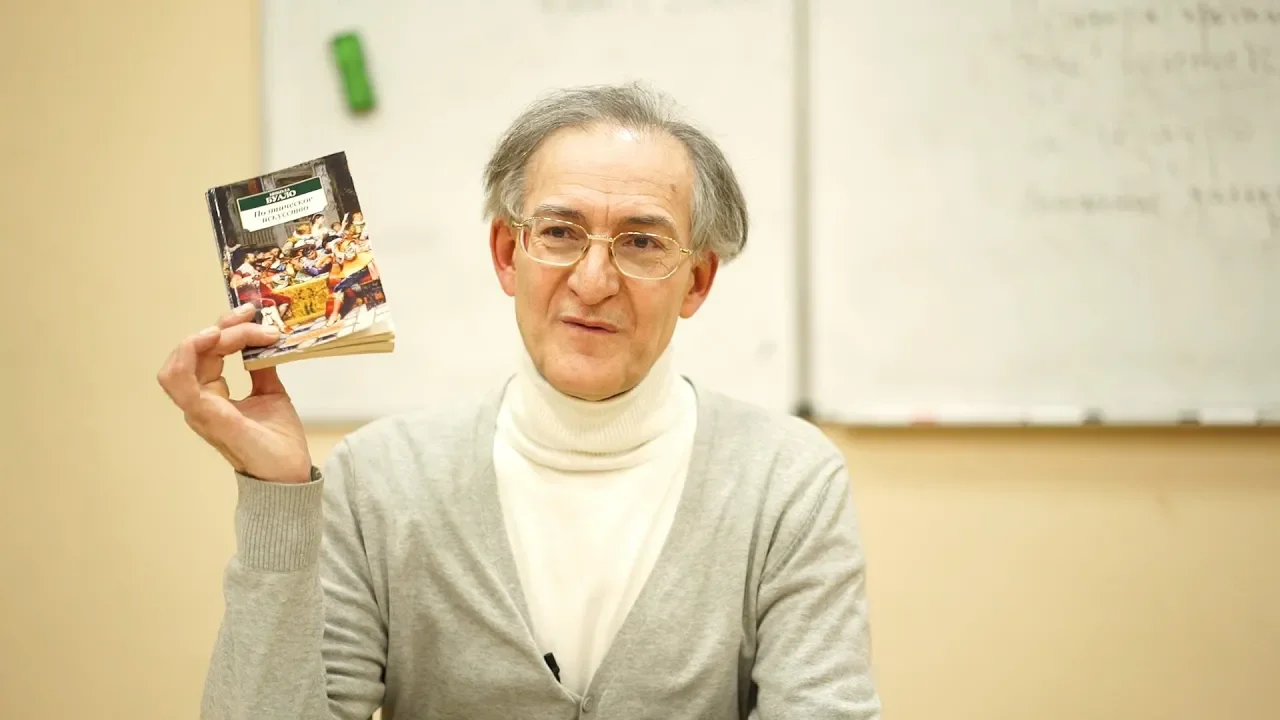
Эпоха барокко, Александр Пустовит, курс "Эстетика", лекция 11/12
Exploring the Nature of Truth in Art
Reflection on Previous Discussions
- The speaker reflects on past discussions, emphasizing the importance of considering what was left unsaid and revisiting previous topics.
- A complex question arises regarding the embodiment of truth in art: is it static or a process? This leads to further inquiries about the relationship between truth, goodness, and beauty.
Process vs. Static Truth
- The distinction between static and processual truths is explored through examples from music and literature. Engaging with a new piece creates a sense of anticipation, making it a process.
- Life itself is described as an ongoing process where individuals navigate uncertainty daily, paralleling the experience of engaging with art for the first time.
Understanding Artistic Experience
- After experiencing a work multiple times, one can perceive it as a complete entity rather than just a sequence of events. This shift illustrates how understanding evolves over time.
- The speaker discusses how familiarity allows for analysis of structure and form within artistic works, contrasting initial engagement with later comprehension.
The Philosophical Underpinnings of Aesthetics
Aesthetic Traditions: Baroque vs. Classicism
- The discussion transitions to aesthetics in Baroque versus Classical traditions, highlighting their philosophical differences rooted in concepts of beauty.
- Classicism draws from ancient ideals while Baroque represents more dynamic expressions; both reflect differing views on beauty's nature.
Historical Context and Influences
- The term "Baroque" may derive from words meaning "irregular pearl," suggesting its complexity compared to Classical simplicity.
- Nicolas Boileau's contributions to French classicism emphasize logic and clarity in poetry, reflecting broader aesthetic values that prioritize reason over emotion.
Insights into Poetic Form
Aesthetic Principles of Baroque Art
Understanding Truth and Clarity in Text
- The speaker reflects on the nature of truth, noting that it often does not appear plausible at first glance. This leads to a discussion about how different individuals react to absurdities and miracles.
The Simplicity and Depth of Writing
- Emphasizes the importance of clarity in writing; one should think through their ideas before expressing them. Simple words are preferred when the concept is clear.
Baroque vs. Classicism: A Shift in Aesthetic Values
- Discusses the contrasting principles between Baroque aesthetics and Classical ideals, highlighting that Baroque art embraces metaphor over strict logic, allowing for ambiguity.
The Role of Metaphor in Baroque Aesthetics
- Introduces Italian theorist Izauro's work "The Telescope of Aristotle," which critiques Classical emphasis on logic and clarity, advocating instead for the emotional resonance found in Baroque art.
Convergence of Distant Ideas
- Explains a key concept from Izauro regarding "conchita," or the merging of disparate ideas, as central to understanding Baroque aesthetics. This contrasts sharply with Classical separation between high and low forms.
Contrasting Views on Taste
Humor and Taste in Artistic Expression
- Highlights how Classical thinkers view humor as poor taste while Baroque artists embrace it, suggesting that artistic expression can blend serious themes with humor without losing value.
The Nature of Artistic Freedom
- Cites Horace’s perspective on artistic freedom—artists should create freely but maintain simplicity and unity within their works, contrasting this with Baroque acceptance of complexity.
Metaphorical Creativity in Poetry
Examples from Literature
- Discusses Horace's humorous imagery involving fantastical creatures to illustrate differing views on taste between Classicists and Baroque artists.
Central Tenets of Baroque Poetics
- Describes how poets like Izauro advocate for creativity that merges unlike elements (e.g., human traits with animal features), emphasizing imaginative freedom over logical constraints.
Romantic Irony vs. Wit
Evolution from Renaissance to Romanticism
- Connects Izauro's notion of wit ("ostrovia") with modern concepts like romantic irony, indicating a shift towards valuing emotional depth over rationality in art.
Expectations from Artists
- Contrasts expectations placed upon poets by Classicists versus those by Baroque thinkers; where Classicists demand reasoned works, Baroque advocates for wonderment and surprise as essential qualities.
Exploring Metaphors Through Exercise
Engaging with Creative Comparisons
Exploring Metaphors in Poetry
The Role of Metaphor in Poetry
- The speaker invites the audience to think creatively about metaphors, specifically comparing a rose to something meaningful and clever.
- References Shakespeare's use of metaphor, noting that while roses are common in poetry, they can still evoke strong imagery and emotions.
- Discusses the challenge of finding original metaphors; mentions how mountains can be likened to roses, emphasizing their beauty and uniqueness.
Analyzing Specific Poems
- A detailed reading of a poem that compares a rose to various elements, highlighting its fleeting nature and beauty through rich imagery.
- The speaker emphasizes the creativity involved in poetic comparisons, such as likening a rose to the sun among flowers.
Insights from Historical Poets
- Introduces Zaura’s work on stylistic diversity in poetry, showcasing how different objects can be connected through metaphorical language.
- Discusses Zaura's exploration of serious themes using stars as an example; he illustrates how distant concepts can be linked effectively.
Creative Imagery with Stars
- Presents imaginative descriptions of stars as dense parts of ether reflecting sunlight, demonstrating scientific yet poetic thinking.
- Highlights the transformation of mundane ideas into profound thoughts through metaphorical expressions about stars.
Mythological References and Their Impact
- Explains Argus from mythology as a figure with many eyes; this reference enriches understanding when discussing celestial bodies like stars.
- Describes how mythological stories enhance poetic imagery by connecting human emotions with cosmic elements.
Varied Expressions Through Metaphor
- Discusses different ways to express similar ideas about stars—ranging from tragic to humorous—showing the versatility of language in poetry.
Overview of Cultural Shifts in European History
Recap of Historical Eras
- The discussion begins with a recommendation for a small, engaging book and transitions into a brief recap of historical periods: Antiquity, the Middle Ages, the Renaissance, and the 17th and 18th centuries.
- Key cultural principles are highlighted:
- Antiquity: Cosmocentrism (the universe as central).
- Middle Ages: Theocentrism (God at the center).
- Renaissance Onward: Anthropocentrism (human beings at the center).
Human Nature and Contradictions
- Acknowledgment of human nature's contradictions:
- People can be very kind or extremely cruel.
- Talents vary widely from genius to mediocrity.
- Introduction to Classicism:
- Clear genre hierarchy in art; high genres include tragedy (e.g., Racine's "Andromaque") while low genres include comedy.
Genre Hierarchy in Classicism
- Discussion on genre limitations within Classicism:
- Noted that classicist dramatists often had limited character types—either a tragic king or a comical bourgeois.
- Comparison to Medieval Worldview:
- Medieval thought divided existence into heaven and earth, paralleling how Classicism divides genres into high and low.
Social Structure Reflected in Art
- Examination of French society in the 18th century:
- Society was stratified into three estates: nobility, clergy, and commoners.
- Explanation of social inequality:
- Nobles held privileges over commoners; this societal structure mirrors the division between high and low artistic genres.
Insights on Tragedy vs. Comedy
- Emphasis on tragedy lacking comedic elements:
- Example given is Racine’s "Andromaque," which contains no humor despite its brilliance.
- Mention of one notable comedy by Racine titled "Les Plaideurs," which contrasts sharply with his tragedies.
Philosophical Developments in the Seventeenth Century
- Transition towards exploring human nature further:
- Suggestion that not all aspects of humanity can be neatly categorized as either noble or base.
- Introduction to contrasting thinkers from the same era:
- French moralists like La Rochefoucauld challenge strict classifications found in Classicist thought.
La Rochefoucauld's Contributions
- Reference to significant works from French moralists who provide nuanced views on human behavior.
- La Rochefoucauld’s work emphasizes complexity over binary oppositions found in classical thinking.
Reception of Moral Philosophy
- Discussion about La Rochefoucauld’s anonymous publication “Maxims” which critiques human virtues as often being veiled vices.
The Nature of Virtue and Vice
Discussion on Virtue and Vice
- The speaker contrasts virtues such as generosity, nobility, and kindness with vices like greed and cowardice, emphasizing their fundamental opposition.
- Reference is made to La Rochefoucauld's decision to publish his work anonymously, highlighting the significance of his insights into human nature.
- A recommendation for reading "Princess of Cleves" by Madame de Lafayette is given, noting its excellent translation by Ivan Shmelev.
La Rochefoucauld's Insights
- La Rochefoucauld aims to unify human thoughts in a coherent manner, suggesting that our virtues are often cleverly disguised vices.
- An example illustrates how societal perceptions can lead one to feel shame about noble actions if true motivations were known.
Literary References
- The speaker cites Voltaire’s remark on La Rochefoucauld’s maxims being both sad and truthful.
- Pushkin's "The Miserly Knight" is introduced as an illustration of the theme where noble deeds are tainted by underlying motives.
Exploring Themes in Literature
Analysis of "The Miserly Knight"
- The play begins with a scene between two characters: Albert and Ivan. Albert expresses determination to win a tournament despite challenges.
- A description follows regarding Albert’s damaged helmet symbolizing the conflict between pride and financial constraints.
Reflection on Human Nature
- The narrative reflects on how poverty can humiliate individuals, leading them to act against their better judgment during moments of glory.
- This leads back to La Rochefoucauld’s idea that we might be ashamed of our most honorable actions if others knew our true intentions.
Tragedy vs. Comedy in Human Experience
High vs. Low Genres
- Discussion shifts towards genre hierarchy in literature, particularly focusing on tragedy as a high genre centered around human mortality.
Sources of Tragedy and Comedy
- The speaker posits that the essence of tragedy stems from human mortality while comedy arises from reasoned understanding.
- It is noted that humor is inherently linked to rationality; thus, both elements coexist within human nature.
Philosophical Perspectives
- A philosophical assertion suggests that life presents itself differently based on one's perspective—tragedy for sensitive souls versus comedy for clear thinkers.
Exploring Human Nature: Tragedy and Comedy
The Duality of Human Thought
- The speaker reflects on the strictness of human nature, referencing Pushkin's idea that one-sided thinking is detrimental to thought.
- Discusses the duality of human existence, highlighting that while humans share mortality with animals, they also possess a divine image and an immortal soul.
- Emphasizes the importance of considering both tragic and comic aspects of human nature as inseparable elements.
Artistic Representation of Human Nature
- Questions how an artist might express the dual sides of human nature in their work, noting that art exists within time.
- Connects artistic forms, particularly sonata form, to concepts of time; mentions ancient circular time as associated with comedy.
Time Concepts in Tragedy and Comedy
- Contrasts circular time (associated with comedy) against linear time (linked to tragedy), explaining how these concepts influence perception.
- References a book about philosopher Alexei Fedorovich's thoughts on students' understanding of cultural differences between antiquity and medieval times.
Philosophical Insights on Time
- Cites a simplistic yet profound example distinguishing ancient naked laughter from the clothed sorrow in Christian depictions.
- Explores how different perceptions of time relate to comedic versus tragic narratives; circular time aligns with comedy while irreversible linear time aligns with tragedy.
Augustine’s Reflection on Time
- Recalls Augustine's famous question about the nature of time, illustrating its complexity through personal reflection.
- Defines time as a force leading humanity from youth to death, emphasizing its irreversible quality which contributes to tragedy.
Life Perspectives: Tragic vs. Comic
- Discusses how life viewed from birth to death can be seen as tragic due to mortality; however, daily life can be perceived comically due to its repetitive nature.
- Introduces Molière’s "The Bourgeois Gentleman" as an example where comedic elements arise from societal aspirations and misunderstandings.
Comedic Dialogue Example
- Describes a dialogue between Monsieur Jourdain and his philosophy teacher regarding writing love letters humorously structured around social norms.
Philosophical Insights on Comedy and Tragedy
The Nature of Love and Death
- The speaker reflects on the duality of love and death, using the metaphor of a beautiful marquise to illustrate how both concepts are intertwined in human experience.
- Acknowledges that despite lacking formal education, one can create profound ideas spontaneously, highlighting the power of creativity.
Combinatorial Perspectives
- Discusses combinatorics by illustrating that rearranging elements (like phrases) does not change their inherent meaning, akin to mathematical permutations.
- Uses the example of a triangle's symmetry to explain how transformations can occur without altering the essence of an object.
Humor and Meaning
- Explores the concept of humor arising from seemingly trivial changes in structure while retaining original meanings, emphasizing unity in opposites.
- References a philosophical work titled "The Philosophy of Laughter," which discusses circular movement as a form of humor compared to linear movement representing tragedy.
Human Existence: Tragic vs. Comic
- Suggests that viewing humanity solely through a tragic or comic lens is reductive; both perspectives coexist within human nature.
- Introduces Hegelian dialectics, proposing that true understanding comes from recognizing contradictions and integrating them into a spiral development model.
Cultural Lineages in Philosophy
- Identifies two historical lines in European culture: one rooted in rationalism (ancient Greece through Enlightenment), and another influenced by medieval Christianity leading to Romanticism.