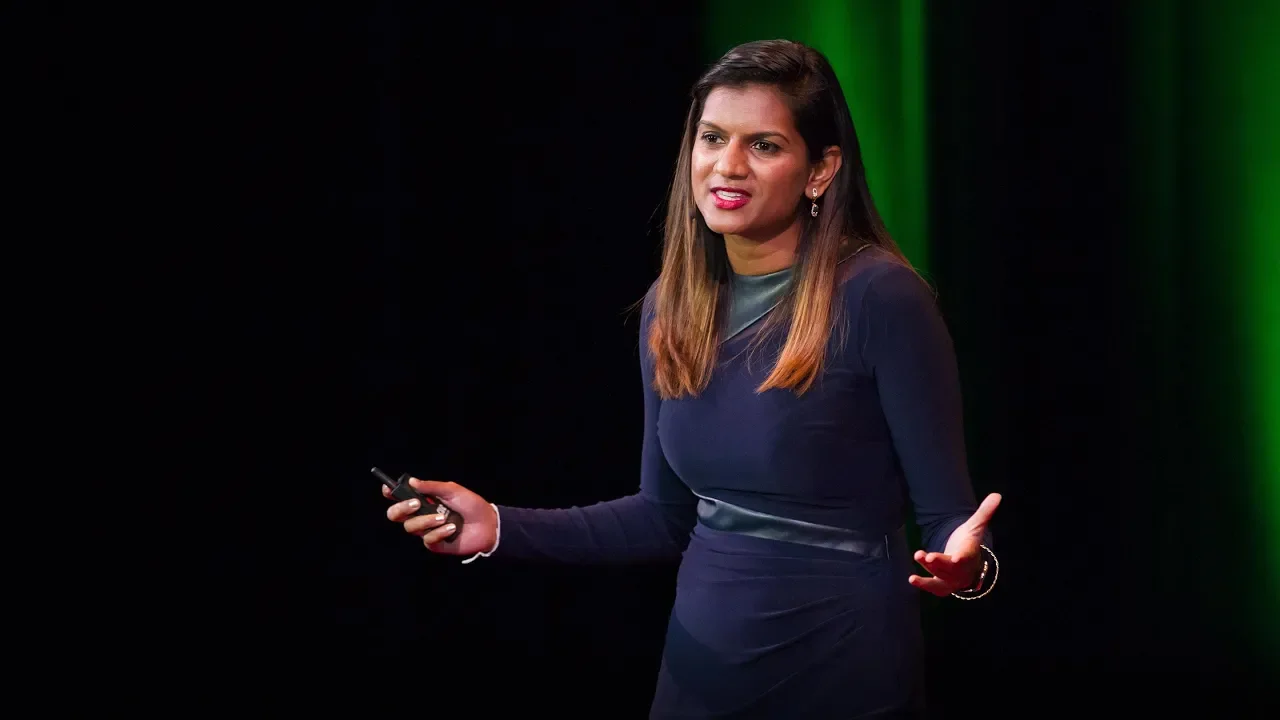
How cancer cells communicate — and how we can slow them down | Hasini Jayatilaka
Cancer and Metastasis
This section introduces the devastating impact of cancer and the ongoing battle against it. It highlights the high prevalence of cancer and the role of metastasis in its progression.
Understanding Cancer and Metastasis
- Cancer is a devastating disease that takes an enormous emotional toll on patients and their loved ones.
- Two out of five people in the US will develop cancer in their lifetime, with 90% succumbing to the disease due to metastases.
- Metastasis refers to the spread of cancer from a primary site to a distal site through the circulatory or lymphatic system.
The Impact of Metastasis
- Cancer does not become fatal simply because of a mass at the primary site but rather when it spreads to other organs, becoming unresectable or untreatable.
Discovering Communication Among Cancer Cells
- Research has shown that cancer cells are able to communicate with each other and coordinate their movement based on how closely packed they are in the tumor microenvironment.
- Interleukin-6 and Interleukin-8 are two signaling molecules through which cancer cells communicate with each other.
Targeting Communication for Controlling Spread
- Blocking this communication pathway using a drug cocktail can slow down the spread of cancer by disrupting cell coordination.
The Journey Begins
This section describes how the speaker's journey into studying metastasis began during her college years.
Early Research Experience
- In 2010, as a sophomore in college, the speaker started working in Dr Danny Wirtz's lab at Johns Hopkins University.
- She focused on studying how cancer cells move in a 3D collagen I matrix, which better represents the conditions in our bodies compared to traditional 2D plastic dishes.
Inspiration from Bacterial Communication
- Attending a seminar by Dr Bonnie Bassler from Princeton University, the speaker realized similarities between bacterial cell communication and cancer cell movement based on population density.
Formulating a Hypothesis
- Building on this inspiration, the speaker hypothesized that cancer cells communicate and coordinate their movement based on their density in the tumor microenvironment.
Discovering New Signaling Pathways
This section highlights the speaker's team's discovery of a new signaling pathway that controls cancer cell communication and movement.
Collaborative Research Efforts
- The speaker collaborated with undergraduate students, graduate students, postdoctoral fellows, and professors from different institutions and disciplines to work on her hypothesis.
Uncovering a Signaling Pathway
- Through years of experiments and merging ideas, the team discovered a new signaling pathway that governs cancer cell communication and movement based on cell density.
- This discovery became known as the "Hasini effect" and received significant attention worldwide.
Targeting Metastasis
This section discusses the development of a drug cocktail to target metastasis directly.
Blocking Signaling Pathway
- The team developed a drug cocktail consisting of tocilizumab and reparixin to block the signaling pathway responsible for cancer cell communication.
- This cocktail showed promising results in preclinical animal models by slowing down the spread of cancer without affecting tumor growth.
Significance of Targeting Metastasis
- Currently, there are no FDA-approved therapeutics that directly target the spread of cancer. Metastasis is often considered a byproduct of tumor growth.
- The drug cocktail developed by the speaker's team offers a new approach to targeting metastasis and has significant implications for future treatments.
Conclusion
The transcript provides insights into the devastating impact of cancer and the ongoing battle against it, with a focus on metastasis. It highlights the discovery of communication among cancer cells and the development of a drug cocktail to target metastasis directly. The speaker's journey from college research to groundbreaking discoveries showcases the importance of collaborative efforts in advancing our understanding and treatment of cancer.
Looking back and expressing gratitude
In this section, the speaker reflects on their journey and expresses gratitude towards the people who have supported them.
Gratitude for Supportive People
- The speaker is grateful for the positive response received from academia, patients, and people affected by the disease.
- They acknowledge the contribution of undergraduate students who demonstrated hard work and dedication.
- The speaker appreciates the support of graduate students, postdoctoral fellows, professors, and support staff in their research journey.
- Friends, family, and other supporters are recognized for lifting spirits and providing encouragement.
- Collaboration with a diverse group of people is highlighted as a favorite part of the speaker's work.
The impact of collaboration
This section emphasizes the power of collaboration in various aspects.
Collaboration as a Superpower
- Collaboration is described as a superpower that has led to incredible discoveries in medicine and science.
- Cancer cells also utilize collaboration to invade our bodies.
- The speaker believes that collaboration can inspire us to create something bigger than ourselves to make the world a better place.
Fighting cancer through collaboration
The speaker discusses how collaboration plays a crucial role in fighting cancer.
Collaboration as a Weapon Against Cancer
- Collaboration is identified as the superpower that helps fight against cancer.
- With the right collaborations, it is believed that we can overcome this terrible disease.
Turn any video into a summary like this
YouTube links, meetings, lectures. With transcripts, search, and chat.