How does your mobile phone work? | ICT #1
How Do Mobile Phones Make Calls?
Introduction to Mobile Communication Technology
- The presenter introduces the topic of mobile phones and raises questions about how calls are made and the evolution of mobile communication generations.
- When speaking on a phone, the microphone converts voice into a digital signal (zeros and ones) using MEMS sensors and integrated circuits (IC).
Transmission of Digital Signals
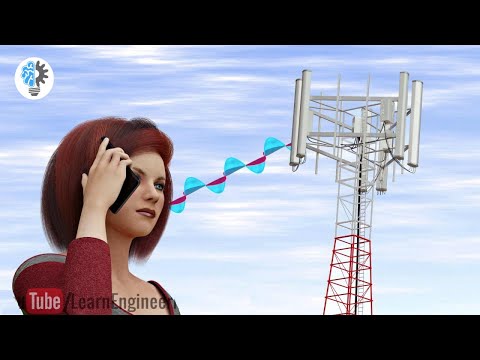
- An internal antenna transmits these digital signals as electromagnetic waves by altering wave characteristics like amplitude, frequency, or phase.
- Electromagnetic waves have limitations in distance due to physical obstructions and environmental factors; they cannot travel indefinitely because of Earth's curvature.
Cellular Technology Explained
- To address transmission issues, cellular technology divides geographic areas into hexagonal cells, each served by its own tower with dedicated frequency slots.
- Cell towers connect through optical fiber cables for national or international connectivity; signals are converted from electromagnetic waves to high-frequency light pulses for processing.
Role of Mobile Switching Centers (MSC)
- After processing at the base transceiver box, signals are routed to destination towers where they undergo a reverse process so that the recipient can hear the call.
- The MSC is crucial for determining which cell tower serves a subscriber's current location. It stores subscription information linked to SIM cards.
Location Tracking Techniques
- The home MSC keeps track of subscribers' locations through periodic updates when crossing towers or when devices are powered on.
- An example illustrates how call requests are processed between Emma's home MSC and John's home MSC based on their respective locations.
Importance of Frequency Spectrum in Mobile Communications
- Each subscriber is allocated a specific frequency range within a limited spectrum available for cellular communications; efficient distribution is essential due to high user demand.
- Two technologies help manage this: frequency slot distribution among cell towers and multiple access techniques that allocate frequencies among active users.
Evolution of Mobile Phone Generations
The Evolution of Mobile Communication Technologies
Transition from 2G to 3G
- The second generation (2G) introduced SMS and internet browsing, marking a significant shift in mobile communication.
- 3G technology focused on higher data transfer speeds, utilizing WCDMA multiple access techniques and increased bandwidth.
- Achieving speeds of up to two Mbps enabled various applications such as GPS, video streaming, and voice calls.
- This transition was pivotal in evolving basic phones into smartphones.
Advancements with 4G Technology
- The introduction of 4G brought substantial speed improvements, achieving rates between 20 to 100 Mbps.
- These enhanced speeds facilitated the streaming of high-resolution movies and television content.
- The advancements were made possible through OFDMA multiple access technology combined with MIMO technology.
Future Prospects: Introduction of 5G
- The upcoming rollout of 5G will leverage enhanced MIMO technology alongside millimeter wave frequencies for even greater performance.
Turn any video into a summary like this
YouTube links, meetings, lectures — with transcripts, search, and chat.