Lecture 25: Change Tolerance
Understanding Change Management
What is Change Management?
- Change management involves understanding the nature of change, resistance to change, and how to implement changes effectively within organizations.
- The only constant in life is change; it is inevitable for individuals, societies, and organizations. Embracing change is crucial for progress.
Importance of Organizational Change
- Organizational changes are necessary for achieving efficiency and effectiveness. This can involve new machinery, product development, or altering work processes.
- Successful change management requires considering perspectives from both employees and the organization as a whole. Engaging stakeholders early on increases acceptance.
Types of Changes in Organizations
Radical vs Incremental Change
- Introducing new modules in systems like ERP represents radical change that can be complex to implement compared to incremental changes that occur gradually.
- Organizations must view change management from both employee and organizational perspectives since changes impact all parties involved.
Stability vs Instability
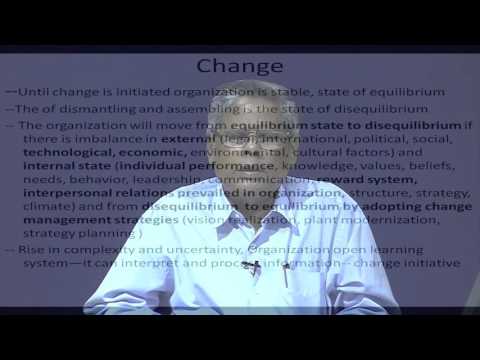
- Before initiating any change, an organization exists in a state of stability. Disruption leads to instability which necessitates effective management strategies to restore balance.
Factors Leading to Instability
Internal and External Influences
- Both internal factors (like outdated technology leading to poor performance) and external factors (such as market competition) contribute to organizational instability.
- Addressing these instabilities through strategic planning helps organizations transition back into a stable state.
Strategies for Managing Change
Implementing Effective Strategies
- To manage instability effectively, organizations should adopt strategies such as vision articulation, plant upgrades, or strategic planning.
Complexity and Uncertainty
- Organizations must remain adaptable; failure to embrace change may lead them to become obsolete in competitive markets.
Resistance to Change
Understanding Resistance Dynamics
- Resistance manifests as a series of reactions against proposed changes; some responses are relevant while others may not be significant.
Identifying Threatening Factors
- Various threats can arise during the implementation of changes including existing group dynamics or cultural inertia that resists new ideas.
The Role of Stakeholders in Change
Impact on Employees
- Changes affect both employees' roles and organizational structures; successful transitions require addressing potential conflicts among different groups within the organization.
Lewin's Change Model
Stages of Change
- Lewin’s model outlines three stages: unfreezing (recognizing the need for change), changing (implementing new methods), and refreezing (establishing stability post-change).
Recognizing Current States
Assessing Needs for Change
- Identifying current states versus desired future states helps clarify what needs changing within an organization’s structure or processes.
Forces Affecting Change
- Forces resisting change must be balanced with those promoting it; if resistance outweighs support, successful implementation becomes challenging.
- Continuous assessment ensures that forces remain aligned towards facilitating positive transformation.
Overcoming Resistance
- Strategies include empowering employees through open communication about upcoming changes while fostering collaboration across teams.
Conflict Resolution During Changes
- When conflicts arise due to resistance against changes, discussions should aim at reaching consensus while ensuring cooperation among team members.
Customer-Centric Approach
- Any proposed changes should consider customer satisfaction since their needs drive business success; failing this could result in negative repercussions for the organization.
Key Steps in Planning Changes
- Effective planning involves setting clear objectives based on long-term visions while adapting strategies according to evolving market conditions.
Vision as a Driving Force
- A compelling vision aligns team efforts towards common goals amidst changing environments by providing motivation throughout transitional phases.
Bridging Gaps Between Actions & Vision
- Discrepancies between ongoing activities versus desired outcomes highlight areas needing improvement—prompting necessary adjustments toward fulfilling organizational aspirations.
Strategic Planning Essentials
- Allocating resources effectively ensures smooth execution during transitions while selecting appropriate agents who will facilitate desired transformations successfully.
Communicating Outcomes Effectively
- All stakeholders must understand implications behind each step taken during transitions—clarifying reasons behind decisions fosters transparency throughout processes involved with implementing modifications successfully.
Employee Reactions
- Anticipating employee concerns regarding skill relevance amid shifts allows leaders time address fears proactively—ensuring smoother adaptation periods following implementations made over time.
Resource Allocation Challenges
- Increased demands placed upon personnel often require additional financial backing alongside managerial support—highlighting importance maintaining adequate resource levels throughout entire process undertaken.
Evaluating Implementation Success
- Post-change evaluations assess whether intended results were achieved—allowing companies determine effectiveness before deciding next steps forward based upon findings gathered thereafter.
( T=t1382 )
Continuous Improvement Cycle
Sustaining Competitive Advantage
#1432
Ongoing Adaptation Requirements
#1496
Conclusion: Navigating Through Challenges
Turn any video into a summary like this
YouTube links, meetings, lectures — with transcripts, search, and chat.