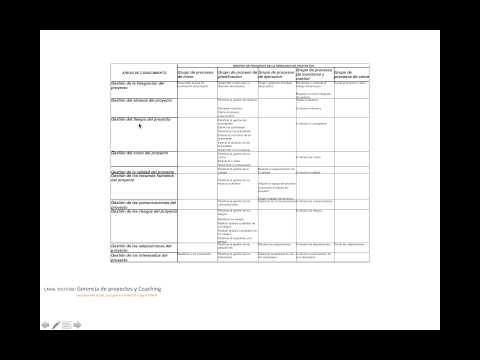
GRUPOS DE PROCESOS Y ÁREAS DE CONOCIMIENTO
Introduction to Project Management Processes and Knowledge Areas
Overview of Project Management Groups and Knowledge Areas
- The video introduces the topic of project management, focusing on process groups and knowledge areas essential for effective project tracking.
- A key table is presented that outlines the process groups: initiation, planning, execution, monitoring and control, and closing.
- The video emphasizes the importance of knowledge areas which encompass a complete set of concepts, terms, and activities relevant to project management.
Description of Knowledge Areas
- Nine knowledge areas are identified:
- Project Integration Management
- Project Scope Management
- Project Time Management
- Project Cost Management
- Project Quality Management
- Project Human Resource Management
- Project Communications Management
- Project Risk Management
- Project Procurement Management
- Each project should ideally incorporate all these knowledge areas; however, their application depends on the project's complexity and scope.
Process Interactions in Projects
Process Group Interactions with Knowledge Areas
- The video illustrates how specific processes align with both process groups and knowledge areas. For example:
- Developing the project charter falls under initiation linked with integration management.
- Identifying stakeholders also occurs in the initiation phase but relates to stakeholder management.
Planning Phase Details
- In planning:
- Integration management involves developing a project management plan.
- Scope management includes defining requirements and creating a work breakdown structure (WBS).
- Time management focuses on scheduling activities by estimating resources and durations to develop a timeline.
Execution Phase Insights
Execution Process Overview
- During execution:
- Integration management directs overall project work while ensuring quality assurance through quality management practices.
- Human resource management involves acquiring, developing, and leading the project team effectively.
Communication & Stakeholder Engagement
- Effective communication is managed throughout execution alongside procurement processes where acquisitions are executed. Stakeholder engagement is crucial during this phase as well.
Monitoring & Control Processes
Monitoring Work Progress
- The monitoring and control group focuses on overseeing project performance against plans. This interactive method allows for real-time adjustments as projects progress.
Project Monitoring and Control Processes
Continuous Monitoring and Control
- The project must undergo continuous monitoring and control, ensuring that deviations between execution and planning are identified promptly.
- Integrated change control is essential, aligning with the project integration management knowledge area to manage changes effectively.
Scope Management
- Constant validation of project scope is crucial; it ensures that the project's objectives remain aligned with stakeholder expectations.
- Each aspect of the project—time, cost, quality, communications, risks, acquisitions, and stakeholder engagement—requires specific controls to maintain overall project integrity.
Closing Processes
- The closing phase involves finalizing all aspects of the project, including procurement closure. This step is vital for ensuring all contractual obligations are met.
Process Flow Understanding
- Understanding the flow of 47 processes within project management helps maintain traceability throughout any type of project. Following this structured approach prevents overlooking critical processes.