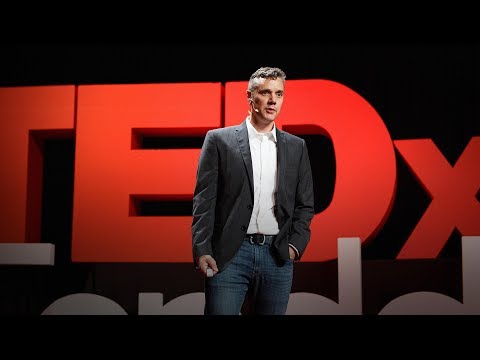
Why we get mad -- and why it's healthy | Ryan Martin
The Power of Anger
In this section, the speaker introduces herself as an anger researcher and explains how she spends her time studying why people get mad. She also highlights that anger is a universal emotion that we all feel.
Introduction to Anger Research
- The speaker is an anger researcher who studies why people get mad.
- Anger is a universal emotion that we all feel.
Understanding Anger
In this section, the speaker talks about how people react when they receive angry messages from their friends. She also discusses how she studies the types of thoughts and actions people have when they are angry.
Receiving Angry Messages
- People often receive angry messages from their friends and try to understand why they are so mad.
- As an anger researcher, the speaker studies the types of thoughts and actions people have when they are angry.
The Universality of Anger
In this section, the speaker talks about how anger is a natural part of our lives and something we all experience from infancy to old age.
Experiencing Anger Throughout Life
- We've been feeling anger since the first few months of life when we didn't get what we wanted in our cries of protests.
- We feel it throughout our teenage years and even at some of the worst moments in our lives.
- It's also been with us in some of the best moments of our lives.
The Benefits of Feeling Angry
In this section, the speaker argues that anger is a powerful and healthy force in our lives. She explains that we need to feel anger and understand why we get mad.
The Importance of Feeling Angry
- Anger is a powerful and healthy force in our lives.
- We need to feel anger and understand why we get mad.
Why We Get Mad
In this section, the speaker talks about the work of Dr. Jerry Deffenbacher, an anger researcher who wrote about how to deal with problematic anger. She discusses how most people think they get mad when they are provoked.
Understanding Provocations
- Most people think they get mad when they are provoked.
- People often use language like "It makes me so mad" or "I got mad because she left the milk out again."
- The speaker asks people what makes them mad, and their answers range from minor irritations to big global problems.
Irritants That Make Us Mad
In this section, the speaker shares some of the common irritants that make people angry based on her conversations with friends, colleagues, and family members.
Common Irritants
- People get angry at things like slow drivers, loud chewers, and roundabouts.
- Some people also talk about bigger issues like racism, sexism, bullying, and environmental destruction.
The Recipe for Anger
In this section, the speaker explains that anger is a response to situations that are unpleasant, unfair, and leave us feeling powerless. However, anger doesn't happen in a vacuum and we can feel angry at the same time as other emotions.
What Makes Us Angry?
- Situations that are unpleasant, unfair, where our goals are blocked, could have been avoided and leave us feeling powerless.
- Provocations don't make us mad on their own because if they did we would all get angry over the same things.
Pre-Anger State
- When you're hungry, tired or anxious about something else those provocations feel much worse.
Primary Appraisal
- When something happens to us we first decide if it's good or bad, fair or unfair, blameworthy or punishable. This is primary appraisal when you evaluate the event itself.
Secondary Appraisal
- Once we've decided what it means in the context of our lives we then decide how bad it is. That's secondary appraisal where we say "Is this the worst thing that's ever happened or can I cope with this?"
Driving: A Recipe for Anger
In this section, the speaker uses driving as an example to illustrate how our ability to cope with a situation affects whether or not we get angry.
Primary Appraisal vs Secondary Appraisal
- Imagine you're driving somewhere and someone in front of you is driving well below the speed limit. If you decide it's not that big a deal then you won't get angry because your secondary appraisal tells you that you can cope with it. But if you're on your way to a job interview and you're going to be late, then your ability to cope with it changes and you start catastrophizing.
Types of Thoughts Associated with Chronic Anger
- Catastrophizing is one of the primary types of thoughts associated with chronic anger.
- Misattributing causation is another type of thought associated with chronic anger where angry people tend to put blame where it doesn't belong, even on inanimate objects.
Cognitive Distortions and Anger
The speaker discusses cognitive distortions, which are irrational beliefs that can lead to anger. However, sometimes these thoughts are rational because there is unfairness in the world.
Demandingness
- People put their own needs ahead of others.
- This can lead to frustration and anger.
Inflammatory Labeling
- People use derogatory terms to describe others.
- This can also lead to anger.
The Evolutionary Advantage of Anger
The speaker explains that anger exists as an emotion because it offered our ancestors an evolutionary advantage. It alerts us to injustice and gives us the energy we need to respond.
Fight-or-Flight Response
- When we get angry, our sympathetic nervous system kicks in.
- This causes our heart rate, breathing, and sweating to increase.
- Our digestive system slows down so we can conserve energy.
- Our blood vessels dilate to get blood to our extremities.
Regulation of Emotions
- We have the capacity to regulate our emotions.
- Even when we want to lash out, we can stop ourselves and channel our anger into something more productive.
Anger as a Motivator for Change
Instead of trying to turn off our anger, the speaker suggests using it as a motivator for change. Racism, sexism, bullying, and environmental destruction are real issues that require action.
Positive Ways to Express Anger
- There are infinite ways we can express our anger.
- We can protest or write letters to the editor.
- We can donate or volunteer for causes.
- We can create art, literature, poetry or music.
- We can create a community that cares for one another and does not allow atrocities to happen.
Turn any video into a summary like this
YouTube links, meetings, lectures. With transcripts, search, and chat.