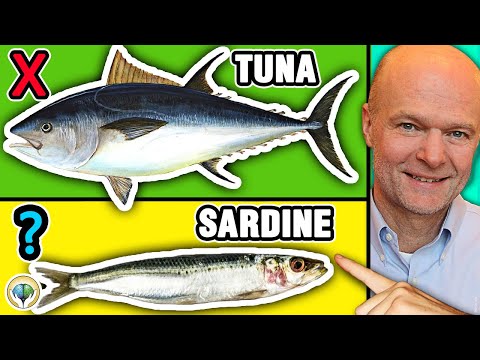
Top 5 Best Fish You Should NEVER Eat & 5 Fish You Must Eat
The Best and Worst Fish to Eat
In this video, Dr. Ekberg discusses the benefits and risks of eating fish. He explains the importance of omega-3 fatty acids, particularly EPA and DHA, which are abundant in fish. He also talks about the dangers of heavy metals like mercury that can be found in some types of fish.
Benefits of Omega-3 Fatty Acids
- Fish is a great source of EPA and DHA, two long-chain fatty acids that are important for brain function, eye health, and cell membrane structure.
- These fatty acids are among the most common deficiencies because people don't eat much fish anymore.
- Eating plant-based omega-3s is not enough because they cannot be converted into EPA and DHA efficiently.
Risks Associated with Heavy Metals
- Mercury levels vary depending on the size and age of the fish.
- Large predatory fish like tuna and swordfish have high concentrations of mercury because they eat other fish that contain mercury.
- Small fish like sardines are safer to eat because they do not live long enough or consume enough mercury to accumulate high levels.
General Recommendations
- Fish is a high-quality protein source that is easier to digest than red meat.
- All types of fish contain around 20% protein by weight.
- To minimize exposure to heavy metals, it's best to avoid large predatory fish or limit consumption to once a week. Small fish can be eaten more frequently.
Understanding the Risks of Eating Fish
This section discusses how the level of mercury in fish can vary depending on where it is caught and the species. It also highlights that farm-raised fish are not a good option due to their unnatural habitat, which leads to them being fed antibiotics and unhealthy diets.
Mercury Levels in Fish
- The level of mercury in fish can vary depending on where it is caught and the species.
- Tilefish from the Mexican Gulf has the highest level of mercury ever recorded at 1,450 parts per billion.
- Trout caught in streams and lakes have lower levels of mercury compared to those caught in oceans.
- Farm-raised fish should be avoided as they are fed an unnatural diet, leading to high levels of toxins like PCBs.
Risks Associated with Farm-Raised Fish
- Farm-raised fish are fed an unnatural diet that leads to them being sick and needing antibiotics.
- Salmon raised in captivity are fed red dye pellets to make their flesh appear red since they do not move enough for their flesh to turn red naturally.
- Feeding farm-raised fish grain changes their Omega 3-to-Omega 6 ratio, making them less healthy than wild-caught fish.
Types of Fish to Avoid
- Tilefish from the Mexican Gulf has the highest level of mercury ever recorded at 1,450 parts per billion.
- Swordfish is a large predatory fish that is high in mercury and should be avoided.
Safe and Unsafe Fish to Eat
In this section, the speaker discusses different types of fish that are safe or unsafe to eat based on their mercury levels.
Types of Fish to Avoid
- King mackerel is high in toxins and should be avoided.
- Tuna has high mercury levels, ranging from 350 to 689 parts per billion, making it unsafe for regular consumption.
- Orange roughy and tuna are the speaker's favorite fish but have high mercury levels at 571 parts per billion. They should be eaten sparingly, once every two months or so.
Types of Fish That Are Okay to Eat
- Mahi-mahi has higher mercury levels than some other fish but is still okay to eat occasionally due to its protein content.
- Cod is a popular fish with slightly less mercury than mahi-mahi but still not super beneficial. It can be eaten occasionally for its protein content.
- Croaker has more omega-3s than cod and mahi-mahi but still not enough to make a significant difference in health benefits. It is safe to eat due to low mercury levels.
Types of Fish That Are Safe and Beneficial
- Flounder is low in mercury and easy to digest, making it a good option for alternating with meat and chicken. It does not have a lot of omega-3s but is still a healthy choice.
- Shrimp has very low mercury levels at only nine parts per billion, making it the safest item on the list. While it doesn't have many omega-3s, it is a good source of protein.
- Freshwater trout has significant amounts of omega-3s at 1070 milligrams and low mercury levels, making it a healthy and safe choice.
The Top 5 Fish to Eat for Omega-3s and Low Mercury
In this video, the speaker discusses the top five fish that are safe to eat and have high levels of omega-3s and low levels of mercury.
The Top Five Fish
- Herring: Contains almost 2,000 milligrams of omega-3s and about 84 parts per billion of mercury.
- Sardines: Has 1500 milligrams of omega-3s per 100 grams and only has 13 parts per billion of mercury.
- Mackerel: Atlantic mackerel is very safe with only 50 parts per billion of mercury but has the highest level of omega-threes at two thousand six hundred seventy milligrams.
- Salmon: Contains two thousand five hundred ninety milligrams omega-3s and only twenty-two parts per billion of mercury. It is extremely nutritious.
Safety Precautions
- Use common sense when consuming fish as these numbers are based on one set of readings from the FDA published between 1990 and 2010.
- Small and young fish are generally safer to consume than larger ones that accumulate more toxins over time.
Turn any video into a summary like this
YouTube links, meetings, lectures — with transcripts, search, and chat.