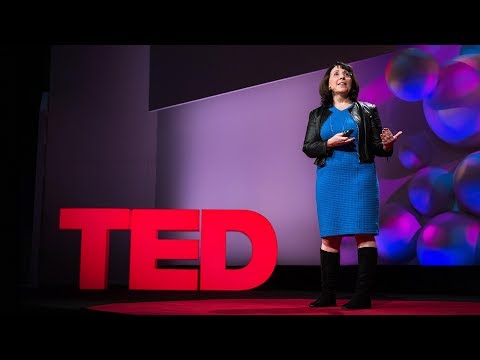
You aren't at the mercy of your emotions -- your brain creates them | Lisa Feldman Barrett
The Nature of Emotions
In this section, the speaker introduces the topic of emotions and how they are perceived by people.
Emotions as Guesses
- Emotions are guesses that your brain constructs in the moment where billions of brain cells are working together.
- Your brain is sifting through a lifetime of experience, making thousands of guesses at the same time, weighing the probabilities.
- Predictions are basically the way your brain works. It's business as usual for your brain.
Misunderstanding Emotions
- We have misunderstood the nature of emotion for a very long time.
- The results of all research on emotions are overwhelmingly consistent.
- None of us in this room have emotion circuits in our brains.
Remorse and Emotion Detection
- Jurors base their decision largely on whether or not the defendant feels remorseful for his actions.
- Tsarnaev is guilty; there's no doubt about that.
- Jurors do not and cannot detect remorse or any other emotion in anybody ever.
What Are Emotions?
- Emotions are not built into your brain at birth; they are just built.
- Emotions are guesses that your brain constructs in the moment where billions of brain cells
are working together.
Research on Emotions
- The speaker has studied emotions as a scientist for 25 years.
- The speaker's lab has probed human faces by measuring electrical signals that cause facial muscles to contract to make facial expressions.
- The speaker's lab has analyzed hundreds of physiology studies involving thousands of test subjects and scanned hundreds of brains.
Conclusion
- Understanding what emotions really are has important consequences for all of us.
Predicciones y emociones
En esta sección, el orador explica cómo nuestro cerebro utiliza las predicciones para construir nuestra experiencia del mundo y cómo esto influye en la forma en que percibimos las emociones de los demás. También discute cómo ciertas empresas de tecnología están intentando detectar emociones en el rostro y el cuerpo, pero que esto es un error ya que las emociones no están ahí.
Las predicciones son primitivas
- Las predicciones nos ayudan a entender al mundo de manera rápida y eficiente.
- Nuestro cerebro no reacciona ante el mundo usando experiencias pasadas, sino que predice y construye nuestra experiencia del mundo.
- El cerebro busca sentido en los movimientos faciales para encontrar un significado.
La percepción de las emociones está arraigada en predicciones
- Mirar a alguien a la cara no permite leer sus emociones como si estuviéramos leyendo un libro; nuestro cerebro está haciendo predicciones basadas en situaciones similares.
- Las emociones que uno cree detectar en otras personas vienen, en parte, de nuestro propio cerebro.
- Algunas empresas de tecnología están gastando millones de dólares tratando de detectar emociones en el rostro y el cuerpo, pero esto es un error ya que las emociones no están ahí.
Las sensaciones simples no son emociones
- Nuestro cerebro hace predicciones para dar detalles sobre nuestras sensaciones simples y saber qué hacer con ellas.
- Las sensaciones simples no son emociones, pero a veces las construcciones que hace el cerebro pueden ser emociones.
- Las sensaciones simples son resúmenes de lo que sucede en nuestro cuerpo.
El mismo estímulo puede provocar diferentes emociones
- El cerebro asocia las percepciones de nuestro cuerpo con lo que sucede en el mundo para saber qué hacer. A veces estas construcciones son emociones.
- La misma sensación física puede tener un significado diferente dependiendo del contexto.
- No estamos a merced de unos míticos circuitos emocionales enterrados en la profundidad de alguna parte antigua del cerebro.
Cambio de Ingredientes
En esta sección, se discute la posibilidad de cambiar los ingredientes en una receta.
Cambiar los ingredientes
- Si uno cambia esos ingredientes hoy,
- Se puede obtener un resultado diferente al esperado.
- Es importante tener en cuenta las propiedades y características de cada ingrediente antes de hacer cambios.
- Algunos ingredientes pueden ser sustituidos por otros con propiedades similares, pero no siempre es posible lograr el mismo sabor o textura.
Turn any video into a summary like this
YouTube links, meetings, lectures. With transcripts, search, and chat.