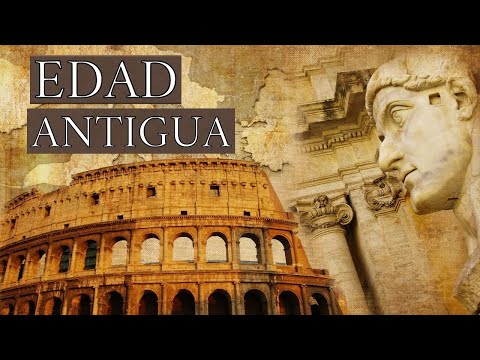
La EDAD ANTIGUA explicada: origen, características y acontecimientos importantes 📜
The Ancient Age
This section provides an overview of the Ancient Age, which was a historical period between approximately 4000 BC and 476 AD. It highlights important events and civilizations during this time.
The Beginning of the Ancient Age
- The Ancient Age is calculated from the appearance of writing around 4000 BC.
- Primitive human societies began to settle in propitious areas, transitioning from nomadic lifestyles to small settlements.
- The Sumerians were among the first to develop writing around 3500 BC.
City-States and Empires
- Human societies organized themselves into city-states and later empires during the Ancient Age.
- Mesopotamia, Egypt, Greece, Rome, and Mayan civilizations were prominent during this period.
- City-states had varied sizes but were larger than simple settlements and became centers of political power.
Forms of Government
- Monarchy was the most common form of government during ancient times.
- Some places experimented with other systems such as republic in Rome or democracy in Greece.
- Religion often played a role in legitimizing kingship.
Written Laws
- While there were rules to regulate human relations before, laws began to be written down during ancient times.
- The Code of Hammurabi is considered the first written law code in history.
Economic Activities
- Agriculture became important for sustaining growing settlements during ancient times.
- Possession of land symbolized wealth, and trade focused on exchanging raw materials or manufactured products over long distances.
Religions
- Most religions during ancient times were polytheistic (belief in multiple gods).
- Judaism and Christianity emerged as significant monotheistic religions during this period.
Cultural Developments
- Classical antiquity saw significant cultural developments influenced by philosophy and art.
- Philosophy emerged as a search for knowledge that impacted various aspects of culture, religion, and politics.
- Artistic expressions, such as literature, sculpture, architecture, and painting, often had strong religious themes.
Prominent Civilizations
- The Sumerians developed writing around 3500 BC.
- Egypt's civilization emerged around 3100 BC with the unification of Upper and Lower Egypt.
- Rome became a significant empire that dominated Europe for centuries.
- Athens, Sparta, and Corinth were important city-states in Greece known for their cultural contributions.
Conclusion
This section concludes the discussion on the Ancient Age by highlighting its impact on Western and world history.
- The Ancient Age was a transformative period that marked the transition from nomadic tribes to settled civilizations.
- It witnessed advancements in governance, written laws, economic activities, religions, philosophy, and art.
- The legacies of ancient civilizations continue to shape our understanding of history and culture today.
Fall of the Roman Empire
This section discusses the fall of the Roman Empire and its impact on Western civilization.
The Fall of the Western Roman Empire
- The Western Roman Empire came to an end in 476 AD after decades of internal problems, political breakdown, and pressure from barbarian peoples.
- This marked the transition from the ancient age to the Middle Ages.
- In contrast, historians argue that in the East, the fall of the Roman Empire was more gradual and continuous.
Mesopotamia - Cradle of Civilization
This section explores Mesopotamia as a region and its significance as the cradle of early human civilizations.
Mesopotamia - Between Two Rivers
- Mesopotamia is a region located in the Middle East between the Tigris and Euphrates rivers.
- It was known as "the land between two rivers."
- The fertile land and access to water allowed for agricultural development and urbanization.
Early Cities and Social Structure
- Nomadic groups gradually settled in Mesopotamia and built cities.
- The society had a monarchical system with rigid social strata, an army, religion, and its own language.
- A priestly caste held significant power economically.
Writing and Trade
- Writing was used to record commercial transactions, document wars, and describe customs.
- Agriculture played a crucial role in their economy.
- Trade was important for exchanging goods within this region.
Persian Empire - Warriors and Polytheism
This section focuses on the Persian Empire's characteristics as a patriarchal civilization known for its warriors and polytheistic beliefs.
Geography and Animal Husbandry
- The Persian Empire was located west of the Tigris River and consisted of deserts, steppes, mountain ranges, and plateaus.
- They were known for their animal husbandry skills, particularly in breeding cows, horses, and dogs.
Warriors and Religion
- The Persians were renowned warriors, feared by their enemies for their ferocity.
- They engaged in conflicts with the Greeks during the Persian Wars.
- Like many ancient civilizations, they practiced polytheism but worshiped gods in triads.
Ancient Egypt - Monuments and Beliefs
This section explores ancient Egypt's legacy through its monumental structures and unique beliefs.
Pyramids and Hydraulic Systems
- Ancient Egypt is known for its pyramids and temples that provide valuable historical information.
- The civilization emerged along the banks of a river (Nile) where inhabitants utilized its waters for agriculture through an advanced hydraulic system.
Monarchy and Religion
- Egypt was governed by a monarch who was considered divine.
- The rulers used religion to legitimize political power.
- Egyptians worshiped a wide pantheon of goddesses alongside other deities.
Greece - Cradle of Western Culture
This section highlights Greece as the birthplace of Western culture with significant contributions to philosophy, art, and political institutions.
Independent City-states
- Greece initially consisted of independent city-states that united against external threats.
- Athens played a crucial role in the development of democracy.
Alexander the Great's Empire
- Alexander the Great expanded Greek territories to India within a short period.
- His empire reached exceptional levels economically and artistically until his untimely death at 32 years old halted further expansion.
Roman Empire - Legacy and Influence
This section discusses the Roman Empire's vast territorial extent, long duration, and enduring legacy.
Vast Territory and Legacy
- The Roman Empire occupied almost 6 million square kilometers, making it one of the longest-lasting empires in history.
- Roman concepts such as law, Senate, provinces, and municipalities continue to influence modern society.
- Roman art and culture have left a lasting impact on European civilization.
Cultural Assimilation of the Romans
This section explores how the Romans assimilated various cultures into their own, particularly from classical Greece.
Assimilation of Cultures
- The Romans assimilated cultural elements from conquered regions.
- Classical Greece had a significant influence on Roman culture, but other civilizations also contributed to their development.
Chinese Empire - Ancient Innovations
This section focuses on the extensive Chinese empire and its contributions to ancient innovations.
Impressive Infrastructure
- The Chinese empire flourished with impressive infrastructures such as dikes and the Great Wall.
- Its territory was vast but managed to be unified under strong rulers.
Chinese Inventions
- China is credited with inventing paper, ink, gunpowder, and many other products.
- Their contributions were not immediately known in Europe but had a significant impact on world history.
Maya Civilization - Advanced Pre-Columbian Culture
This section highlights the advanced Mayan civilization in Mesoamerica during ancient times.
Extensive Territory and Development
- The Mayans inhabited a wide territory ranging from Mexico's Yucatan Peninsula to present-day Guatemala.
- They reached a higher level of evolution compared to other pre-Columbian cultures during the formative or pre-classical period.
The transcript ends abruptly, and the summary covers the available content.
Historiography of the Ancient Age
This section discusses the historiography of the ancient age, including when it is considered to have ended and different perspectives on this matter.
The End of the Ancient Age
- Historiography considers that the end of the ancient age occurred when the Western Roman Empire fell under the pressure of barbarians and due to its own problems. This end occurred in 476 AD.
- It should be noted that the Eastern Roman Empire survived until 1453, so some historians argue that this end of the ancient age is only valid for Western civilization.
- Different areas may have different dates for the end of their ancient ages, as some empires maintained similar characteristics until much later.
What are your thoughts?
Perspectives on the End of the Ancient Age
This section explores different perspectives on when the ancient age ended based on geographical and cultural considerations.
Varied Dates for Different Areas
- Some experts argue that other areas should consider different dates for the end of their ancient ages.
- Certain empires retained similar characteristics well beyond what is traditionally considered as the end of the ancient age.
What do you think?
Please replace "insert_link_here" with actual links to relevant videos.